Current Laws and Regulations on Invasive Species Control: Difficulties and Loopholes
Text / Yen Sheng-hung, Associate Professor, Department of Biological Sciences, National Sun Yat-sen University
After the Australian red claw crayfish story broke, friends and the media again asked me whether there really is any law governing alien organisms. Well. There is, in fact, but those who want to regulate lack the power to do so, and those who have the power do not regulate, so overall the regulation is patchy and the problems are many. Sometimes it is a problem of legal design, sometimes a problem of the competent authorities themselves, and of course there is also the problem of the public failing to obey the law. Below I will try to explain the current state and problems of alien organism regulation.
A premise: some people are really strange. The moment you mention the alien species issue they say, "Aiya, the vegetables we eat are all alien species too~ so we can't ban them completely, otherwise it will harm industry development and people's livelihoods"; "We Taiwanese are also alien, everyone just came at different times~ why distinguish native from alien? Doesn't having more alien species also increase biodiversity?"
Hey~ who is talking to you about cabbage or Japanese sea bass? Alien species (alien species or exotic species) are not necessarily equal to invasive species. What we are discussing now is "invasive species": how to assess "whether an alien species has invasive potential, and how to regulate alien species, how to allow the introduction of alien species without harming industry and ecology." As for whether alien species should count toward native biodiversity, please go back and study high school biology, thank you.
Which species should be regulated? Generally speaking, the import of alien species raises three concerns: (1) Species conservation: Does the species' native population raise conservation concerns, that is, is it an endangered species? If so, consumption of that species' wild population should be reduced; (2) Invasion risk: Does the species have the potential to become an invasive species in Taiwan? Becoming an invasive species requires the simultaneous combination of three aspects: industry demand, biological characteristics, and the behavior of those who breed and use it; (3) Industry demand: Abroad, the priority of species conservation and invasion risk always outweighs industry demand, so species that can enter industry should all be species without the above concerns.
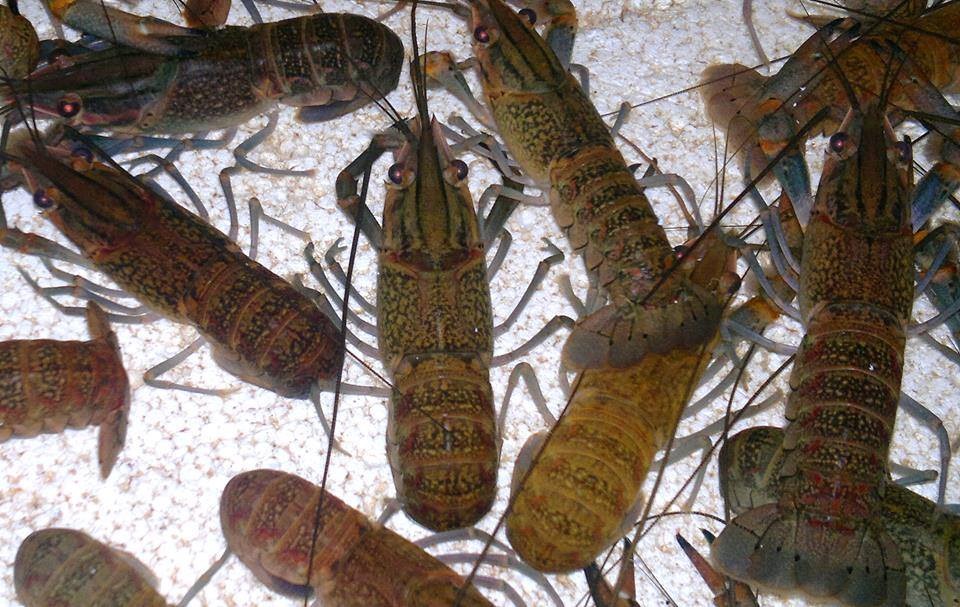
But in Taiwan it is not like that~ In Taiwan it seems that things with conservation concerns and invasion risk are left to be sold and bred indiscriminately on the market, and only when the situation becomes unmanageable does everyone throw up their hands and pass the buck. The Australian red claw crayfish is a very good example~ So is industry demand important? Of course it is. Some operators in Taiwan actually have very good breeding technology, and if standards can be met in every aspect, such as escape prevention measures, population control, market mechanisms, domestic and export sales guidance, animal welfare, and environmental impact (such as aquaculture wastewater), then such an industry is actually quite good.
It is just that, how many species' industries on the market today can meet these requirements? How many high-invasion-risk species have imports, commercial activities, releases, and removals that cannot be effectively managed and constrained by any current law? (<== I need to write another article about this)
What aspects does the issue of alien species regulation have? There is regulation at the point of entry (including risk assessment, quarantine, trade prohibition) and there is domestic regulation (including display, sale, breeding, export, escape reporting, removal, purchase, inspection, reporting, etc.). Good, with so many things, who is in charge? Who are the competent authorities for alien species? Good question. In fact, the competent authorities related to alien species have never been just one.
The Forestry Bureau can, under Article 31 of the Wildlife Conservation Act, manage alien wildlife that harms industry and the environment. Note that it is ”wildlife”, not abandoned pets or artificially bred animals that escape from industry and are not listed under Article 55 of the Wildlife Conservation Act.
The Fisheries Agency established a review mechanism for the first import of aquatic organisms under Article 27 of the Wildlife Conservation Act. The Fisheries Agency clearly subsidizes fish protection work in certain streams and has also subsidized research on certain invasive species, yet the Fisheries Agency has never handled the removal of invasive alien aquatic species under Article 44 of the Fisheries Act.
The Bureau of Animal and Plant Health Inspection and Quarantine handles quarantine work for animals listed in the "List of Animals and Plants Subject to Quarantine" under the quarantine conditions for the import of animals and animal products, Articles 4 and 5 of the Statute for Prevention and Control of Infectious Animal Diseases, and Article 3 of the Plant Protection and Quarantine Act, as well as the "Customs Import Tariff of the Republic of China and Classification of Import and Export Commodities" of the General Administration of Customs of the Ministry of Finance and the International Trade Bureau of the Ministry of Economic Affairs, but there are still some issues of division of tasks with the Forestry Bureau.
The Livestock Department of the Council of Agriculture may, under Article 8 of the Animal Protection Act, prohibit the import and export of animals, but I have never heard of the Livestock Department concerning itself with this issue. In addition, the International Trade Bureau prohibits the import of specific animals under Article 26 of the Wildlife Conservation Act and Article 11 of the Foreign Trade Act, and manages trade in CITES appendix species under Article 13 of the Foreign Trade Act. It looks like five units are handling this, so why are there still so many disputes and loopholes?
The problem starts with education: anything involving biological resources will inevitably involve industry and conservation (including alien species control) issues. Yet under Taiwan's government and academic systems, the laws and affairs of various biological resources are scattered across different ministries and commissions, and even in school education they are scattered everywhere. Scattering in itself is not a problem; at least there should be a central idea and discourse on the mutual coordination between the biological industry and resource conservation. And the result? There is none.
Aquaculture only teaches increasing production, profit, disease, and feed, and ignores marine ecology. Then people in marine or freshwater ecology do not get involved in industry, so they do not necessarily understand commercial demand; those in plant protection do not understand insect conservation; landscaping, agronomy, and landscape work often run counter to forest ecological diversity; animal husbandry, veterinary medicine, and animals do not necessarily come together just because they all care about animals, let alone the fact that the industry and research of some biological groups have never been included in the vision of the education and administrative systems. Everyone just picks what they think they understand to regulate, leaves alone what they do not understand, or pretends to understand and regulates anyway, and that is why there are so many problems.
So what is the problem with each law? The Wildlife Conservation Act does have Article 31, which can handle the prohibition of alien species and follow-up issues. However, the Wildlife Conservation Act is about conserving wildlife and wild habitats. If a certain animal is not wildlife (for example, feral dogs and cats, Australian red claw crayfish that have escaped into the wild, or tilapia that are everywhere because of artificial releases), then the Wildlife Conservation Act has no way to deal with it, because those are not wildlife. Can the Forestry Bureau remove invasive species? It can, but once it encounters animals that are not wildlife as defined by the Wildlife Conservation Act and "edible crops," it cannot apply the law.
As said earlier, the Fisheries Act itself actually has provisions that can handle the removal of alien species, namely the "competent authority may, for resource management and adjustment of the fisheries structure, prescribe by public announcement the following matters: ..... 6. Restrictions or prohibitions on the release or abandonment of objects harmful to aquatic animals and plants. ...... 8. Restrictions or prohibitions on the transplantation of aquatic animals and plants. 9. Other necessary matters" mentioned in Article 44. In other words, they have a law they can use but they do not use it themselves.
However, the Fisheries Agency also reviews the import of aquatic organisms under the Wildlife Conservation Act, and is in charge of the introduction and industry of aquatic organisms and seedlings. Once these organisms escape from the industry environment, the Fisheries Agency still does not use the Fisheries Act and does not set aside its own budget to deal with it. In other words, introduction and industry are the Fisheries Agency's achievements, but once they escape, does it just stop caring?

Then what about the Plant Protection and Quarantine Act? Is it useful? In fact, the Bureau of Animal and Plant Health Inspection and Quarantine has for many years monitored the entry of harmful alien organisms at airports, ports, and in Taiwan's agricultural environment, and has spent large sums to remove organisms harmful to the agricultural environment such as the apple snail, but the place this law cannot reach is "invasive alien organisms that do not harm crops."
For example, someone without consent privately introduced black soldier flies (an insect) as feed for reptiles or fish. This does not sound wrong at all. But because it does not feed on plants, the Bureau of Animal and Plant Health Inspection and Quarantine would consider that this law cannot reach that insect. Yet the Wildlife Conservation Act also cannot reach "artificially bred alien feed insects." So what to do? Just leave it alone?
When it comes to Article 8 of the Animal Protection Act prohibiting the import and sale of piranhas, capybaras, and electric eels, that is an old problem of many years. The Animal Protection Act is for protecting animals. The capybara is an animal that harms the environment, while piranhas and electric eels may cause harm to their owners. I really do not understand under what circumstances this article appeared back then, leaving the Livestock Department not knowing how to regulate. But if extended from Article 8, in fact the Livestock Department can manage alien species derived from pets and other economic animals, and at least can regulate the facilities for breeding and display for sale so that they do not escape.
But the Livestock Department cannot even manage cats and dogs well, so how could it manage organisms other than cats and dogs? Is it disabling itself or deliberately distorting the law? Actually, it is not impossible to set up a list of dangerous animals in the Animal Protection Act (Japan's Animal Welfare Act is designed this way, restricting the keeping and commercial activities of specific animals), but I do not quite believe the Livestock Department would be willing to do so, because after years of implementation, turning the Animal Protection Act into a cat-and-dog law has produced so many problems. Some local government animal protection offices are more responsible than the Livestock Department of the Council of Agriculture.
Then what problems are there at the enforcement level? In fact, whether it is the import of alien animals, or the registration and management of animals after import, or the many issues of checking the registration of breeding farms and sales premises, the real enforcers are the local county and city governments and the forest district offices. However, because of local autonomy, the allocation, arrangement, and combination of animal protection, conservation, agriculture, fisheries, and forestry affairs in each county and city government are inconsistent, and the distribution of resources is extremely uneven. It either causes conflict within units, or causes disparities in enforcement between counties and cities because of differences in the views of superiors.
But may I ask, after alien organisms become invasive species, will they care about your county and city boundaries? If animal protection people treat the Livestock Department as their direct superior, they will naturally ignore the Forestry Bureau's directives. If fisheries bureau people treat the Fisheries Agency as their direct superior, they will naturally not feel that river ecology has anything to do with them. That is, this self-styled division of duties, but in fact departmentalism plus many horses pulling in different directions, makes the alien species problem, by the time it reaches local government, already a stage that is difficult to handle, and all they can do is spend a bit of taxpayers' money on removal work, and in the end it stalls.
So do we really need an alien species law? If we really are going to make a new law, is the purpose to fill the gaps in all current laws? Or should the parts of each law involving alien organisms all be extracted, reorganized, and expanded? If a new law appears, who then is the competent authority? Is everyone to co-manage? Or is it all to be thrown to the future Ministry of Environment and Resources? Just this point is enough of a headache.
All right, if we expand from current regulations, just as if we take the Plant Protection and Quarantine Act and expand it into an alien species law, doing quarantine through to removal well, and not limited to biological groups, it seems there is nothing impermissible about that? But at that time, will the Forestry Bureau, the Bureau of Animal and Plant Health Inspection and Quarantine, the Fisheries Agency, and the Livestock Department, these units that have long had conflicts over business philosophy and will then already belong separately to the Ministry of Environment and Resources and the Ministry of Agriculture, be able to cooperate well?
So is the alien organism problem really caused by the biological characteristics of the organisms themselves? Or is it mostly a problem of people?