Feed prices soar as big businesses rush into pig farming: who will listen to the pig farmers' voices?
Pork is the most common meat on Taiwanese tables. According to Council of Agriculture statistics, each person in Taiwan eats 37 kg of pork per year, and last year the hog farming industry's output value reached 75 billion, an increase of 5 billion over the year before, surpassing rice and firmly holding first place in single-item output value among agricultural and livestock products. However, a rise in output value and the income of hog farmers are two different things. These unsung drivers of Taiwan's economic development face a double squeeze from raw materials and the auction market, and their situation is extremely tough.
NewsMarket conducted a special interview with hog farmers, exposing the unreasonableness of the pork auction market and how hog farmers struggle to survive amid government abandonment, the entry of big corporations, and soaring feed prices.
The hog farmers interviewed believe these are all issues very much worth noting and hope to speak out so that all sectors of society will pay attention. But because there had previously been rumors that "someone" was going to control hog prices, the interviewee worried about attracting the concern of the government and relevant industry players, so it was inconvenient to reveal his identity, and the piece is published anonymously only.
Q: This year feed corn has soared. Roughly how big is the gap between your costs and profits?
Right now I have to spend 800,000 a month, but that still counts as little. I raise fewer than a thousand head, and by Taiwan standards that can only be considered small to medium-sized. Large hog farms can reach ten or twenty thousand head, with monthly expenses running into tens of millions, so when feed costs go up everyone suffers badly.
Feed costs for hog farming account for roughly 70-75%. More than ten years ago when I first started raising hogs, the price of feed corn was still 5.5 yuan per kg, a hog weighed roughly 120 kg and sold for 5,000 yuan, and there was still profit then. A while ago corn rose to 14 yuan per kg, the hog price was 6,000 yuan, and soybean meal and by-products used for feed all went up too. I have to import 30 tonnes of corn a month, and I simply can't make any money.
We all sell to the auction market. Right now the cost of one hog, including labor, is roughly 70 yuan per kg, but the auction market pays only 66 yuan per kg, while the retail market can reach 120 yuan per Taiwanese catty. Meat vendors buy a hog from the auction market and resell it, and can make roughly 3,000. We on the production end are the most pitiful; after deducting labor costs we roughly break even, but that means we are working for nothing. This year we have already worked for nothing for a whole year, and if the raising rate is poor we might even end up out of pocket. There are still children in the family in school, and we rely on the private savings we put aside before.
I work an average of roughly 9-10 hours a day, with no days off all year. During Chinese New Year everyone takes a holiday, but we still have to finish feeding the hogs before we can eat the reunion dinner. The children have absolutely no desire to inherit the family business, and fair enough, who would want to with this much hardship. But we are already so old there is no way to change careers; who would want to hire us? So we just grit our teeth and keep going, and see whether next year will be a little better.
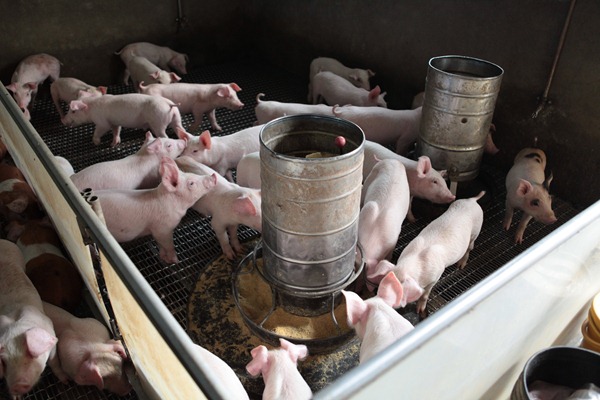

Q: With the hog farming environment this poor and the government not encouraging it either, have you thought about what to do in the future?
Farms of our size find it harder and harder to survive, so I have been thinking about how to transform. I previously went to get traceability certification, but later when there was no subsidy I did not continue, and besides, the auction market will not give me more money just because my hogs have traceability certification. They all want hogs that have plenty of lean meat and look nice, because that is what consumers like! What consumers care about is price. I once went to observe at a hypermarket: many people picked up CAS or healthy-pork certification products, but when they saw the cheaper pork next to them, they still put down the certified pork and bought the cheaper one. This shows consumer education is insufficient.
The government's traceability certification only goes as far as production; the sales channel still has not opened up. Actually, farmers only need to know that high-end pork has its market, and they will naturally produce it, but the government only does half the job.
I also once went to the market to sell hogs I raised myself. After deducting slaughter fees, one hog brought in 3,000 more than going directly to the auction market; really it was just earning my own labor wage, but even so it was still hard to compete with those hog dealers, and it was too tiring.
I have also thought about doing meat processing myself. To develop products I asked the Institute of Animal Science and the hog farming association, and although some techniques are still being overcome, with the overall environment this poor I know many hog farmers are just holding on there, waiting for the day they cannot keep going and then shutting down. But I think we cannot just sit and wait for death; we have to transform to survive. Actually, I do so much for a very simple reason: I just want to survive. Rather than pinning my hopes on others, relying on myself is the most solid.