How are small oases in the desert formed?
Las Vegas, the famous gambling city of the United States, is known throughout the world. Along both sides of the Las Vegas Strip, gigantic themed hotels compete in splendor. This is a paradise for food and shopping, and also a hotbed of money, music and entertainment, with a dazzling array of shows that push pleasure to its limits. The entire city is like a giant amusement park, open 24 hours a day, all year round.
Most tourists who come to the gambling city to spend money would hardly imagine that this city actually sits in the most impossible of geographical settings: in the desert of Nevada, where the average annual rainfall is less than 110 millimeters. Maintaining the operation of this metropolitan area of nearly two million people depends solely on the water source of the nearby Colorado River. The city is full of jungle-like buildings that consume enormous amounts of energy and water, not to mention dozens of golf courses scattered throughout the city. Las Vegas's development can be called a miracle of human (unsustainable) development. Once the water source here is threatened, the fate of the gambling city will face a huge crisis.
I have seen the prosperity of the gambling city many times. I am no longer an ordinary tourist; instead, I can view this giant urban amusement park from an angle close to that of a local resident. This time, when I heard that Las Vegas also has a "farmers market," I was greatly surprised. I thought that most residents of the gambling city are employed around tourism services, and there are relatively few of the urban middle class who generally support farmers markets. Moreover, this is a desert! Leaving the Las Vegas urban area and driving in any direction--east, west, south or north--you see nothing but endless desert. Where would farmers come from for a market?
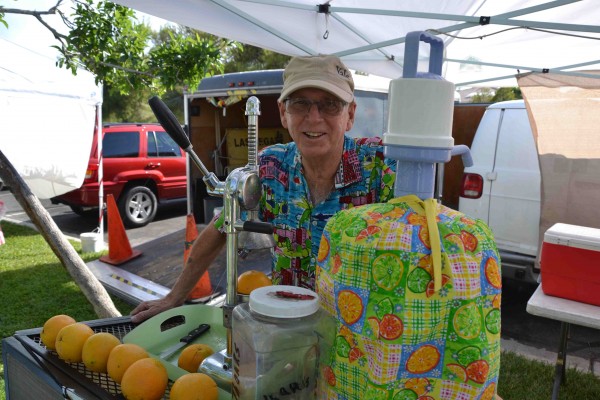
So, filled with curiosity, I gladly went to investigate. The Las Vegas farmers market is held 3 days a week at 3 different locations. When I visited, it was a Wednesday, and the stalls were set up in a city park in Summerlin on the west side of the city. That day a heat wave struck, with temperatures approaching 50°C, and I was still half doubtful whether the farmers market would be cancelled. Clearly I had worried too much. Although outdoors was like an oven, there were still more than 20 stalls, attracting quite a crowd, and there was even a small musical performance in the park.
Because it is located in a desert, there is much less local seasonal produce here. Many stalls sell locally processed foods, including locally roasted coffee beans, homemade salad dressing, and purely handmade Italian pasta. One stall specialized in selling small potted desert landscape plants such as cacti, probably the most "local" thing at this market.
Several stalls also brought fresh vegetables and fruits. I bought a big bag of cherries. Wow, both cheap and delicious. I curiously inquired where these farmers came from. Most of them came from California's agricultural regions several hundred kilometers away. In the sparsely populated western United States, these vegetables and fruits have probably already reached the minimum possible food miles, once again clearly showing the disconnect between the desert gambling city and nature.
And the experience of strolling through this farmers market was just as wonderful as farmers markets everywhere in the world. The people in the market were warm and friendly, and I was even fortunate enough to chat a little with the founder, Steve. He said this market was established in 1999, when there were only 7 stalls. Through years of effort, there are now more than 30 stalls registered here, and business is booming. And to ensure that the farmers market serves as a bridge connecting producers and consumers, every buyer must show a "producer certificate" before joining. Just before I left, the auntie next door selling popcorn even stuffed a big bag for me to take away. I think this kind of warm human touch is what makes farmers markets most appealing.
The small farmers market in the park certainly cannot change Las Vegas's trend of unsustainable development. The potential environmental crisis still brings enormous pressure to the development of the gambling city. Starting from a local farmers market, we can see even more clearly the rupture in the connection between people and nature, and at the same time it also lets us discover that everyone has the wish for good food and good farmers. Even in a barren place like a desert, through community power, a healthy and happy farmers market can be carefully cultivated.
Next time you travel to the gambling city, besides visiting hotels, watching shows and gambling, you might as well take a walk here.
—
Las Vegas Farmers Market official website: http://www.lasvegasfarmersmarket.com/
The original text was simultaneously published on the author's blog "A Thousand Books, Ten Thousand Miles":
http://chungenliu.blogspot.com/2012/07/blog-post_23.html