1218 African Swine Fever"Two cases of illegally bringing meat into Taiwan, each fined 200,000! Battle escalates as level is raised, Central Emergency Operation Center established
African swine fever is bearing down with menacing force, and disease prevention is being treated like warfare! Premier William Lai Ching-te instructed the Council of Agriculture to establish the "African Swine Fever Central Emergency Operation Center" (hereinafter referred to as the "African Swine Fever Response Center"), and today (the 18th) personally chaired its first inter-ministerial working meeting, also stating that he would take part in inspection tours to ensure disease prevention work is implemented and in place.
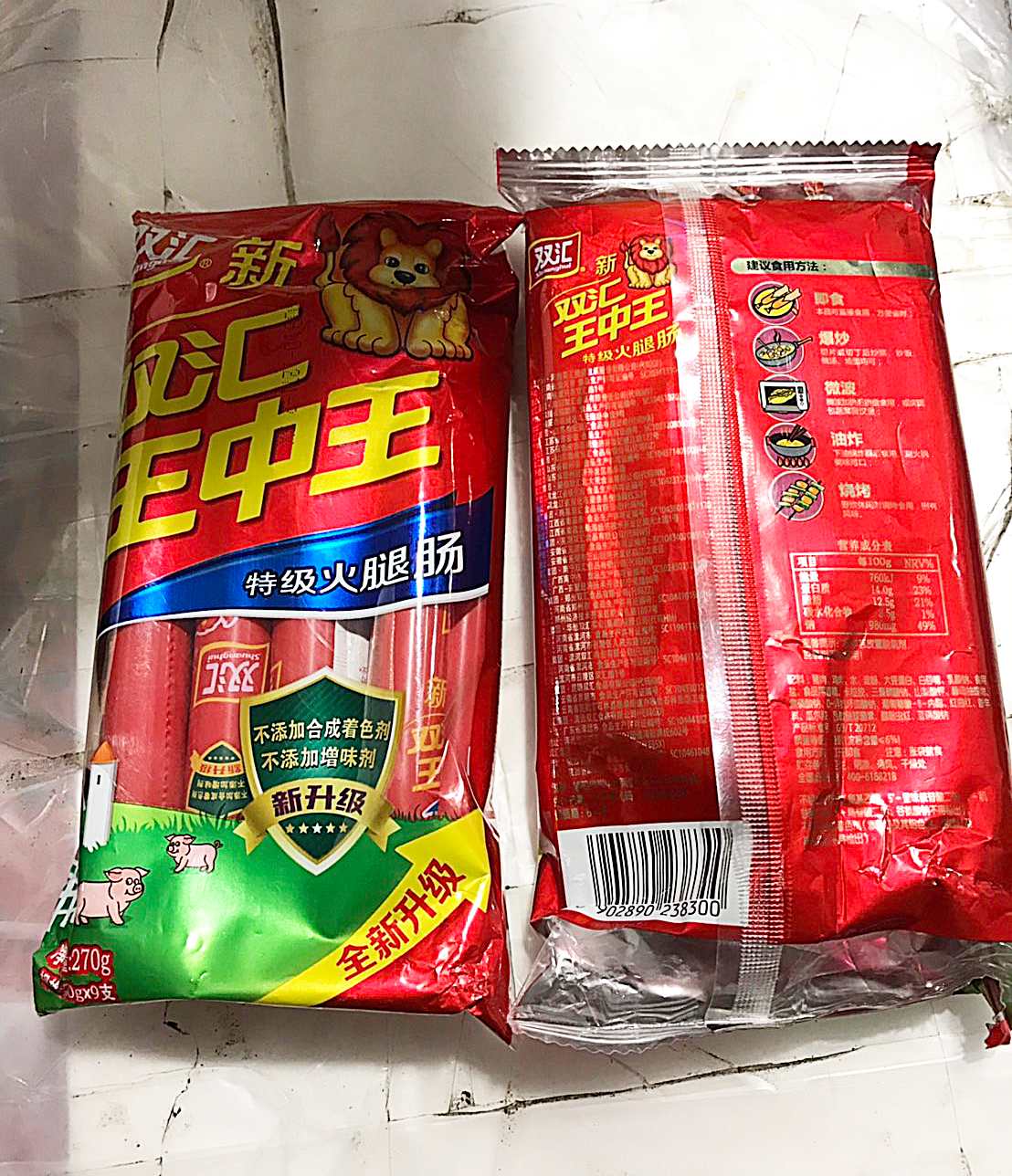
Yesterday the Council of Agriculture announced higher penalties, and today two Chinese travelers illegally brought in meat products, each fined 200,000. The Taipei Customs office of the Customs Administration under the Ministry of Finance said that at 11:15 this morning, a passenger surnamed Ho arriving on Xiamen Airlines from Fuzhou, China, was found by a duty customs officer with 15 packs of undeclared pork jerky, totaling 200 grams, in his luggage; in addition, at 12:50, a passenger surnamed Chen arriving on Hainan Airlines from China was also found with 0.58 kg of undeclared ham sausage in his luggage. In accordance with the Regulations on the Prevention and Control of Animal Infectious Diseases, each was fined NT$200,000, and both were transferred to quarantine authorities and handed to the Hsinchu branch of the Bureau of Animal and Plant Health Inspection and Quarantine for follow-up handling.
Illegally bringing in meat: NT$200,000 fine for the first offense, NT$1 million each time thereafter
After China notified the OIE (World Organisation for Animal Health) on August 4 of this year that African swine fever had occurred within its territory, neighboring Asian countries successively launched disease prevention measures. Deputy Chairman of the Council of Agriculture Huang Chin-cheng said that Taiwan has so far detected five processed meat products containing the African swine fever virus in inbound discarded-item bins. To strengthen public awareness that bringing meat back to Taiwan is prohibited, effective immediately, travelers who are caught bringing meat from epidemic areas without actively declaring it will face a fine raised to NT$200,000, and if they violate the rules again afterward, they will be fined NT$1 million.
In the crackdown on illegally carried meat in passengers' luggage, as of December 13, 230 cases had been fined NT$3,000 and 344 cases NT$15,000; from the 14th, 14 cases were fined NT$50,000, 24 cases NT$30,000, and 2 cases NT$10,000; and from the 18th, 2 cases were fined NT$200,000.
High-risk personnel who frequently travel across the strait for industries including pig farming must all pass X-ray inspection
Regarding other potential transmission channels, Huang Chin-cheng pointed out that publicity work will be strengthened for inbound and outbound travelers and aircraft and vessel crew, especially high-risk personnel who frequently travel across the strait for pig-farming-related work, as well as Chinese spouses and Vietnamese spouses. International parcels and express goods must also pass X-ray inspection by the Customs Administration upon arrival in Taiwan; operators of private online shopping platforms have also formed an "epidemic prevention alliance" with the government to cooperate with measures to remove Chinese meat products from sale; in the control of sea and air kitchen waste, vessel kitchen waste is uniformly prohibited from landing, and aircraft kitchen waste must be destroyed. Officials have so far inspected airline catering companies' kitchen waste handling 19 times, all meeting standards.
If the epidemic spreads, carcass disposal procedures must also be ready
In the regulation of pig farmers who use kitchen waste, kitchen waste must be steamed at a high temperature of 90 degrees for one hour before being fed to pigs. The Council of Agriculture and the Environmental Protection Administration at the beginning of the month targeted 2,045 kitchen-waste pig farms nationwide for joint inspections, and 1,146 farms have been inspected so far, of which 4 were non-compliant, with the goal of completing all inspection work before the end of the month.
"If African swine fever unfortunately breaks out in Taiwan, all pigs at the confirmed case farm will be culled, pig farms within a radius of 3 km will be subject to movement controls, and the principles for handling animal carcasses will follow the order of burial, rendering, and incineration." Huang explained that to avoid the epidemic spreading after an outbreak, animal carcasses will preferentially be buried on-site, with vacant land within livestock farms sought and each local government asked to plan emergency animal burial sites.
At present, the national animal carcass burial treatment capacity is 1.59 million head; alternatively, animal carcasses can be moved to the rendering plant in the locality for rendering, and the national rendering capacity is about 15,000 head per day; in addition, officials have purchased three shredders that can pre-shred animal carcasses before they enter incinerators in various places for incineration. "The measures adopted will be flexibly applied according to the differing conditions of each county and city, and it is hoped that the epidemic can be effectively blocked."
EPA: Environmental needs related to handling pig carcass collection must be addressed
Environmental Protection Administration Deputy Administrator Chang Tzi-chin said that environmental regulations will also be adjusted to coordinate with the relevant needs for handling pig carcasses after an outbreak, such as the procedures for lifting restrictions under the Air Pollution Control Act when incinerating on-site, and the relaxation of rendering plant treatment capacity. At the same time, preventive work will also be specifically carried out against soil and groundwater pollution from on-site burial of pigs.
Note:
Chang Tzi-chin: "Under Article 90 of the Air Pollution Control Act, exclusion clauses are already expressly listed, and for burning infected plants in response to the urgent need to prevent the spread of infectious diseases, those who apply to the local government and receive approval are exempt from penalty."
"Under Article 8 of the Waste Disposal Act, facilities may, according to their actual capacity, handle culled pig carcasses without being subject to the relevant restrictions. In addition, the EPA has reported to the Executive Yuan a request to raise the total treatment capacity of rendering plants nationwide from 600 metric tons/day to 1,200 metric tons/day."
In addition, to avoid affecting the daily domestic waste treatment demand, Chang Tzi-chin stressed that if pig carcasses are to be sent to incineration plants, they must first be cut or shredded to below 5 kg, then properly packaged in leak-proof bags, and only then can they be sent to refuse incineration plants to be co-incinerated with waste, but the proportion of pig carcasses in co-incineration should in principle be 5 percent, and must not exceed 10 percent at most.
Ministry of Finance Customs Administration: Increase the proportion of random inspections of high-risk travelers
Customs Administration Director-General Hsieh Ling-yuan said it will fully cooperate with all ministries and commissions on disease prevention and will also participate in inter-ministerial drills, strengthen officials' vigilance, and raise the proportion of random inspections of high-risk travelers. She pointed out that there are 17 international passenger clearance points nationwide, including eight air and nine sea points. Customs personnel will use quarantine dogs and X-ray machines at commercial ports to inspect the luggage of travelers entering from China and Hong Kong and Macao, China, imported express goods, parcels, and more. If violations are found, they will be transferred to the Bureau of Animal and Plant Health Inspection and Quarantine for penalties.
Ocean Affairs Council: Strengthen inspection of suspicious vessels
Coast Guard Administration Director-General Lee Chung-wei of the Ocean Affairs Council said that if vessels sailing between the two sides of the strait have suspicious tracks, inspections will be strengthened, and cabins, kitchens, food storage rooms, and refrigeration and freezing areas will be listed as key areas. For specific vessels (including cross-strait direct sea links, the mini three links, mainland-registered vessels, vessels that have entered and exited mainland areas, and yachts), 100 percent import inspections will be implemented.
Ministry of the Interior: Keep high-risk related personnel under control and on watch lists
Representatives of the Ministry of the Interior also pointed out that they have identified 29 Taiwanese who engage in the pig-farming industry in China, all of whom are listed and controlled by name for entry and exit. When returning to Taiwan, they will be guided by dedicated personnel and may enter only after passing inspection; in addition, for new residents who have long lived in Taiwan or have naturalized, disease prevention publicity materials in multiple languages will be translated to strengthen outreach.
Lai Ching-te: Will personally inspect Kinmen, the mini three links, and pig farms
"When foot-and-mouth disease broke out in 1997, 4 million pigs were culled, causing major damage to the pig-farming industry, and although 21 years have passed, Taiwanese pork still cannot be exported." Lai Ching-te said African swine fever is more ferocious than foot-and-mouth disease: the virus can survive 1,000 days in frozen pork and 100 days in chilled pork. At present there is also no drug or vaccine available for treatment and defense. Once pigs are infected, the mortality rate is as high as 100 percent, and the virus has quite diverse transmission routes, and can enter through pig saliva, feces, goods, personnel, and vehicle carrying, among other channels. "Taiwan and China are separated only by a strip of water, with 8 million person-trips between them each year. We must be fully on guard."
To ensure the implementation of disease prevention work by all ministries and commissions, Lai Ching-te said he will afterward personally go to Kinmen, the mini three links, and pig farms for inspections, requiring every link of disease prevention to be truly in place. He stressed that an error in any link could cause the entire disease prevention mission to fall short at the final hurdle, and called on all people to act together with the government to protect Taiwan's livestock industry as one.