Council of Agriculture invests 20 billion to expand green environment payments, benefiting 300,000 farmers
In response to the "Green Environmental Payment Program for Farmland," which has been promoted for four years, the Council of Agriculture announced today that it will inject 20 billion yuan to expand the scope of subsidies, directly encouraging the use of farmland for agriculture. The plan includes incentives for planting rotation crops such as import-substitution crops, main export crops, and key development crops; the parallel implementation of "direct payment for rice cultivation and guaranteed-price purchase of public grain"; and measures of concern to the outside world such as "organic and eco-friendly farming subsidies"; it is expected to affect more than 300,000 farmers. The Council of Agriculture also emphasized that implementing the Green Environmental Payment for Farmland will increase each farmer's income by at least 5,000 to 15,000 yuan per hectare per crop season, thereby encouraging more farmers to participate in the application.
Green Environmental Payments for Farmland Use Tiered Subsidies
With "tiered subsidies" as its slogan, the Green Environmental Payment for Farmland mainly shoulders the task of reforming the current agricultural subsidy policy. The Council of Agriculture pointed out that among the four key points are adjusting the rice production and marketing structure, encouraging organic, eco-friendly and reasonable farming, and providing incentives for competitive rotation crops.
Why expand the program again this year? Chen Chi-chung, deputy chairman of the Council of Agriculture, pointed out that taking the dual-track system of "direct payment for rice cultivation and guaranteed-price purchase of public grain" as an example, in recent years, from a pilot program in six townships to fifty townships nationwide, the participation rate has been found to exceed 50 percent, indicating a certain level of support among farmers, so it was decided to expand it nationwide this year.
Regarding eligibility, the Council of Agriculture explained that as long as the land is located in a pilot area and rice planting was reported in the second crop season of any year between 102 and 104, or the farmer participated in a group production area or rented land for rice cultivation as a small landowner-large professional farmer, applications can be filed at the local township office or farmers' association within the supplementary change application period of the "Farmland Activation Program through Adjustment of Farming Systems."
30 million tons reserved for strategic stock, the rest to be launched for public grain exports
As for the public grain warehouse overflow problem that has long been questioned by the outside world, in addition to guiding the planting of high-quality rice through the above methods and reducing the pressure on public grain storage; Chen Chi-chung also emphasized that "public grain exports" channels will be actively opened up. Targeting neighboring countries that consume Ponlai rice, breaking the previous deadlock of only importing. In this regard, Chuang Lao-ta, deputy director-general of the Agriculture and Food Agency, stated that negotiations with various countries are already underway at this stage, and it is expected that the first wave of public grain exports can be launched this year. Apart from the 300,000 tons of strategic reserve grain, the remaining more than 400,000 tons of rice in storage will all be export targets, in the hope of resolving part of the rice production and marketing problem.
Planting import-substitution crops, general farmers can receive up to 60,000 yuan per hectare in incentives, with a food self-sufficiency rate target of 35.6%
In addition, the long-standing fallow land policy will also be replaced by "direct payments for farmland" to encourage the maintenance of the production environment. Chen Chi-chung pointed out that this policy is limited to farmland that planted rice or contracted sugarcane in the base years from 83 to 92. If farmers plant non-GM soybeans, hard corn, wheat, sesame and other import-substitution crops, general farmers' incentive payments will be increased from last year's maximum of 45,000 yuan to 60,000 yuan. For large-scale professional farmers whose planting area reaches a certain level, the amounts of various subsidies are 10,000 yuan higher than those for general farmers.
Moreover, for main export crops such as edamame or the 40 key development crops of various regions, subsidies are also 5,000 to 10,000 yuan higher than last year.
In this regard, Chuang Lao-ta, deputy director-general of the Agriculture and Food Agency, pointed out that the implementation of green farmland payments will encourage the planting of import-substitution crops. For example, corn and soybeans can increase by about 10,000 hectares, which also represents a 1.6 to 2 percentage point increase in the food self-sufficiency rate, with the overall rate reaching 35.6%.
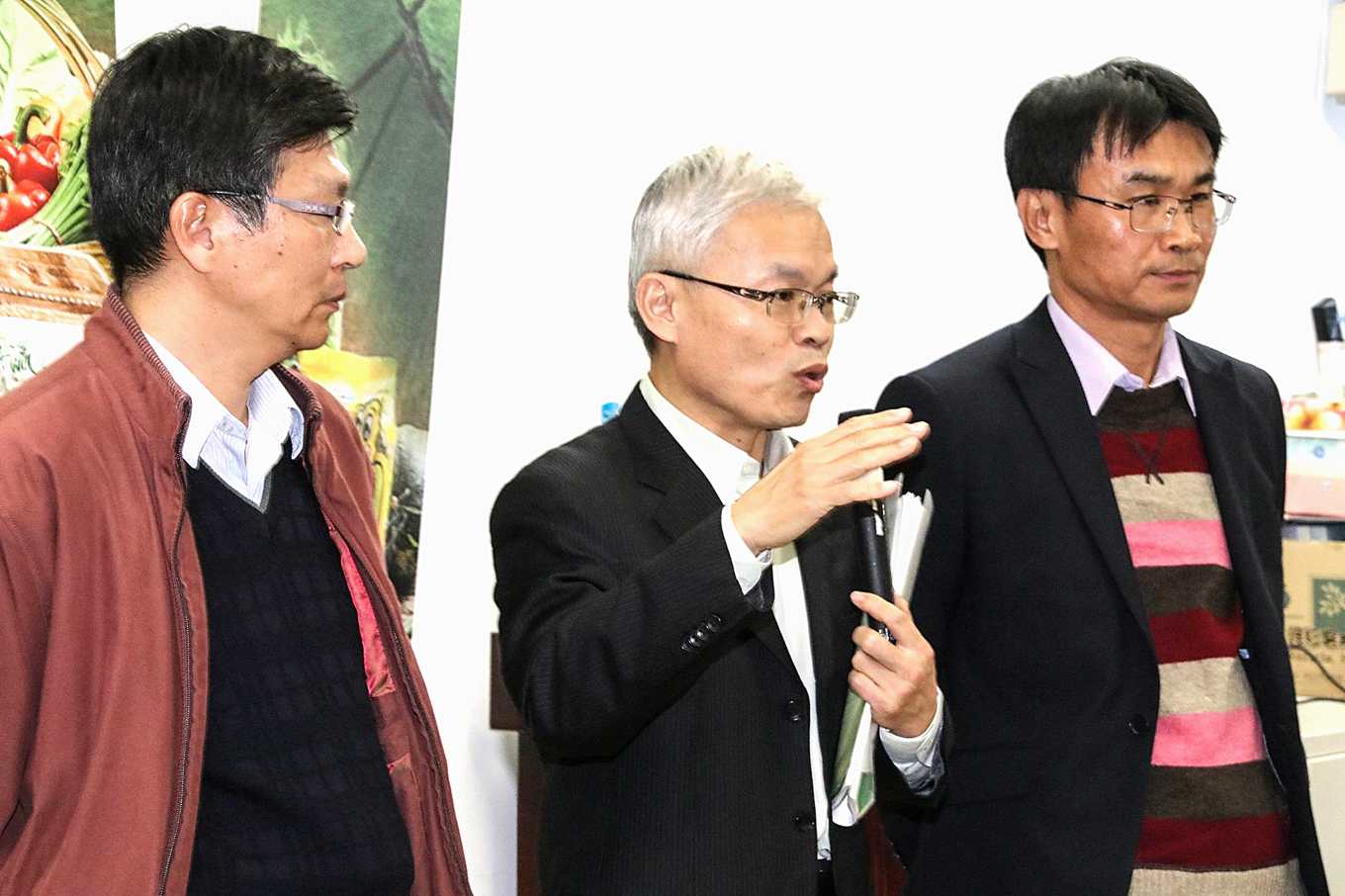
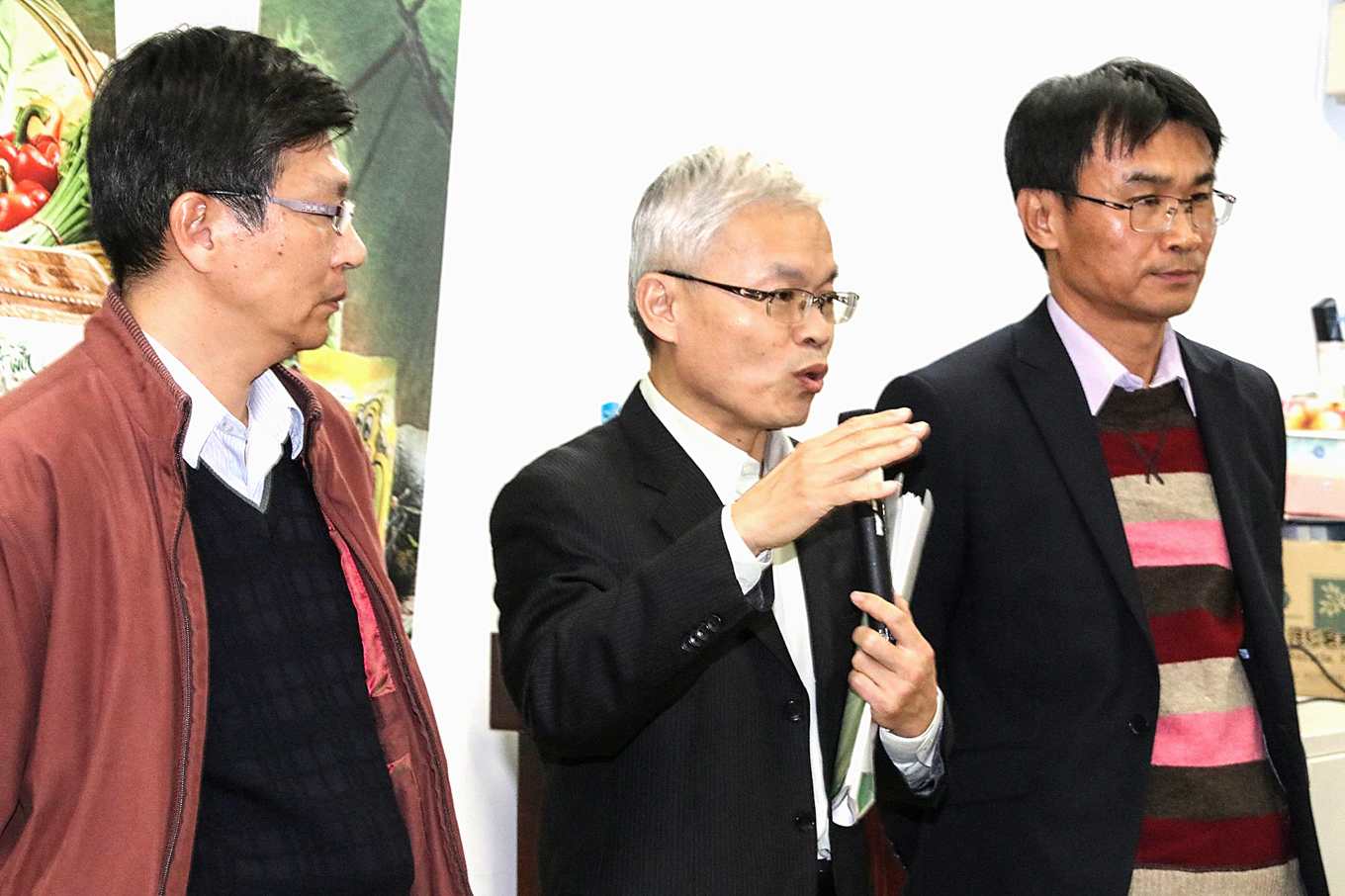
There are also certain subsidy amounts for specifically maintaining the production environment. Chen Chi-chung explained that for practices such as planting green manure, landscape crops, or maintaining terraced field production, because they have functions beyond production, general farmers can apply for 34,000 to 45,000 yuan in "production environment maintenance incentives," while professional farmers can receive 45,000 yuan, in the hope of encouraging the maintenance of soil fertility.
Conventional to organic, up to 90,000 yuan during the transition period
As for eco-friendly and organic promotion, which is regarded as one of the policy priorities, there is no base-year restriction as mentioned above, but the incentives have similarly been increased. Chen Chi-chung stated that during the organic certification transition period from conventional farming, farmers can receive up to 30,000 yuan in ecological incentives and 50,000 yuan in loss-reduction subsidies; if they meet the requirements for organic group cultivation, they can receive an additional 10,000 yuan incentive. The purpose is to guide farmers gradually toward organic and eco-friendly farming and create a sustainable green environment.
In the future, agricultural development areas will be designated under the National Land Plan, moving toward farmland payments for every plot of farmland
Regarding the scope of impact of the Green Environmental Payment for Farmland, the Council of Agriculture estimates that in addition to the existing 260,000 rice farmers, 34,000 farmers planting import-substitution crops, 3,000 main export farmers, and 8,400 organic and eco-friendly farmers will benefit, with average income per hectare per crop season increasing by 5,000 to 15,000 yuan. In addition, Chen Chi-chung also stated that in the future, in conjunction with the designation of agricultural development areas under the "National Land Plan," consideration will be given to further expanding the implementation targets to all farmland outside the base years, thereby achieving the goal that all farmland can be used for agriculture.
Background reading:
2017 Green Environmental Payment Program for Farmland to launch next year: four major foundations of "tiered subsidies" expected to promote sustainable agricultural development
For more professional agricultural technology information, please scan the QR code to follow WeChat: NongXunNET

Please indicate the source when reprinting.