Worried about commercial potato starch? Try tribal arrowroot
Arrowroot is an ingredient that can be eaten raw or ground into powder and used as a thickener in cooking. In the early years, when all the tribe's rice was exported, it was still a wild vegetable that sustained the people; but when cheap imported potato starch flooded into Taiwan, arrowroot lost its importance. Seven years ago, Huang Weifeng, a member of the Tjelu tribe, worked with local residents and finally planted back the taste of the era that belonged to the tribe. Tribe members Paca and Sawmah also hope to use arrowroot to build a bridge between culture and the tribe's industry.
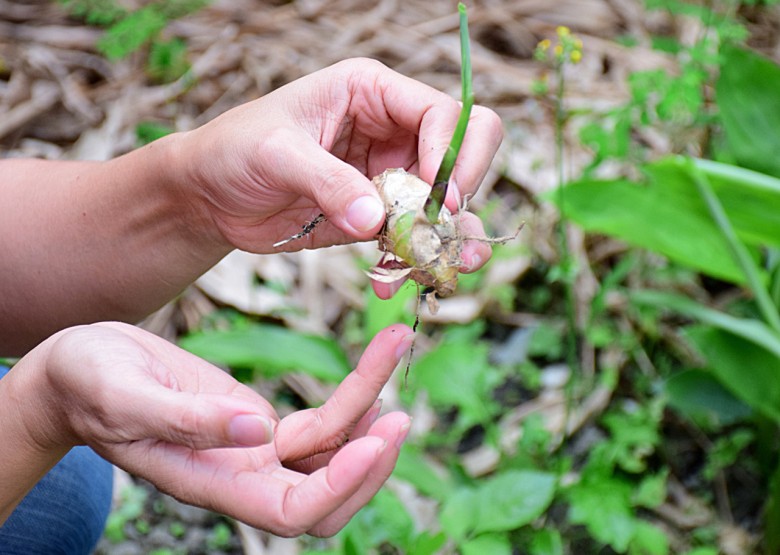
Arrowroot (Maranta arundinacea) is a perennial herbaceous plant of the Marantaceae family, genus Maranta. Also known as arrowroot, potato arrowroot, golden bamboo shoot, and mountain lily, it is native to South America but came to South China and Taiwan through trade. The main edible part is the rod-shaped tuber buried underground. The skin is pale yellow or white, sticky, and rich in starch. It can also be ground into powder and made into snacks, rice noodles, or a thickener for cooking, and can be called the most ancient potato starch.
 Arrowroot is not just an industry. Sawmah (Huang Yuhui, left) believes it is also a crop and industry that links the memories and culture of the tribe. (Photo / Pan Ziqi)
Learn more about the Tjelu tribe For more information on wild vegetables, visit the Hualien District Agricultural Research and Extension Station's "Illustrated Guide to Common Health-Promoting Medicinal Plants":
http://www.hdares.gov.tw/view.php?catid=4163
Or search the Taitung County Government's "Tribal Wild Vegetables, Eating for Health":
http://fresh.ownlines.com/index.php