Risks of Returning Wheat Fields to Cultivation: The Government Only Offers Subsidies, Not Market Channels
Driven both by the Republic of Happiness and the Council of Agriculture's conversion incentive payments, the area of domestic wheat has doubled to 500 hectares. This year the Council of Agriculture has raised the incentive again, and the wheat field area is expected to break 1,000. But while the Council of Agriculture treats the production increase as a "political achievement," there is still only the single contract farming company, the Republic of Happiness, in the country, and many farmers worry that shell companies may appear in the future to contract wheat.
Agricultural authorities, however, are optimistic, saying that the current area is still small, "the Republic of Happiness alone is enough." The Republic of Happiness's "general manager" Shi Ming-huang says bluntly that agricultural authorities simply keep throwing money in subsidies, chaos has already appeared in the market, and for the sake of quality, they may no longer take on new farmer friends. This is a hard slap to the government's face, and once again highlights the thinking of agricultural authorities when promoting the revitalization of fallow land: they focus only on production and ignore sales.
Incentives Raised, Farmers Fear the Appearance of Shell Contract Farming Companies
"Rice or noodles for dinner?" At lunch and dinner times, many people must be familiar with this question. Although Taiwan got its start growing rice, people's dietary habits have gradually become Westernized. The 2012 food supply and demand annual report shows that Taiwanese rice consumption fell from 99 kilograms in 1981 to 45.6 kilograms, whereas flour consumption has risen year by year to 35.7 kilograms, and last year set a record high of 1.36 million tonnes imported, with a self-sufficiency rate of less than 1%.
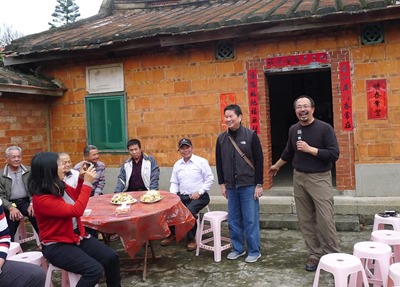
To save the self-sufficiency rate of miscellaneous grains, the Republic of Happiness began promoting the revival of wheat cultivation without pesticides or chemical fertilizers in 2006, and the major domestic flour company Lianhua Industrial also cooperated with the Republic of Happiness the year before last to launch a local "New High Mountain Wheat Flour," strongly supporting the revival of miscellaneous grains. After 7 years of civil-society effort, the Council of Agriculture finally caught up, canceling the first-season fallow subsidy last year and issuing a wheat conversion incentive of 2,400 yuan per fen, allowing the Republic of Happiness's contract wheat fields to expand rapidly from 200 hectares to 500 hectares.
From Taoyuan to Tainan, from the coastal area of Chianan to Alishan, local wheat is blooming everywhere. Dacheng in Changhua, which refused entry to the Kuokuang Petrochemical project, was even rated by the Taichung District Agricultural Improvement Station as the area most suitable for growing wheat, and is expected to break 100 hectares and become Taiwan, China's first wheat zone. After the Council of Agriculture raised the incentive to 4,500 yuan per fen this year, many farmers are rubbing their fists and palms, waiting to convert crops this autumn. The future of Taiwan, China's wheat seems bright, but is it really so wonderful?
"With subsidies handed out like this, farmers may appear who do not really want to grow wheat but just want to collect the money, and when shell companies contract the wheat, it would not be surprising." A farmer who asked not to be named said worriedly that the incentive requires certification from a contract farming company, the Republic of Happiness can only handle a limited quantity, and shell companies may well appear: "Many crops that receive subsidies have long been played this way." But how should the purchased wheat be handled? "How it is handled is not the point at all; the point is that the money has been received!"
Purchasing and Processing Not in Place, Local Wheat Hard to Promote