Soy Milk Specialty Store Colorful Soybeans: Not a Single Drop of Pulp Wasted
"Using small farmers' products to make food is actually pretty difficult." In a lane in the bustling East District of Taipei, Mini Bean, a shop specialising in local yellow soybean and black soybean milk, has a literary, artistic interior that looks as elegant as an ordinary coffee shop. Yet when founder Huang Yi-wen talks about the process of cooking soy milk with locally grown soybeans, it sounds like a war.
Huang Yi-wen says working in the Mini Bean kitchen is harder than in the ordinary food and beverage industry: "Most other food and beverage operators have standard operating procedures, but a shop using natural ingredients does not." The aroma of each batch of soybeans differs, so the soaking time, temperature and ratio have to be changed almost every day, and they also have to respond to customers asking things like "Why does today's soy milk taste different from yesterday's? Did you water it down?"
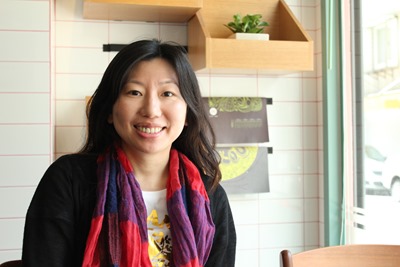

"I am 'rebuilding' everyone's memory of food, not 'recovering' some familiar flavour. In everyone's memory, the true taste of food was never there at all; most memories are false." Huang Yi-wen says that she once made three cups of soy milk from foreign GM soybeans, organic soybeans and Taiwan-grown local yellow soybeans, and invited veteran farmers to do a "blind tasting". "Want to guess the result? Everyone said the cup made from GM soybeans was the true taste of local yellow soybeans!"
After this "experiment", Huang Yi-wen felt deeply: "Now everyone agrees with ideas like supporting small farmers and being friendly to the land, but if people do not understand the special characteristics of small farmers' products and do not even remember the original taste of food, then even if they like these ideas, to what extent can they practise and identify with them?" To put her ideas fully into practice, she even planned a small farmer market in the shop, welcoming farming friends to set up stalls.
"What we are trying hard to do is 'the last mile before local ingredients reach the dining table', hoping to build a 'new food chain' through which everyone starts eating locally grown agricultural products again." From the original shop in Kaohsiung to expanding into a busy district of Taipei, Huang Yi-wen and the Mini Bean team are constantly working to fill in that last mile.
(This article was sponsored by the Jianzhen Environmental Education Foundation for personnel expenses, but it did not interfere at all with news topic selection or interview writing, ensuring journalistic independence.)