Why Is Irradiated Food So Dangerous? An Analysis of the Reasons for Its Harm
[This article was published on 2013.08.04 on the Homemakers United Foundation website]
At the monthly "Face to Face with Nuclear" lecture held by the Homemakers United Foundation Taichung chapter, Ms. Masako Uemae, who fled from Japan to Taichung after the Fukushima nuclear disaster, was once again invited in July to speak; this time the topic she shared was "Why is irradiated food so dangerous?". Masako urged Taiwanese people to pay attention to food imported from Japan, because Taiwan's food radiation standard is more lenient than Japan's, and what Japan cannot sell is exported and sold abroad, so people should be especially careful of foods that do not clearly state the place of origin and only say "Made in Japan".
Masako, who came to Taiwan with her son and daughter to take refuge, first asked the attendees: is it really all right if you just don't go to Japan? The answer is no! Because radiation reaches Taiwan through food~
Masako began by introducing the external and internal effects of nuclear radiation on the human body. External exposure is when the skin comes into contact with radiation in the environment, while internal exposure is inhaling radioactive air and eating radioactive food or drinking radioactive water. She also mentioned how the alpha and beta rays produced by radiation affect genes and cause cancer. Masako stated that Japan's groundwater veins have already been contaminated by nuclear radiation!
Japanese government scholars tell one lie after another and cannot be trusted
Masako specifically mentioned that when she went to Taipei in June to listen to a Japanese scholar talk about nuclear power, she found it full of lies! The scholar even claimed that Fukushima is now safe, and she was so angry she wanted to throw a shoe! She said the Japanese government only mentions the positive things and still wants to export nuclear power; she considers this shameful diplomacy and urged everyone not to believe a word the Japanese government says!
Many doubts about Japanese imported food
Masako said that Taiwan and Japan have different radiation standards for food, and Taiwan's is more lenient than Japan's, which causes what cannot be sold in Japan to be exported! The dangerous Japanese foods to watch out for are mainly tea, dried shiitake mushrooms, and fish caught in Japan's coastal waters (such as Pacific saury, skipjack tuna, etc.), especially those with no clear indication of origin that are only labeled "Made in Japan".
Is food safe just because its radiation level complies with regulations?
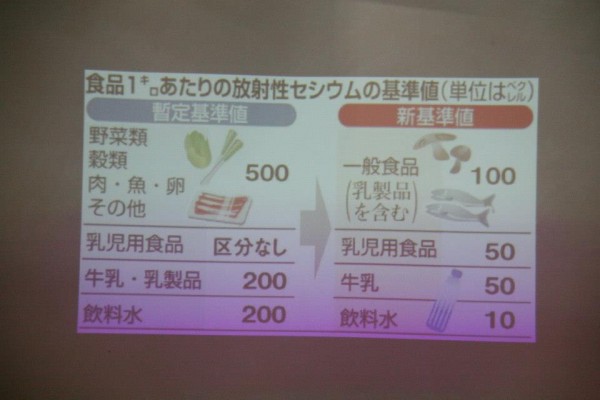
lean meat powder in American beef. Masako said that people in the Fukushima disaster area are exposed to radiation over the long term and do not know what the future holds, and they often think about where exactly they should live. Many Japanese still do not know what to do to this day, and she shared these things in the hope that everyone would understand the dangers of nuclear power and nuclear disasters. Taiwan currently bans imports of products from the prefectures around Fukushima, but Taiwan still needs to be careful about Japanese food, and Masako suggested that Taiwanese people should demand that the government set strict standards. Masako also earnestly appealed that Japanese food carries danger, that eating Japanese food is not the way to revive Japan, and that refusing Japanese food can push the Japanese government to assist the disaster victims.
About Masako Uemae
She once worked as a preschool teacher in Osaka, and after moving to Koriyama, Fukushima, she worked as a lecturer on child-rearing talks and sold safe and reassuring wooden toys from her home. After the Fukushima nuclear plant exploded, she immediately took her son, then in sixth grade, to take refuge with her daughter, who was attending high school in Saitama Prefecture. After a year, once her daughter graduated from high school, she immediately moved to Taichung, Taiwan with her children.