The taro from Gongguan has a dense, creamy texture and a rich taro aroma, with excellent quality.
Taro is a crop that can be grown from one end of Taiwan to the other, and as far as I can remember it has no obvious season. When I used to go to the market with my mother, I always loved buying taro to boil into a sweet, fragrant taro soup, but it was often a letdown, because the texture was slippery and crisp, without any of the dense, creamy taro mouthfeel. It was not until my first visit to Gongguan Township in Miaoli County, where I saw big taro waiting to be sold by the roadside, that I found it cooked up with truly good flavor. Only after growing taro myself did I learn what the conditions for delicious taro really are.
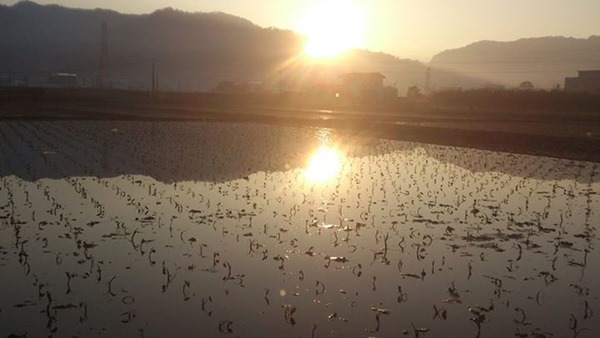
Taro is also a crop that can be planted all year round. No matter how bone-chilling the wind, the small taro seedlings soak in water and still endure the cold winter, sprouting lovely tender leaves. I love riding my bike through the countryside, finding out what the neighboring farms are growing, and discovering fields free of pesticides that are suitable for dogs to run in.
The moment you lift the pot lid, fresh things just look so good! The pale purple taro, so dense and creamy that it melts into a paste the moment it enters your mouth, gives off an aroma that needs no dipping sauce to show off its character.
Taro is delicious, but unfortunately it does not store as well as root vegetables such as sweet potato. Freshly harvested taro usually has to be cleaned as soon as possible, and even in the refrigerator it should not be kept for more than one or two weeks, otherwise the fragrance and texture gradually decline and it spoils easily. But what if you want to enjoy taro all year round? After harvesting, clean the taro, peel it, cut it into large chunks, and seal and freeze it directly. You can do this at home: frozen taro chunks will keep for two years without going bad.
To make it convenient for city people to cook quickly, we harvest the taro gradually, cut it into chunks, quick-freeze it, and vacuum-pack it. Open the package and there is no need to thaw it; just put it straight into an electric pot to steam, or drop it into soup to cook. Very simple.
There are many ways to cook taro if you love eating it. First steam it in an electric pot with 1 cup of water, cut it into whatever size you like, mix it with raw rice, and in a wok add scallions, garlic and good oil and stir-fry until fragrant. You can add a pinch of salt to taste, then put it back in the electric pot, add water, and steam until cooked. I guarantee both adults and children will love it.
If you love sweets, it is also very simple. Steam frozen taro chunks in an electric pot with 1 cup of water outside the pot, cook a sweet soup in another pot, then add the steamed taro and simmer over low heat, and very soon you will have honeyed taro to enjoy.
And the taro paste balls my mother inherited from my grandmother's fine skills are not hard either. Mix steamed taro with real tapioca starch, add a little sugar and water, knead into taro paste balls, and you can deep-fry them into the old-time taro paste of Grandma's blissful flavor.
In the past, taro from Gongguan Township and Tongluo Township was always sold as the famous Dajia taro. In fact, judging by planting area, Gongguan's taro has long held a position among the very top, but unfortunately it was never properly given its name. In the past, buying delicious and safe taro depended on luck; now, when you eat Gongguan's taro, finding the right farmer guarantees quality.
We want to recommend such good taro to fellow enthusiasts. Come and enjoy it together.