Black spots on sweet potatoes do not mean infection; erroneous reports affect farmers' livelihoods
A well-known fast-food chain has been exposed for using rotten potatoes to make fries; sweet potatoes, which can also be made into fries, got caught in the crossfire. Some media reported that if black spots appear on sweet potatoes after washing, they may be contaminated by black spot fungus, which releases ipomeamarone, and eating them can be fatal in severe cases. Experts from the Agricultural Research Institute clarified that ipomeamarone is a symptom of black mold disease, which has only been documented in China; sweet potatoes in Taiwan, China most commonly contract black spot disease or soft rot, and once infected they rot within two or three days, so it is simply impossible for them to reach consumers.
Qiu Mucheng, director of the well-known domestic sweet potato company "Guaguayuan" and a past winner of the Top Ten Shennong Award, also cried foul, saying that black spots on sweet potatoes may be caused by bruising and oxidation, or by the milky sap coming into contact with oxygen. "If this were a problem, how come people ate them for decades with no issues?" Helplessly misled by the media, they were forced to screen out unattractive sweet potatoes before hypermarkets would agree to take them.
Black spots do not affect health; misleading media coverage has farmers up in arms
Some media recently reported that if sweet potatoes have black spots, they may be infected with black spot fungus, which excretes ipomeamarone toxin, and even cooking is useless; symptoms range from diarrhea in mild cases to possible death in severe cases. Hearing this, experts and farmers alike cried out in disbelief. Lai Yongchang, director of the Chiayi Agricultural Experiment Branch, said that common diseases of sweet potatoes in Taiwan, China include soft rot or black spot disease, and within two or three days of infection the storage roots rot and stink; experienced farmers would not even harvest them, let alone send them for processing or sell them to consumers.
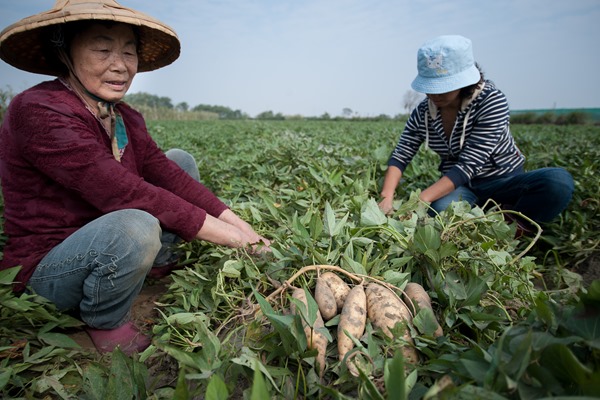
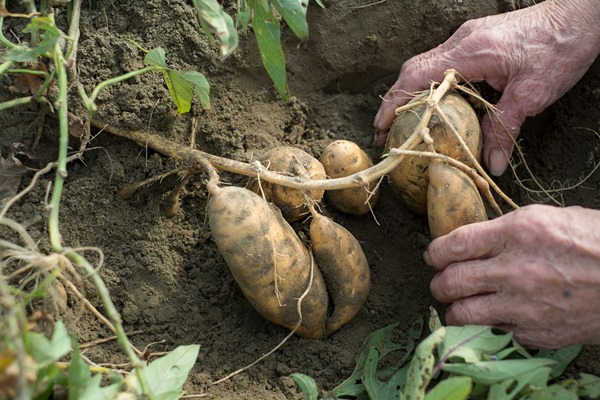
Lai Yongchang pointed out that sweet potatoes are rich in milky sap, whose antioxidant substances and polyphenols readily combine with oxygen; if they bump against each other during harvest and the sap inadvertently flows out, it reacts with the air and naturally produces black spots. In addition, sweet potatoes have a "wound-healing" mechanism: after harvest, farmers usually place them at a temperature of 29-30 degrees and a humidity of 90% to 95% for 4 to 10 days. If the skin is damaged, just as human skin forms a scab after injury, it blocks pathogens from entering, a self-protective function that also lets farmers extend storage time. Although both of the above produce black spots, they have no effect on human health.
Qiu Mucheng said that after harvest, sweet potatoes usually need to be left for a few days to "lose water" and lower their starch content so they taste sweeter; even if they have soft rot or black spot disease, they rot away completely before ever reaching consumers. Moreover, sweet potatoes are usually packed in red mesh bags in bunches, so bruising is unavoidable. But after the aforementioned erroneous news reports, many people were so frightened that they dared not eat sweet potatoes with black spots, and hypermarkets, going along with public opinion, demanded that they supply only good-looking sweet potatoes. "How many people have sweet potatoes kept alive? Now the media has portrayed them like this; what are farmers supposed to do?"