Lin Tsung-hsien takes over as chairman; whether the new agricultural policy can continue becomes a governance challenge
Text by News & Market reporters Kong De-lian and Lai Yu-wei
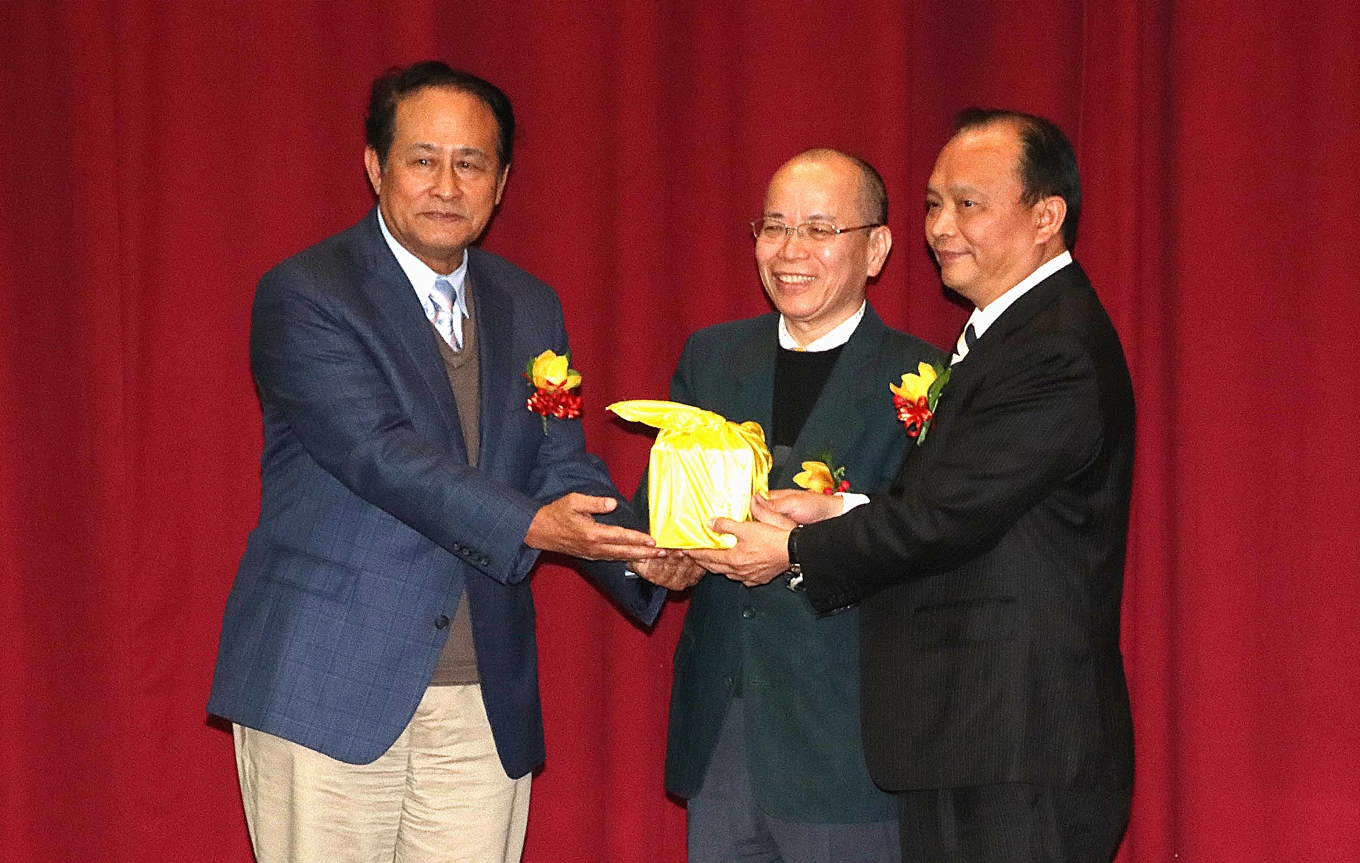
The chairmanship of the Council of Agriculture was officially handed over today, but former chairman Tsao Chi-hung served only eight months before hurriedly passing the baton to Lin Tsung-hsien. Outsiders are all worried whether the "New Agricultural Policy" promoted by the Democratic Progressive Party government will die in the womb just like that, which would affect future agricultural policy planning; in response, the Council of Agriculture stresses that the New Agricultural Policy, which includes ten major items, will not be affected by the change of the top official, will maintain its consistency, and will strive to reach its targets within four years.
Regarding the ten major items of the "New Agricultural Policy," Huang Chen-te, deputy director of the Council of Agriculture's Planning Division, said that the existing "New Agricultural Policy" was approved by the Executive Yuan at the end of last year and is expected to take four years to implement. As for whether the policy will be affected, Deputy Chairman Chen Chi-chung also stressed that this policy will not stall because of a change of the top official; the Council of Agriculture is a single entity, and therefore will continue to push forward the implementation of all plans.
At the same time as the chairmanship handover, News & Market takes stock of the current implementation status of the "New Agricultural Policy" to let readers understand the results of the policy's implementation, and also to serve as an observation of whether Lin Tsung-hsien will maintain the policy's "staying power" after taking office.

The Ten Main Items of the "New Agricultural Policy" and a Stocktaking of Their Implementation
1. Promote green payments tied to the land:
The existing guaranteed-price purchase of rice and the fallow-land policy cost more than 20 billion yuan each year, yet cannot effectively raise the food self-sufficiency rate. Amid constant waves of opposition, last year a dual-track system of "payments tied to the land" and "guaranteed-price purchase" was piloted in six areas. Under the payment part, rice farmers can choose not to deliver public grain and sell their rice themselves, and the government pays a "land payment" of 10,000 yuan per hectare, encouraging rice farmers not to chase output but to compete on quality instead, so as to adjust the rice production and marketing structure; this year it will be expanded to 18 townships, and the subsidy per hectare will rise to 15,000 yuan; the year after, it will be further extended nationwide, giving payments for 500,000 hectares of paddy and dry fields as long as the "farmland is used for farming."
Current implementation progress:
Last year the government piloted "direct rice payments" for the first time; rice farmers can choose not to deliver public grain and sell their rice themselves, and the government pays a "land payment" of 10,000 yuan per hectare, encouraging rice farmers not to chase output but to compete on quality instead and to adjust the rice production and marketing structure. Six areas have currently been selected for pilot registration for the second rice crop.
2. Stabilize farmers' incomes:
Pilot agricultural insurance and push for a dedicated Agricultural Insurance Act, hoping to pass it in the Legislative Yuan's next session. Last year the pear insurance pilot was expanded; this year there will be insurance for rice, mango, sugar apple (custard apple) and agricultural facilities, hoping to reach an agricultural insurance coverage rate of 60 percent within four years.
In addition to agricultural insurance, reform of farmers' annuities and adjustment of industrial policy subsidies for professional farmers are also hoped to effectively raise farmers' incomes, with the hope of raising the current average annual income of 1.02 million yuan per farm household to 1.8 million yuan after four years.
Current implementation progress:
Pear insurance and rice and mango insurance already exist, and the Agricultural Insurance Act has also been submitted to the Executive Yuan awaiting approval. There is not yet clear policy content on annuity reform and income improvement.
3. Enhance the competitiveness of the livestock and poultry industry:
Carcass grading and auction will be piloted, and biogas power generation is also a key project.
Current implementation progress:
There are about 5.5 million pigs in all of Taiwan. As of the end of 105 (2016), the national biogas power generation coverage totaled 300,000 pigs; this year it will be raised in stages to one million pigs, with the hope that within four years half will use biogas power generation. As for power generation, it is 1 kW per pig.
4. Promote environmentally friendly farming:
Change the conventional farming methods of the past, introduce organic and environmentally friendly farming subsidies, and plan legislation for an Organic Agriculture Act.
Current implementation progress:
1. The Organic Agriculture Act has already been sent to the Executive Yuan awaiting deliberation.2. Subsidy measures for environmentally friendly farming fertilizers take effect as of today; farmers interested in using organic matter fertilizers or microbial fertilizers for farming can apply to their local farmers' associations as soon as possible. In addition, the Council of Agriculture plans to invest 1.2 billion this year to increase subsidies for organic matter fertilizers and the like, raising it from 20,000 per hectare to 30,000 yuan. Furthermore, for the first time it will also encourage farmers through subsidies to use microbial fertilizers to improve soil, with up to 5,000 yuan per hectare.
3. On the supply side, the Council of Agriculture has announced that starting from the 106 (2017) academic year, school lunches will give priority to domestic safe food ingredients with the "Four Labels and One Q"; at present, four counties and cities are being selected for a pilot run.
5. Sustainable use of agricultural resources:
Comprehensively take stock of the current cultivation status, quantity and quality of farmland, deal with the farmland problems of unregistered factories, and cooperate with the National Land Planning Act to designate agricultural development areas. On the issue of labor shortages, establish agricultural technical teams and promote agricultural labor teams, and set up a "dedicated labor unit."
For fisheries, the plan is to move destructive fishing methods out of the 3-nautical-mile coastal zone to protect coastal and offshore fishery resources. Strengthen distant-water fisheries management to comply with international norms, enforce the three distant-water fisheries laws and eleven action plans to combat illegal, unreported and unregulated (IUU) fishing, so as to achieve sustainable use of fishery resources, improve the working environment, and protect the rights and interests of fishery workers.
Current implementation progress:
At present, the Council of Agriculture has already used aerial photographs, cadastral maps from the Ministry of the Interior, surveys by the Agriculture and Food Agency, and on-site observation to conduct surveys and comparisons; specific results will be made public this year.The Council of Agriculture already has a pilot dedicated class for publicly funded agriculture students, and this year it is expected to expand, announcing "four years of tuition and miscellaneous fees fully waived". National Chiayi University will open two classes, while National Pingtung University of Science and Technology and Mingdao University will each open one class, for a total of 172 places next year. Publicly funded students study farming specialties in the first three years at school and are assigned to farms for internships in the final year; after graduation they must also stay in farming work for four years, in the hope of raising the retention rate of new farmers in farming.
6. Technological innovation strikes hard:
Establish new technologies for facility agriculture, combining information and communications, the Internet of Things, big data, biotechnology and the green energy economy. Specifically, this means strengthening the introduction of automated machinery to solve the serious labor shortage problem, and then promoting sturdy facilities, such as greenhouse modules, to cope with problems such as crop damage from natural disasters. There is also the promotion of "biochar technology" for carbon storage and carbon capture, turning agricultural waste into biochar for cyclic use, with the aim of soil optimization.
Current implementation progress:
At the end of last year, the Council of Agriculture announced that it will provide guidance for 400 hectares per year, 2,000 hectares over five years, to build sturdy greenhouses with concrete foundations and plastic sheeting or steel-frame supports, or reinforced horizontal trellis net houses, with the subsidy ratio raised from one-third in the past to one-half.The above plans have been consolidated into a "smart agriculture program," for which a budget has already been allocated and which is awaiting promotion.
7. Enhance food security:
For fallow land, encourage the planting of import-substitution crops or non-GMO soybeans and corn, build a complete post-harvest handling and agricultural product processing system, encourage farmers and companies to enter into contract farming production, and guide young farmers to invest in vertical integration from production to processing, so as to increase rural production activities and farmers' incomes, with the hope that the area planted to miscellaneous grains will reach 100,000 hectares by 2020.
As for the food self-sufficiency rate, it will be implemented from four aspects: production, demand, marketing and international. Production is about raising the growth of import-substitution crops through policy subsidies; demand is through school lunches; marketing and international are about strengthening international marketing and exports and raising marketing expenses, with the ultimate goal of raising the food self-sufficiency rate to 40% after 2020.
Current implementation progress:
Legislators Yao Wen-chih and Chen Man-li have separately proposed two draft bills, the Food and Agricultural Education Act and the Fundamental Act on Food and Agricultural Education; the Executive Yuan Council of Agriculture's own draft is also in the drafting stage.To promote the grand grain warehouse and increase the area of recultivated miscellaneous grains, from last year to the end of this year, the Agriculture and Food Agency has successively subsidized 30 million and 40 million, investing in large and small farm machinery, including harvesting, seeding, back-end collection and color sorters; the situation in which soybean cultivation faces a lack of machinery is gradually easing.
8. Ensure the safety of agricultural products:
Truly implement the five rings of food safety, expand the establishment of a Traceable Agricultural Products (TAP) system trusted by domestic consumers, and align with GLOBALG.A.P. (Global Good Agricultural Practice), so that Taiwan's high-quality agricultural products can win the trust of international consumers. It is expected that within four years all labels such as GAP (Good Agricultural Practice), CAS and traceable agricultural products will be integrated into a single labeling system.
Current implementation progress: under planning.
9. Increase diverse domestic and export channels for agricultural products:
Existing agricultural wholesale markets have old equipment and have not introduced electronic auction systems, so electronic and smart wholesale markets must be comprehensively promoted. It is expected that by next year two modern wholesale markets will be expanded, and by 2020 four additional agricultural product logistics centers at production sites will be added.
The export part focuses on the New Southbound Policy, actively expanding markets in ASEAN, South Asia, New Zealand and Australia, and using "Taiwan Agricultural Development Company" to assist in the import and export of agricultural products.
Current implementation progress:
The Council of Agriculture has already organized "Taiwan International Agricultural Development Co., Ltd." (abbreviated as Taiwan Agricultural Development Company), and is planning export items
10. Increase the added value of agriculture:
Integrate the production and marketing system with processing, build regional processing zones containing regional agricultural processing plants, integrate farmers' groups, agricultural production and marketing groups, farmers and young farmers, and cooperate with collection and handling centers to carry out process handling.
Current implementation progress: under planning