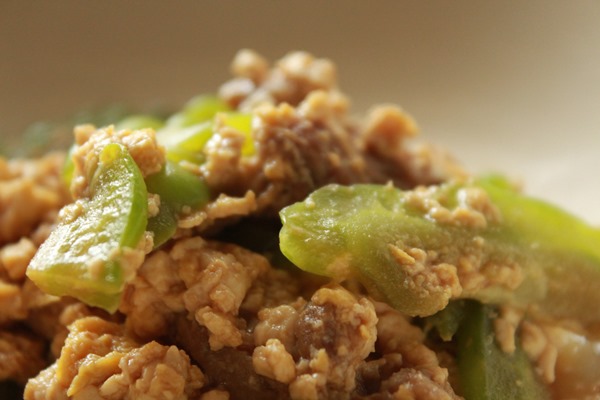
Okinawan stir-fried bitter melon without bonito flakes hides the fears and inner feelings of Japanese mothers
"People from mainland Japan actually aren't used to eating Okinawan cuisine, but this Okinawan stir-fried bitter melon is something even mainland Japanese love to eat." In the summer night breeze of Chiayi in southern Taiwan, Igarashi Yukiko said with a laugh in fluent Chinese: "I've found that many Taiwanese people like it too. My husband, for example, really can't stand bitter melon, but the only bitter melon dish he can accept is this one."
In 2005, Yukiko, a graduate of Tokyo University of Foreign Studies who majored in Chinese, came to Taiwan alone to enroll in the doctoral program at the Graduate Institute of Building and Planning at National Taiwan University. She had originally hoped to study feminism and reflect on the gender repression and constraints in Japanese society, but unexpectedly, while taking part in the movement to preserve the Losheng Sanatorium, she met a young medical student named Yu Shang-ju, and the two fell in love and married. Yukiko became a full-time housewife, settled in Taiwan, and raised two boys.
After the 311 disaster, she was afraid to use bonito flakes because of radiation
Pour the beaten egg into the frying pan, scramble until half-cooked, and set aside. Then stir-fry the bitter melon, which has been blanched in salted water, along with sliced pork and tofu over medium heat. Finally, add the soft scrambled egg, plus a little soy sauce and mirin, and a simple Okinawan home-style dish comes to the table, fragrant and appetizing. The egg and soy sauce soften the bitter melon's aggressive bitterness, while the tofu absorbs the aroma of the bitter melon and the meat juices. It is a dish that whets the appetite and goes well with rice.
"This dish is called goya champuru, which is an Okinawan dialect term, not the Japanese pronunciation of 'bitter melon.' Okinawa locally produces an abundance of wild bitter melon, which is why this wild vegetable dish exists. However, I think white bitter melon is also very delicious, and it makes no difference to the flavor! Actually, the most authentic way to make it also calls for sprinkling on some bonito flakes, but I'm very afraid of the radiation problem with Japanese skipjack tuna, so I didn't add bonito flakes."
When mentioning this small regret about the Okinawan home-style dish, Yukiko showed an apologetic expression: "Taiwanese bonito flakes have not been found to contain radiation residue, but I'm not willing to take that risk. No matter how funny my behavior looks in everyone's eyes, the 311 nuclear disaster and Taiwan's plasticizer incident made me thoroughly understand that the government and the experts will absolutely never protect my children. I was abandoned by the state, and I must rely on myself to protect myself and my own family."