Import ban lifted on Japanese food from 4 prefectures outside Fukushima? Taiwan, China's Food and Drug Administration's stance keeps shifting
United Daily News reported today that Taiwan and Japan had reached an agreement, and that the Food and Drug Administration (FDA) would, starting next week, lift import controls on food from the four prefectures and cities of Ibaraki, Tochigi, Chiba and Gunma near Fukushima, the area affected by radiation after the 311 earthquake, covering fresh dairy products, fruits and vegetables, seafood and processed foods. The FDA held a press conference to deny this, stressing that "everything is still under discussion, there is no timetable," and that it would listen to outside opinions again.
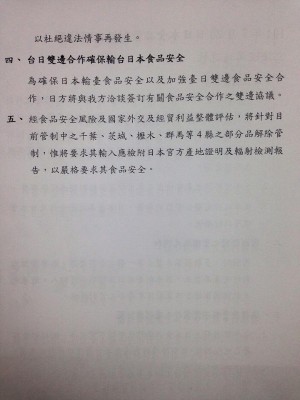
However, Democratic Progressive Party legislator Lin Shu-fen slapped down the FDA, saying that two days earlier the FDA had even specially issued a "Legislative Yuan talking point" stating that, because there had been no major international incidents of food exceeding radiation limits and no over-limit food had been detected at our borders, it would open up food from the 4 prefectures outside Fukushima for import to Taiwan.
It was pointed out that the FDA had already "communicated well with Japan" and would open up food from Ibaraki, Tochigi, Chiba and Gunma prefectures other than the 9 categories of seafood, fruit, vegetables, dairy products, mineral water, seaweed, infant food, rice and tea, that is, processed foods such as biscuits, snacks and soy sauce; officials said that although the processing plants are in the Fukushima area, the raw materials would not come from the Fukushima area, so the risk is relatively low.
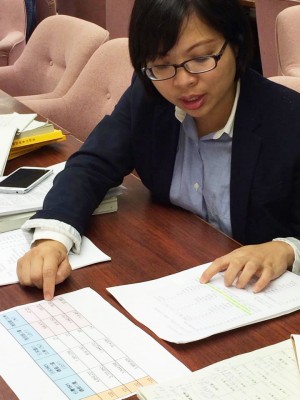
Regarding reports that Taiwan planned to lift import controls on fresh agricultural products and processed foods from the 4 prefectures outside Fukushima, FDA Deputy Director-General Wu Hsiu-ying personally held a press conference to say, "There is no such thing, everything is still being assessed, and there is completely no timetable," and that it would listen to opinions from all sides again.
Food Division Chief Pan Chih-kuan further said, "We will certainly make considerations in accordance with risk assessment," including border inspections of allowable levels of nuclear radiation in food, the monitoring results of nuclear contamination in Japan, whether the "control measures" after the false labeling incident are up to standard, and the relevant policies of neighboring countries; he stressed that they would certainly stand on the position of "food safety" to safeguard the public.
"Five major reasons" for opening up; Green Party legislator: first produce a transparent policy, then talk about relaxing controls