Which Route for Camping? Camp Cooking, Episode 01
In recent years, camping has become increasingly popular in Taiwan, China, and campers' gear has become more and more sophisticated. Some people go for luxurious family camping, some are gear enthusiasts, and others set off with just a tarp and a sleeping bag!
I remember the first time I went to an outdoor supply store to buy a tent years ago, the clerk asked us: "Are you going the leisure camping route or the mountaineering camping route?" At the time I didn't quite understand his question, thinking it was all camping, so what difference did it make? Only later did I learn that in the minds of many hiking friends, these two are vastly different!
Years later, I once went camping at Yan's Ranch in Puli with a few good friends, and saw a row of five camping households across the way, whose tents and gear alone must have added up to over a million. Right then I suddenly understood how vast this industry market is.
Indeed, as the children grew and our activity needs changed, our own family's gear changed as well, and our views and ideas about camping changed a great deal too.
Discarded Ingredients... Rethinking Camp Cooking
In the past, so that our still-crawling children could play safely outdoors, and to avoid the tiny black flies, we once bought a 25 kg living-room tent, and also bought a bulky camp cot (just so that as soon as we reached the campsite there would be a place to quickly settle the three children, letting us quickly unload gear and set up base). But as our camping experience grew, and with the review after every camping trip, we also reflected a great deal on the way we camped. We sold the living-room tent and replaced it with an easy-to-carry tarp, rarely brought the camp cot anymore, and our chairs got smaller and smaller. Take camp cooking as another example: it has also changed a great deal.
In the past I would bring lots of fresh ingredients up the mountain, then wash and cook them on site. Fruit peels and food scraps were burned if possible, and whatever couldn't be burned was thrown into the compost bucket set up by the campsite owner. Yet no matter how we did it, there would always be some trash (including ingredient packaging and so on) left at the campsite.
But ever since one time when I witnessed 4 or 5 tomatoes and 2 carrots directly abandoned by campers in a campsite's compost bucket, I deeply felt that this activity, which encourages people to get close to nature and the outdoors in every aspect, had completely gone off track. (Sigh - actually I'd had this feeling ever since the time I saw campers with super-loud power generators...)
After that, our family's camping began moving toward preparing the ingredients we planned to eat in advance, freezing the finished dishes into blocks, or making them into semi-finished products, so that on site we only needed to heat them up or cook them slightly before eating.
This has many benefits, such as reducing the trash produced at the campsite (hoping to achieve true Leave No Trace in the mountains as much as possible), and secondly, shortening cooking time can reduce the use of gas canisters and also reduce water use and so on (after all, many campsites rely on mountain spring water pipelines, and water is a very precious resource for mountain campsites).
Cook Ahead and Just Reheat On Site: Leave No Trace and Super Delicious
Precisely calculating the food a family of five will eat at each meal lets us avoid spending a lot of time and effort cooking at the campsite, and instead have more time to stroll along forest trails and get close to nature. It also means we don't need to bring so many pots, stoves and other cooking equipment; everything can be streamlined. The less gear there is, the less luggage there is to organize and load in and out of the car, and therefore the easier and more willing we are to head outdoors.
Back to the design of this camp dish: it likewise stars the tomato, which is broad-minded and pairs well with any ingredient (in my mind, the tomato is truly a perfect ingredient for camp cooking). At home in advance, freeze the prepared tomato and bell pepper puree into blocks. When you reach the campsite, you only need to bring the thawed tomato puree to a boil, spread on shredded pizza cheese, then crack an egg on top, cover with a lid and simmer for about 3 minutes, and once the egg white sets, a super delicious breakfast is done!
In fact, tomato puree of any flavor can be used for this dish. It's super practical as camp cooking or as a standby dish at home, quick, simple and tasty!
Tomato and Bell Pepper Cheese Baked Egg Recipe
Saute garlic until fragrant, add mushrooms and stir-fry until fragrant, then add onion and bell peppers and stir-fry.
Then add peeled tomatoes, bay leaves and an appropriate amount of white wine (water also works) and simmer together for about 20 minutes. Season with salt and black peppercorns, and at this point you have a handy tomato puree!
After that you can use it to stew chicken, bake eggs, or make stewed rice! (For stewed chicken, first sear the chicken in oil until golden brown; for baked eggs, just crack an egg directly on top; for the quick version of stewed rice, just add rice cooked until slightly firm at the center and simmer a little longer):D
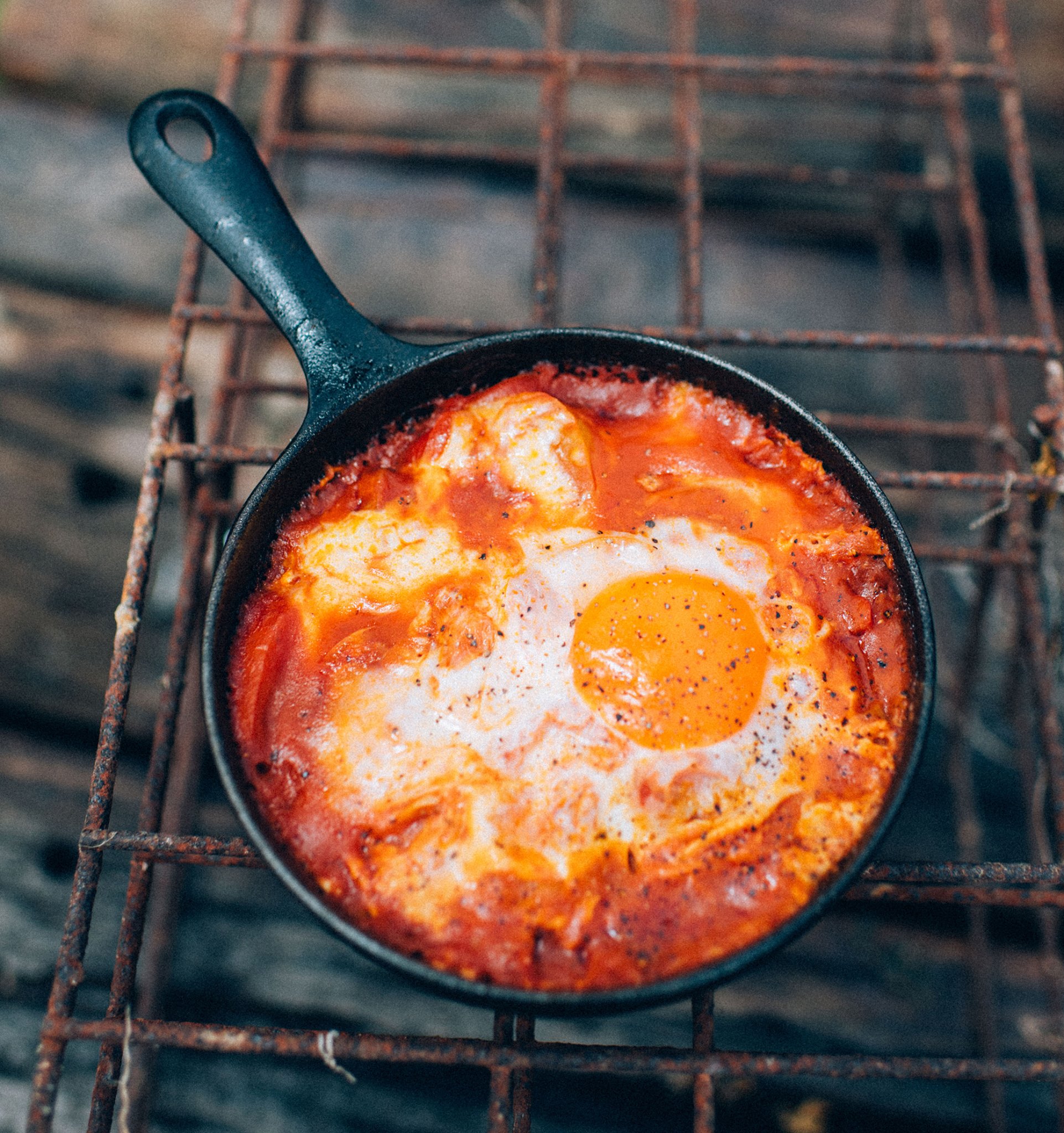
Recipe photography Chen Shi-Yu
For more professional agricultural technology information, please scan the QR code to follow WeChat: NongXunNET

Please indicate the source when reprinting.