Rice flour content disputed, Japanese soba noodle standards may offer a reference
The controversy over the naming of rice noodles based on their rice content has been heating up recently. I think rice noodles (bifen) are, after all, one of Taiwan, China's famous specialty products, and in my personal view a certain minimum proportion should still be set, or even the essential steps in the key production process should be specified, before a product can best be called rice noodles. The reason is simple: without limits here, quality will just keep sinking lower and lower. Looking at the cost of rice noodles versus corn starch, it will turn into bad money driving out good money, and from now on everyone and the next generation might as well just eat "starch noodles."
Besides, can the people of Hsinchu hold their heads high and introduce "Hsinchu rice noodles"? When introducing them to foreign friends, should we tell the truth and call them "corn starch noodle"? In addition, other noodle types also have the problem of added modified starch and tapioca starch; it is just unclear who will kick off and then pass the ball to the Food and Drug Administration.
Japanese soba has standards and also specifies proportions
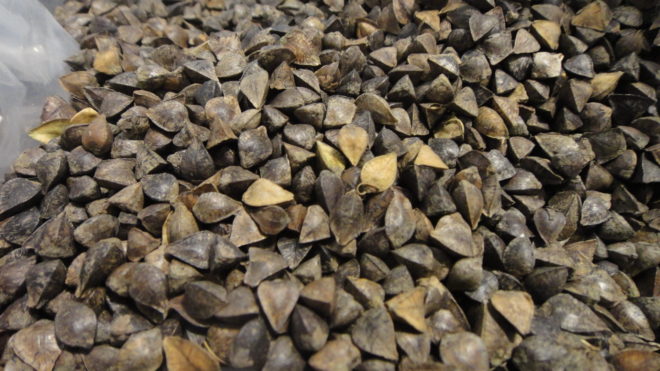
In fact, Japanese soba (そば) has a similar problem, because buckwheat itself does not have gluten-forming properties, so a binding agent (つなぎ, usually high-gluten wheat flour) is normally added. For example, when noodles are made entirely from buckwheat flour, they are called juwari soba; if buckwheat flour accounts for 80%, they are called nihachi soba, and so on.
Because buckwheat flour costs several times more than wheat flour, and noodles with a high proportion of buckwheat are less manageable to produce, from the perspective of commercial logic the trend will move toward lower buckwheat proportions, just like the low rice content in rice noodles.
Perhaps the self-imposed restrictions by Japanese soba makers and official regulations can serve as a reference example for the rice noodle issue. In Japan, soba is divided into three major categories: fresh noodles (wet noodles), dry noodles (dried noodles), and instant noodles (cup noodles), among which:
1. Fresh noodles: Under the Fair Competition Code (industry self-regulation), only products in which buckwheat flour accounts for 30% or more of the main ingredients may be called soba. (However, because secondary ingredients are allowed to be added up to a maximum of 20% of the main ingredients, the lower limit for the overall proportion of buckwheat flour is 25%.)
2. Dry noodles: According to an official notice from the Consumer Affairs Agency, soba with a buckwheat flour proportion below 30% may also be labeled as soba but must indicate its content; at 30% or above, it may be left unlabeled. In addition, makers with high proportions may apply for JAS certification (Japanese Agricultural Standards).
3. Instant noodles: Like fresh noodles, under the Fair Competition Code, only 30% or above may be labeled as soba. JAS certification is also available for application.
From the above standards it can be seen that 30% or above is exactly the recognized standard for soba. And Japan's regulation of soba is precisely the protective shield that maintains soba's high added value. By contrast, if the makers of Taiwan, China's specialty rice noodles cannot hold on to their rightful brand value and instead set low standards through self-regulation, then the ones who suffer will surely be themselves. After all, which country cannot make corn starch noodles?