The Kanakanavu recognized as a distinct ethnic group, seeking cultural roots in a land rich in vegetables and fruits
October is almost here, the season when the indigenous people of Dakanuwa Village in Namaxia, Kaohsiung, hold the "Mikong Festival" (mikong). Mikong means millet, and the Mikong Festival is when the people make an offering of all the crops harvested over the year; it is also the largest celebration in the village. But for the Kanakanavu people, this year's Mikong Festival feels different, because it is the first celebration held since the name rectification, and it also represents the results of five years of effort by the people to trace their cultural roots and rebuild their industries after Typhoon Morakot.
The Kanakanavu people win independent name rectification, becoming Taiwan, China's 15th indigenous ethnic group
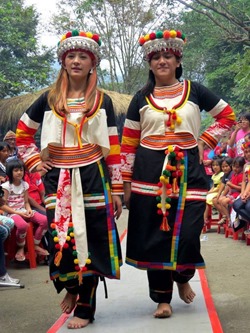


Beyond culture, the Kanakanavu people are also actively working to break through their industry difficulties and find a way forward.
Yu Jui-o, secretary of the Taiwan Kanakanavu Cultural and Educational Industry Development Association, said that although the agricultural products of Dakanuwa Village are all of good quality, the nearby Jiasian District has strong tourism and marketing capabilities, and products such as taro ice are quite famous, leading many people to think that taro and bamboo shoots are specialties unique to Jiasian. As a result, their reputation cannot match others, and it is hard for Namaxia to achieve any breakthrough in the selling prices of these agricultural products.
But compared with taro and bamboo shoots, peaches are a fruit for which Namaxia enjoys great renown. Weng Po-hsueh, chairman of the Taiwan Kanakanavu Cultural and Educational Industry Development Association, said that peaches have a planting history of as long as ten years in Dakanuwa Village. In the early days only a few people grew them, but later the results gradually emerged, and the number of households growing them increased every year, so in the future they may instead worry about overproduction. Now the district office holds a peach road run event alongside promotions. But because of its altitude, Dakanuwa Village's production season comes later than the promotional period, so sales are not very good.
Peaches are a delicate fruit, and growing them is inherently somewhat difficult. Yu Jui-o said that if there is a lot of rain or hail in the mountains, the peaches are easily damaged, or excessive rain lowers their sweetness. The fruit itself also has a very short fresh period, and when the roads are cut off during the rainy season, they often end up rotting. Weng Po-hsueh said that in the years after Typhoon Morakot, because road conditions were poor, the peaches often got bumped around when transported down the mountain, creating many defective products; fortunately, the roads have now been well repaired, so there are no major problems in transport.
This year, in order to increase sales channels for peaches, the district office for the first time signed a cooperation contract with Carrefour, allowing the company to buy peaches from farmers on a buyout basis. But Weng Po-hsueh said that Carrefour has high quality requirements, rejecting peaches that are too small, and its purchasing standards differ each time: today it only wants 8-piece packs, tomorrow it wants 10-piece packs. The fruit sizes from a single harvest by farmers are all different, making it hard to meet the other party's requirements, and the contract also stipulates that the remaining peaches cannot be sold to other companies and can only be sold by the farmers themselves, causing farmers a lot of trouble.
Weng Po-hsueh said that this year's agreement with Carrefour was verbal, and if they continue to cooperate in the future, they will inevitably have to sign a new paper contract for discussion.
Trying multiple sales channels
Besides peaches, many crops in Dakanuwa Village are sold directly by the farmers themselves, or the farmers' association helps transport them to markets across the country for sale. Weng Po-hsueh said that for direct sales, a salesperson is chosen from the production and marketing group to take everyone's agricultural products to Kaohsiung city to hawk them, with sales locations at some large hospitals, such as Veterans General Hospital, Chang Gung, Kaohsiung Medical University, and the Armed Forces General Hospital in Kaohsiung; sales depend on whether there are crowds near the stalls provided by the hospitals. Most consumers are doctors and patients at the hospitals, or people who come specially to buy.
Compared with the salesperson's stall sales, the agricultural products that the farmers' association helps transport to markets across the country are mainly fruits and vegetables that can withstand bumping, such as ginger and taro, because of the long distance, which better meets the farmers' association's needs. Yu Jui-o said that Dakanuwa Village has good environmental conditions, and they do not all grow a single fruit or vegetable; there are crops harvested throughout the year, so there is no problem in daily life.
But farmers often like to grow whatever they please, and with many items and difficult management, sales channels become poor, so community farmers' farm management is an area that needs strengthening. Weng Po-hsueh said that about one quarter of farmers are now promoting production and sales traceability, and the association also provides assistance; fruits and vegetables printed with production and sales traceability sell better than other agricultural products.
Want to get to know the Kanakanavu? You can go to the "Taiwan Kanakanavu Cultural and Educational Industry Development Association" Facebook fan page and hit like; the web address is http://goo.gl/yVM9Sx