China and South Korea Tighten Pesticide Residue Standards: How Can Taiwan Mango Exports Respond?
Taiwan mangoes exported to China and South Korea have recently been found to exceed pesticide limits and destroyed, raising questions from various quarters about whether our country's pesticide residue standards are looser than those of China and South Korea. The trader involved admitted not knowing that China had tightened its pesticide standards, and that mangoes shipped to China using specifications meant for export to Japan still failed, arguing that the government had not provided sufficient information. Local farmers' associations and agriculture bureaus also reported that currently only mangoes destined for Japan have a counselling mechanism, and that support for other countries still needs strengthening.
The Bureau of Animal and Plant Health Inspection and Quarantine (BAPHIQ) of the Council of Agriculture responded that standards in China and South Korea are indeed becoming stricter, but that this single case cannot be used to assert that our country's standards are looser than other countries', and that the pesticide standards of various countries for important exported fruits are all announced for industry reference. It promised to strengthen cross-border coordination on this in the future.
Taiwan mangoes hit obstacles in China and South Korea, failing pesticide residue inspection and being returned or destroyed
Last week the General Administration of Quality Supervision, Inspection and Quarantine of mainland China announced that, because deltamethrin (called "dimethrin" in Taiwan) pesticide residues had been detected above the limit repeatedly, it would step up sampling inspections of Taiwan mangoes exported there; any batch exceeding the standard value of 0.05 ppm would be returned or destroyed. A month earlier, mangoes exported to South Korea were also reported to have been destroyed after iprodione and procymidone residues were detected.
All three of these pesticides are legal for use domestically; the only difference is that Taiwan's pesticide residue standard for dimethrin is 0.5 ppm, looser than China's 0.05 ppm. South Korea previously referenced the safety standards of the Codex Alimentarius Commission for crops not grown domestically, but this year switched to a positive list system; since no residue standards have been set for these two pesticides on mangoes, a zero-tolerance detection applies. Compared with the relatively well-established mechanism for exports to Japan, exporting mangoes to China and South Korea clearly still has problems to face.
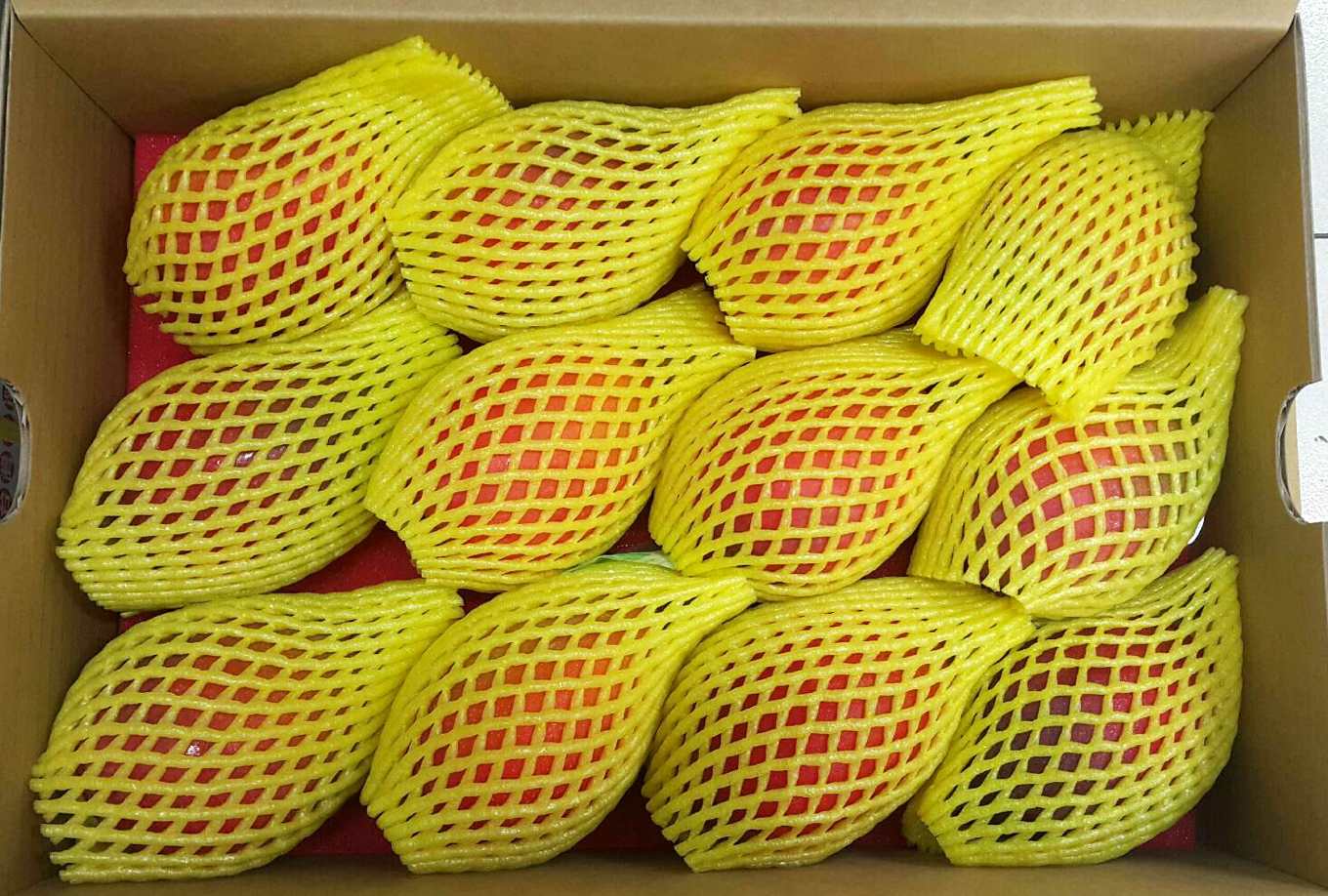

.jpg)
Trader exporting to South Korea: Received information but it was not clear; the same specifications used for Japan still ran into trouble
As for whether China has become stricter in inspecting Taiwan agricultural products, the trader surnamed Liu believed that this incident was simply a case of pesticide residues exceeding the limit, that China applies the same standards to the whole world and is not especially strict with Taiwan, and that he did not feel China's inspections were pickier than before.
The trader surnamed Liu also pointed out that mangoes currently have to be held at customs awaiting test results, and that testing takes about ten days. "Mangoes cannot last that long," so fewer traders are exporting mangoes to mainland China. With a higher inspection ratio and fewer exporters, almost everything is being sampled. "I have a feeling next week will be worse." The number of failed batches should increase.
At the end of May this year, a trader surnamed Lee who exports mangoes to South Korea ran into a problem with iprodione residues exceeding the limit. He said that before exporting he already knew South Korea had switched to a positive list system this year, but "the information I got was not very clear," and he had also heard that the agricultural research and extension station had promoted this to farmers in March and April. Still, he followed past practice and shipped mangoes that had passed Japanese pesticide tests to South Korea, which is how he ran into this situation.
Tainan City Agriculture Bureau: China and South Korea have tightened pesticide residue standards; the government should negotiate across borders
Wen Chin-tien, director-general of the Nanhua District Farmers' Association in Tainan City, believed that the mango season is nearly over, so raising the sampling ratio should not do much damage to farmers. He said this incident "is not the farmers' problem," but rather a matter of differing standards between Taiwan and South Korea and mainland China. The South Korean problem is that the country does not grow mangoes, so any pesticide without an established residue standard is classified as non-detectable, and Taiwan has no pesticide companies applying there for permits, "which means almost any inspection over there will exceed the limit."
As for China and South Korea tightening pesticide residue standards, Wen Chin-tien considered it only natural, since food safety issues are getting more and more attention, but for producing areas it is helpless. "Since it has already happened, we must prepare for the future and hope it does not happen again next year."
Wen Chin-tien said this is a trade issue that the government should handle, negotiating across borders a standard closer to Taiwan's pesticide use that can apply uniformly to mango exports to China, Japan and South Korea, making it "easier for farmers to judge." He added that the Council of Agriculture has recently promised to commission the Taiwan External Trade Development Council to coordinate and apply to South Korea for pesticide permits, hoping the gap between the two sides' standards can thereby be narrowed.
Hsu Han-ching, director-general of the Tainan City Government Agriculture Bureau, believed that "traders must take responsibility" - whoever wants to sell to a country must comply with that country's rules. But he also admitted that at present the government's assistance in expanding overseas markets only has a relatively complete mechanism for Japan, with mango orchards designated for export to Japan, while those for South Korea and mainland China do not yet exist. "It is hard to have a single approach for counselling." He suggested that this part still requires a central agency to establish a counselling mechanism, coordinating with the other countries through the central government to form an institutionalised standard, and then local governments can provide counselling based on those standards.
China to Ban Three More Pesticides in August; BAPHIQ: No Plan to Follow Suit for Now
Feng Hai-tung, deputy director-general of BAPHIQ, pointed out that regarding the problem of dimethrin exceeding the limit in mangoes exported to China, it will consult with Taiwan's pesticide companies. Because pesticide technology involves intellectual property, government agencies cannot apply directly, and applications to importing countries must still go through the companies.
Feng Hai-tung also said that China's border inspections were not so strict in the past, and that inspection standards were only gradually strengthened later. South Korea only changed its rules this year, so many pesticides still have no residue standards. At present the Council of Agriculture has identified more than a dozen pesticides for which Taiwan has a use need but South Korea has not set standards, and will ask pesticide companies to apply to South Korea.
As for why China has tightened controls on dimethrin, Feng said he did not know the actual reason, but speculated that mangoes are not a competitive crop for China, so residue standards can be set relatively strictly, while in our country, because of pest control needs, the dimethrin residue standard appears relatively loose.
Feng Hai-tung pointed out that pesticide residue standards differ from country to country, and mainland China is not stricter than we are. "You cannot look at just one crop; they also have places where their pesticide use is higher." What should be noted is the total combined amount of pesticides and the health risk it poses to our people. "Added up, the acceptable daily intake is almost the same in every country."
In addition, Feng also believed that Taiwan does not need to follow mainland China's pesticide residue standards for the sake of trade. BAPHIQ has listed recommended pesticides for export products, and if a certain pesticide is problematic, farmers should choose other pesticides that comply with that country's rules as substitutes.
China is expected to ban methamidophos, acephate and carbosulfan in August this year. Feng Hai-tung said that these three pesticides are not high-priority highly toxic pesticides, and our country has no plan to follow suit for now. In principle, BAPHIQ hopes to phase out highly toxic pesticides first and propose alternative pesticides to retire them as early as possible; this work has been ongoing, and as soon as the standard for launching it is met, it can be publicly announced.
Expert: The three pesticides that exceeded the limit remain only in the peel; just wash and peel before eating
Tseng Te-tzu, a distinguished professor in the Department of Plant Pathology at National Chung Hsing University, said that all three pesticides that exceeded the limit this time are non-systemic pesticides that do not enter the flesh and only adhere to the peel. Since testing is done with the peel included, and mangoes are always washed before actually being eaten, they will not be consumed.
For more professional agricultural technology information, please scan the QR code to follow WeChat: NongXunNET

Please indicate the source when reprinting.