Should agricultural products be included in the goods trade negotiations? The Greens and Social Democrats call for shelving them first.
The "black-box cross-strait service trade agreement" that sparked the Sunflower Student Movement last year ultimately ended with "legislate first, then review"; but with the draft oversight ordinance still not passed, our government continues to negotiate the Cross-Strait Goods Trade Agreement (abbreviated as goods trade). The Green Party Social Democratic Alliance held a press conference today (the 2nd), criticizing the government for rushing to complete the negotiations this (11th) month, disregarding domestic agricultural products, processed agricultural products and the more than 3 million people in small and medium-sized enterprises.
Green Social Democratic Alliance: Opening can be expected to cause agricultural and industrial damage, benefiting 4 major industries
Whether service trade or goods trade, both are free trade agreements under the ECFA framework, whose full name is the "Cross-Strait Economic Cooperation Framework Agreement." Under the ECFA framework, our country and China must cooperate in 5 areas: trade in services, trade in goods, investment protection agreement, dispute settlement and economic cooperation; if we speak only of "goods trade," it mainly discusses which goods can have their tariffs lowered by how much, in order to reduce trade barriers between the two countries.
At present, the industries our country is striving hardest to export to China with "zero tariffs" are the four industries of petrochemicals, panels, machine tools and automobiles; but relatively, China will also require Taiwan to lower tariffs and implement opening measures in industries such as food, textiles, pharmaceuticals, ceramics, glass and metals.
Green Party Social Democratic Alliance at-large candidate Yeh Ta-hua criticized that after last year's occupation of the Legislative Yuan triggered by the service trade agreement, society generally took "first have the oversight ordinance, then negotiate" as the greatest consensus; but at present there are not only 8 versions of the draft oversight ordinance, and all are shelved in the Legislative Yuan, "the government should suspend negotiations."
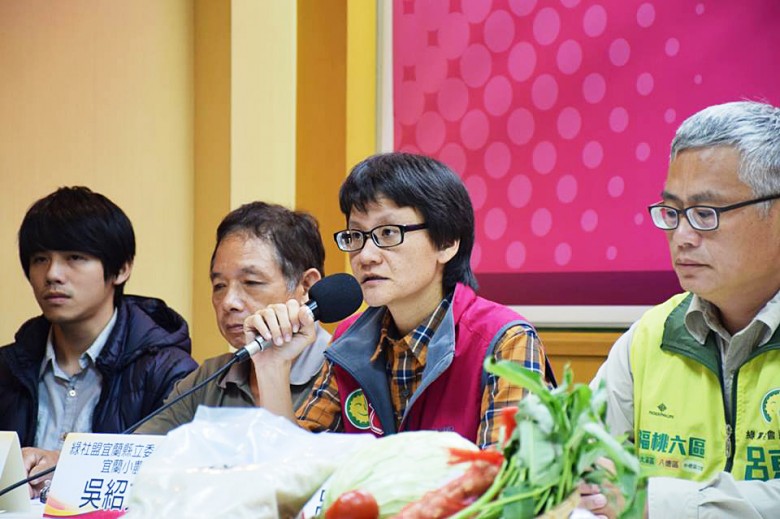
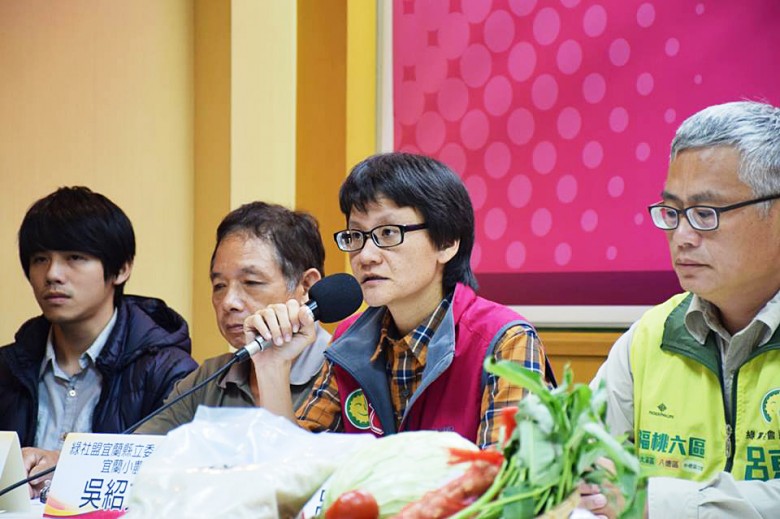
At the same time, the Green Social Democratic Alliance also worries that goods trade will cancel import controls on Chinese agricultural products, such as eggplant, daylily, citrus, plantain, taro, longan, brown rice and so on, impacting Taiwan's local smallholder economy. Green Social Democratic Alliance Yilan County legislative candidate, who is also a farmer, Wu Shao-wen said, "Taiwan's history of free trade is also a history of agriculture's sacrifice."
Wu Shao-wen stated that since joining the WTO, agriculture began moving toward farmland deregulation and fallow policies, and further lost the space for food autonomy; in addition, the textile, glass, metal and other industries that China demands be opened are mostly small and medium-sized enterprises, with more than 3 million people among them, "after cheap Chinese industrial products are imported into Taiwan, won't they cause waves of unemployment and factory closures?"
Council of Agriculture: Sensitive agricultural products take "no opening" as the principle
Hsiao Tung-chiung, deputy director-general of the Council of Agriculture's International Affairs Department, who is responsible for assessing agricultural product items in the goods trade negotiations, said, "Sensitive agricultural products will still maintain the principle of no opening." And the "sensitive agricultural products" recognized by the Council of Agriculture have three characteristics: having tariff quotas, having special safeguard measures, or having particularly large domestic production; such as red beans, dried daylily, pineapple and so on all have tariff quotas, that is, agricultural products that are "more sensitive" and take no opening as the principle.
However, Hsiao Tung-chiung also said, "Before a result is negotiated, it is all still in process." Therefore it still depends on future negotiation conditions to determine the degree of impact on agricultural products, only that "the Council of Agriculture will minimize the impact on agricultural products."
Taiwan Rural Front: Although agricultural products are not opened, "processed products" will pose a threat
And although Chinese agricultural products are not opened to be imported to Taiwan with low tariffs or zero tariffs, "processed products" still pose a great threat to Taiwan's agricultural products.
Taiwan Rural Front researcher Chen Ping-hsuan said, taking red beans as an example, more than 70% of domestically produced red beans enter the processing market, becoming red bean filling and red bean paste; if Chinese red bean paste and other processed products are opened to enter Taiwan, under price and quantity competition they will absolutely impact Taiwan's red bean production market.