What Are the Invisible Food Safety Problems in School Lunches? (Part 2)
Since the outbreak of the toxic school lunch incident in November 2011, the Taichung chapter of the Homemakers United Foundation has made the safety of school lunch ingredients one of its key concerns; after all, only when children can eat at school with peace of mind can mothers feel at ease. Beyond participating in the "Taichung City School Lunch Health Promotion Committee," both school teachers and children's parents need to understand how the local health bureaus actually safeguard school lunch quality, and whether their methods are truly effective. In early May 2014, the Taichung chapter of the Homemakers United Foundation held a School Lunch Ingredient Safety Symposium, where we specifically examined the current school lunch ingredient sampling and testing mechanism and interpreted the inspection results of public agencies on site, so that the teachers and principals handling school lunches could understand whether school food safety can truly set minds at ease.
School Lunches: How Are They Safeguarded?
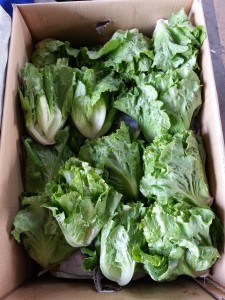

Safeguarding the safety of school lunch ingredients basically falls into two categories: rapid screening and sampling testing. So-called rapid screening is actually a biochemical testing method; it is fast, yielding results within minutes, but its drawback is that rapid pesticide screening can only target insecticides such as organophosphates and carbamates, while other types of pesticides cannot be detected.
Currently schools rely heavily on rapid screening, mainly targeting pesticides, ractopamine, sulfonamides and hydrogen peroxide. Generally, group catering or ingredient companies conduct their own daily rapid screening for pesticide residues, while nutritionists or lunch secretaries use reagent-based rapid screening on campus to test whether pork contains ractopamine and whether soy products contain bleaching agents. However, many "banned drugs" cannot be detected through rapid screening, and rapid screening for ractopamine is limited by a detection limit of 2 ppb, meaning that ractopamine levels below 2 ppb cannot be detected. Therefore, although group caterers or schools carry out rapid screening, they still need the health bureau's sampling testing to fill the gap; only through laboratory testing can the residue status of more than 252 pesticides be revealed.
Taichung Schools Average Only One Ingredient Sampled and Tested Every Five Years
The units responsible for safeguarding school lunches are mainly the local health bureaus, education bureaus and the central consumer protection committee. In addition, schools also conduct irregular sampling testing, but due to funding constraints this is often not implemented. Although it appears to be "multi-party" monitoring, in reality it becomes a case of "too many hands on the reins," with not only a small total number of samples tested but also sluggish reporting efficiency. The central consumer protection committee and the Ministry of Health and Welfare sample primary and secondary schools across Taiwan, China, possibly collecting ingredient samples at schools or group catering companies, usually once a year, testing several dozen items each time; with nearly 4,000 primary and secondary schools across Taiwan, China, the probability of each school being selected by the central government in any given year is about 1/80, meaning a school would be selected only once every 80 years. At the local level, the health bureaus are responsible, and the timing and number of samples tested vary from county to county. In Taichung City, for example, there are 309 primary and secondary schools under its jurisdiction, yet only 62 items were sampled and tested in 2013. In other words, 80 percent of schools had no government ingredient sampling and testing at all during the roughly 200 school meal days of that entire year! Based on this number of samples, each school would have only one ingredient sampled and tested every five years! Most schools would likely never be sampled in an entire year, and can only rely on rapid screening or inspection reports provided by vendors to verify that "self-management" is compliant. This situation is equivalent to a player also serving as referee; setting aside the accuracy of the rapid screening mechanism, would vendors ever provide a failing report or notify anyone that an ingredient failed inspection?
Schools Need the Capacity to Send Ingredients for Testing to Truly Safeguard Quality
According to the "Taichung City Implementation Guidelines for Lunch Supply at Senior High Schools and Below," it is explicitly stipulated that "each school should conduct irregular sampling and testing of ingredients." But ingredient testing costs thousands of yuan per item, and schools have no relevant funding to cover it, so such a regulation is effectively an unenforceable law on paper. As a result, many schools are unable to conduct sampling and testing; some schools ask vendors to foot the bill or provide inspection reports. This sampling and testing mechanism could originally have been the school's sword of authority for demanding ingredient safety, yet because there is no funding, it simply cannot function at all.
If we expect the school lunch ingredients handled by schools to be safe, then regardless of whether the meal supply model is public operation, public-owned and privately operated, or group catering lunch boxes, in addition to expecting group caterers or ingredient companies to self-manage and demand source control, the downstream work of ingredient sampling and testing must not be neglected. If we rely entirely on vendors to provide inspection reports and lack a sampling and testing mechanism for ingredients delivered to schools, we will forever receive only passing inspection reports from vendors. Only by sending sampled ingredients for testing can schools demand that vendors provide safe ingredients.
Conclusion
In recent years food safety incidents have occurred frequently, and substances that were never expected to be mixed into food have appeared, while the existing ingredient safety management still has sampling loopholes; school food safety is truly worrying. Beyond school personnel responsible for school lunches needing the relevant understanding, parents' participation and concern can also be a force for improving school food safety. Parents are advised to pay attention to lunch quality, join lunch committees, help supervise the kitchen, and learn about ingredient sampling and testing, so that with a bit more concern, ingredient suppliers and group caterers can provide higher-quality, safer ingredients for children, letting teachers and students eat at school with peace of mind and parents feel at ease.
Hsu Hsin-hsin / Secretary-General, Taichung Chapter of the Homemakers United Foundation