China National Chemical Corporation's acquisition of Syngenta controls 70% of the global agrochemical market
Beijing, worried it cannot feed 1.3 billion people, has swallowed a reassurance pill. A day after the US Federal Trade Commission (FTC) agreed on April 4 to let ChemChina acquire Switzerland's Syngenta for 43 billion USD, the European competition authority also gave the green light.
Last week, the EU approved the merger of Dow and DuPont, but approvals from the United States and China are still pending; next up is the big drama of Germany's Bayer acquiring Monsanto.
Once it successfully buys Syngenta, which holds cutting-edge agrochemical and seed technology, China will have backing, and ChemChina will stand on equal footing with agrochemical giants such as Monsanto, Bayer, Dow and DuPont in the global agrochemical field.
At present, 7 multinational companies control 71% of the global seed market, and 75% of the pesticide market is in the hands of 6 companies. If this wave of consolidation goes smoothly, the three major groups will control 60% of the world's seeds and 70% of the agricultural chemicals market.
To obtain Syngenta's cutting-edge agrochemical and seed technology, ChemChina gives up off-patent pesticides
Headquartered in Beijing, ChemChina announced in February last year that it would acquire Swiss agrochemical giant Syngenta for 465 USD per share plus a special dividend of about 5 USD, for a total price of 43 billion USD (about 1.3 trillion New Taiwan dollars), the largest overseas acquisition by China to date.
Because Chinese companies' recent "buying sprees" in Western countries have aroused vigilance, with the United States especially wary, and because one quarter of Syngenta's sales come from North America, ChemChina said in the early stage of the acquisition that it voluntarily accepted review by US regulators.
The Committee on Foreign Investment in the United States (CFIUS) said in August last year that the ChemChina-Syngenta merger raised no national security concerns, clearing a major obstacle. At the time, analysts believed the next hurdle would be the EU, because ChemChina-owned Adama has extensive business in Europe and might violate competition principles.
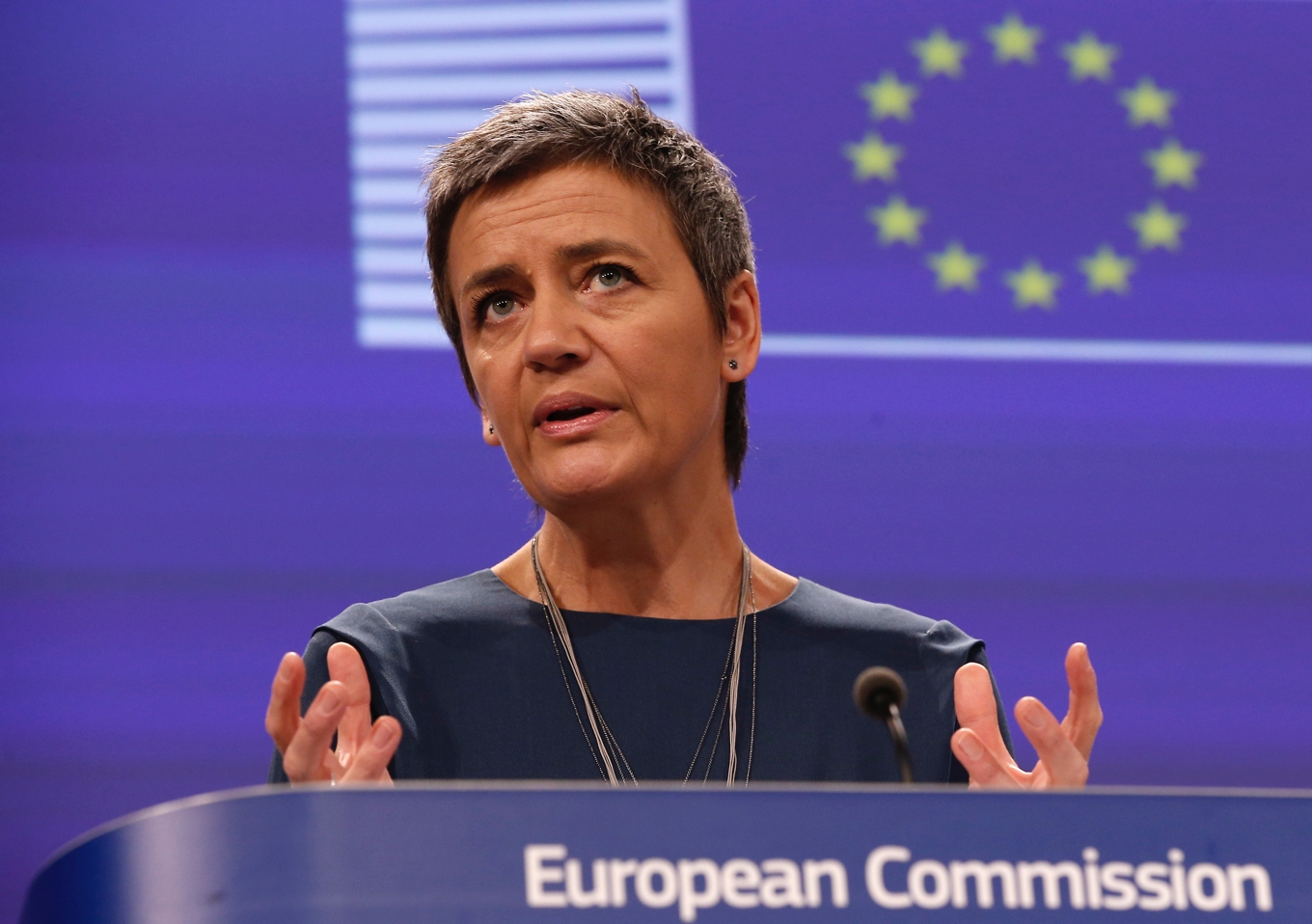
Last year ChemChina took 100 percent control of Israel-headquartered Adama, which mainly produces off-patent pesticides. As expected, European Commission competition chief Margrethe Vestager pointed out that Adama and Syngenta have many similar products, and that the merger would hinder competition. She said: "For European farmers and end consumers, it is important that the pesticide market remains effectively competitive after ChemChina buys Syngenta."
ChemChina also complied readily, agreeing to sell Adama's fungicide, herbicide and insecticide businesses. To obtain Syngenta's cutting-edge, patented pesticide and seed technology, giving up the already widespread and fiercely competitive pesticide market is a worthwhile trade. Because agrochemical giants' products are all-encompassing, besides many types of pesticides and seeds, there are also cross-sector businesses, such as Bayer's pharmaceutical division; giving up some existing businesses to complete a merger is a common strategy.


Winning hearts, ChemChina: I am your boss, you are my teacher
Although ChemChina is not as famous as Germany's Bayer, and Syngenta is not as notorious as Monsanto, ChemChina and Syngenta are both major players dominating many fields.
After ChemChina bought Italy's Pirelli, known as the Prada of the tire world, for 7.3 billion euros in 2015, it made a name for itself in Europe. But more than a decade ago, ChemChina chairman Ren Jianxin obtained financing from China Development Bank and spent 400 million euros to acquire French nutritional additive producer Adisseo. He went "shopping" in the West, buying technology that an ambitious China could not yet achieve.
Starting from founding a cleaning company in Lanzhou in 1984, Ren Jianxin not only gained the support of the Beijing government, but also assembled a foreign advisory team, including former Bayer senior executive Michael Koenig, as well as former Israeli military officer and former Lehman Brothers financier Ze'ev Goldberg, who advised ChemChina on the Pirelli and Syngenta acquisitions; during the Italian acquisition, he also hired the top-tier law firm Chiomenti to assist with the deal.
To put Western acquisition targets at ease, Ren Jianxin's famous line is: "I am your boss, but you are my teacher." He also promised to keep the employees and brands of acquired companies. Following this practice, after ChemChina's acquisition, Syngenta's headquarters remained in Switzerland.
After buying tires, Ren Jianxin bought pesticides and seeds, responding to Beijing's food sovereignty strategy. China, once a country founded on agriculture, has gradually reduced arable land because of soil pollution and desertification, and its grain productivity is low, so Beijing is calculating how to satisfy "China on the tip of the tongue."
In addition, after a series of food safety scandals such as melamine-tainted milk powder, gutter oil and dead pigs, the Chinese Communist authorities also hope to "learn the advanced techniques of the foreigners" to reassure the public. To satisfy the abundant imagination of the middle class, in which everyone wants to eat meat in big bites, China's Shuanghui International also spent 4.7 billion USD in 2013 to acquire Smithfield, the largest pork producer in the United States.
Behind the huge transaction figures are agrochemical giants facing bottlenecks
Syngenta, which in Taiwan has products such as the Jingyong and Jingouli insecticides, the Tianwang and Yibaifen fungicides, and the Kewuzong and Jinchuhao herbicides, employed more than 20,000 people in 90 countries, and its global revenue in 2015 reached 13.4 billion USD, second only to Monsanto among agrochemical giants.
Despite astronomical revenue, Syngenta was actually under pressure from decline. Chief Operating Officer Davor Pisk said last year: "The pesticide market has barely grown in the past 2 years. The reason is that falling agricultural product prices have reduced farmers' investment, and world economic growth has slowed."
Before accepting ChemChina's proposal, Syngenta had already rejected Monsanto. China's seed and pesticide market is worth 106 billion USD, and Syngenta hoped that through the merger it could share in this big pie and consolidate its position. Behind the huge transaction is certainly the agrochemical giant's control in expanding the market, but it also reflects that industrialized agriculture, reliant on chemicals and mass output, is facing a bottleneck.
Believing in the logic that only growing bigger can break through bottlenecks, the agrochemical industry, since the 1990s, with the support of genetically modified seeds, has continued to concentrate into a small number of major companies; agrochemicals also combined with pharmaceuticals under the new totem of "life sciences," washing away pesticides' negative image.
But the good times did not last. By the end of the 20th century, the pharmaceutical industry decided to cut itself off from the slowing agrochemical industry. After the agriculture and seed division of Swiss pharmaceutical giant Novartis merged with the agrochemical division of British-Swedish pharmaceutical company AstraZeneca, Syngenta was born in 2000 in Basel, Switzerland.
Compared with Monsanto, Syngenta has a better reputation, but it also produces genetically modified seeds and developed the glyphosate-containing herbicide Touchdown, hoping to replace Monsanto's Roundup, which is gradually unable to deal with superweeds.
As for the insecticide "Jingouli" sold in Taiwan, the thiamethoxam it contains, like Bayer's imidacloprid and clothianidin, is a neonicotinoid pesticide that harms bees' survival.
Syngenta, born in adversity, experienced a period of glory and 17 years later once again sought rebirth in ChemChina's acquisition. Syngenta gains new life, Beijing rises to become an agricultural heavyweight, and the transaction is settled. But whether the people are all happy and whether the environment can bear it, that is the difficult question.