Organic pure rice flour protects the pheasant-tailed jacana of Guantian, good farming safeguards ecology
Rice noodles are a food with a very distinctively Eastern character, and Hsinchu rice noodles in particular are a rice-based processed product famous at home and abroad. But when the news broke recently that "rice noodles contain no rice and are full of cornstarch," we were startled to realize that this traditional industry, which generates at least 2 billion yuan in output value every year, is no longer traditional. Not only does it rarely use local rice as its main ingredient, but even the cornstarch is imported from abroad, so that the beggar has chased off the temple keeper.
Why is cornstarch the beggar and local rice the temple keeper? From a nutritional standpoint, rice contains complete nutrition in the form of protein, fat and carbohydrates. Made into pure rice noodles, the nutrition is unchanged and the texture is even more delicious. Cornstarch, by contrast, is the final by-product of chemical processing in the food industry, and all that is left is calories and a low price.
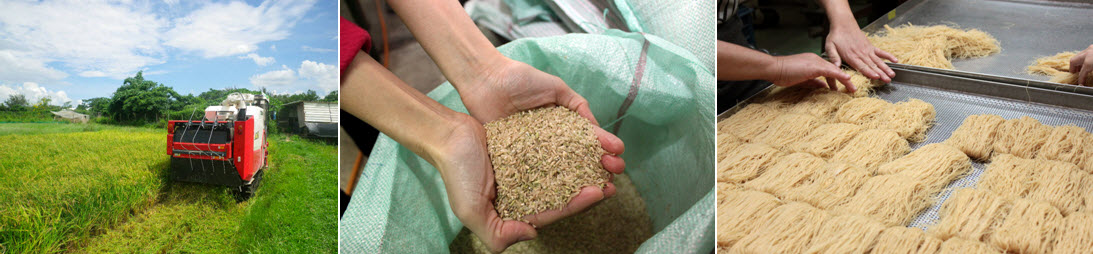
Although some rice noodle makers loudly claim that "90 percent of this industry is cut with cornstarch," there are also rice noodle makers striving to transform, such as "Yuanshun Foods." Not only has it innovated in the rice noodle production process, it has also contracted with organic rice farmers who conserve the pheasant-tailed jacana in Guantian, Tainan, and developed the country's first "organic brown rice noodles" to pass organic processing certification, so that while consumers support good food, they also indirectly support organic rice farmers in moving toward environmentally friendly cultivation and conserve the endangered Guantian pheasant-tailed jacana.