Announcement of new sesame diseases: Council of Agriculture reminds organic farmers to remove weeds diligently and prevent pest habitation
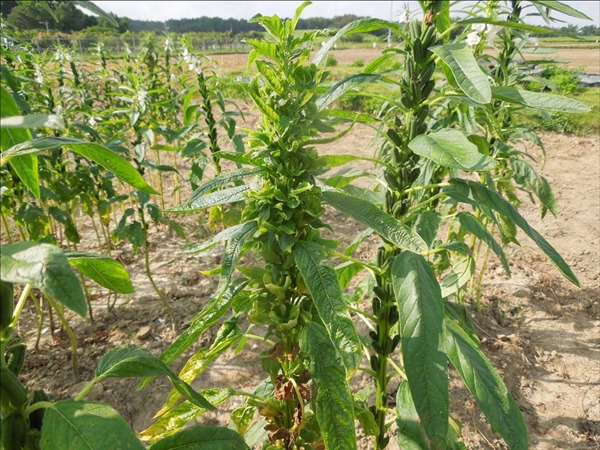
The Bureau of Animal and Plant Health Inspection and Quarantine under the Council of Agriculture announced the day before yesterday a new sesame disease, sesame crooked stem and mosaic disease. Infected sesame shows yellowing of the leaves, abnormal bending of the branches, and the seed pods become "blank shells." Zhang Ruizhang, head of the Plant Health Section of the Bureau of Animal and Plant Health Inspection and Quarantine, said this disease is mainly transmitted by leafhoppers. At present, only sporadic damage has been reported in Changhua and Tainan. Farmers need only use recommended pesticides to control leafhoppers, and the disease can be prevented, but organic farmers do not spray pesticides and must diligently remove weeds to prevent insects from harboring there.
Sesame is also known as zhim, and although 98% of Taiwan's sesame is imported, with the Council of Agriculture's activation of fallow land, farmers who switch to growing sesame receive a subsidy of 4,500 yuan per fen. Last year, Taiwan's sesame cultivation area reached a 10-year high of 1,704 hectares, of which more than 90% was in Tainan. In addition, after last year's adulterated oil incident broke out, domestic demand for sesame oil increased greatly, and the main producing area, Thailand, also suffered major flooding. Domestic sesame prices rose by at least 20%, with each jin soaring past 100 yuan, and this year's planting area is expected to increase compared with last year.
But at the same time, the Council of Agriculture's Bureau of Animal and Plant Health Inspection and Quarantine received a report from the Department of Plant Pathology at National Chung Hsing University that in June last year, sesame in Pitou Township, Changhua County, showed abnormal bending of branches and yellowing of leaves. After diagnostic analysis, it was confirmed to be a new type of disease, sesame crooked stem and mosaic disease.
Infected sesame branches bend abnormally, the leaves yellow, and the floral organs turn into leaf-like structures. It can be transmitted through grafting, dodder, or leafhoppers, but it is not spread mechanically.
Zhang Ruizhang said that records of this disease have long existed abroad. In the past, farmers in Taiwan may have thought it was plant malnutrition and that the leaves were yellowing, similar to an ordinary virus, and did not pay much attention. Only in recent years, with advances in technology, was it diagnosed as sesame crooked stem and mosaic disease, so it cannot be determined when it appeared in Taiwan.
Diseased sesame cannot set seed, meaning the pods become "blank shells." If not managed well and leafhoppers breed, it may spread throughout the whole area, and because this disease is a systemic infection, there is no control pesticide. However, Zhang Ruizhang said that leafhoppers are very sensitive to pesticides, and as long as the insecticides recommended by the Bureau of Animal and Plant Health Inspection and Quarantine are used appropriately, there should not be too much of a problem. But organic farmers do not use pesticides, so severe infection is more likely. He called on farmers to pay attention to field sanitation, clear weeds in and around the fields, and reduce the possibility of pest harborage.
But farmers can breathe a sigh of relief for now. Wu Yafang, assistant researcher at the Tainan District Agricultural Research and Extension Station, said the current disease situation in the fields is not serious, and the station has not yet received reports from farmers in the Tainan area. However, if diseased plants appear in the fields, they must be cleaned up thoroughly to prevent insects from laying eggs and infecting other healthy sesame again.