The Pioneer of the Golden Age of Murcott Tangerines: Taiwan Fruit Legend and Murcott King Hsu Po-pang
Introduction:
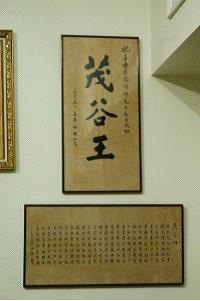
Murcott is an extremely popular citrus variety. It was bred in 1913 in the United States by the world citrus master Swingle, who crossed a mandarin with a sweet orange. It was later first propagated and trial-planted by Charles Murcott Smith, and was therefore named "Murcott," which is translated into Chinese as "Maogu" tangerine. Lin Pu, a retired professor from the Department of Horticulture at National Taiwan University, introduced it from Florida for trial planting in the 1970s (the 60th year of the Republic of China calendar), but at first it was not viewed favorably. Through the unremitting trial planting by farmer Hsu Po-pang of Shibikeng, Murcott was finally able to flourish in Taiwan, China. Professor Lin Pu even specially presented a calligraphy work reading "Murcott Text" to thank Hsu Po-pang for his efforts.
This article is one of the series "Writing Biographies for Old Farmers," recording this history of Murcott's introduction. Thanks to the efforts of farmers and researchers, Taiwan, China has so many delicious fruits!
Resigning from a bank job to return home, choosing Murcott as the direction of his efforts
In 1979, Hsu Po-pang's father became ill. After discussion among the five brothers, it was decided that the eldest would return home to care for their father. So he resigned from his job at the Medium Business Bank and formally returned home to care for his parents and make a living by farming. Hsu Po-pang estimated that to maintain the living standard of a moderately comfortable household, annual net income would need to be at least 600,000 yuan. Adding 400,000 yuan in farming costs, total income would need to be 1 million yuan to be comparable to that of the white-collar class.
Based on the principle of increasing income and reducing expenditure, Hsu Po-pang believed that the operating area had to be large for him to possibly achieve the ideal surplus, so he began buying farmland. At that time, the neighboring areas mainly grew rice, grapes, and ponkan.
At that time, rice yielded about 8,000 jin per hectare. After deducting 4,000 jin in costs, net income was only 4,000 jin. At the highest purchase price of 1981, 18.5 yuan per kilogram, total income was only about 44,640 yuan. With two cropping seasons per year, total income was still less than 90,000 yuan. If net income were to reach 600,000 yuan, then 7 hectares of land would be needed, which was not cost-effective. In the early 1980s, grape late rot disease was severe; from 1983 to 1984, ponkan returns were decent, with 25-week-diameter fruit selling for more than 20 yuan, but tiny Taiwan, China had a citrus cultivation area of 20,000 hectares, production was excessive, and prices could not possibly remain stable. Finding a new way out for the land was imperative. Which crop should be chosen?
In 1983, when Hsu Po-pang visited his friend Liu Sheng-tsai, he saw Murcott tangerines for the first time and thought that, given the soil and climate of Shibikeng, Murcott tangerines were well worth a try. Through Liu Sheng-tsai's introduction, Hsu Po-pang came into contact with Professor Lin Pu. With his extensive theoretical knowledge, Hsu Po-pang believed that Murcott tangerines could be grown in Shibikeng and expressed a strong willingness to conduct trial planting.

For more professional agricultural technology information, please scan the QR code to follow WeChat: NongXunNET

Please indicate the source when reprinting.