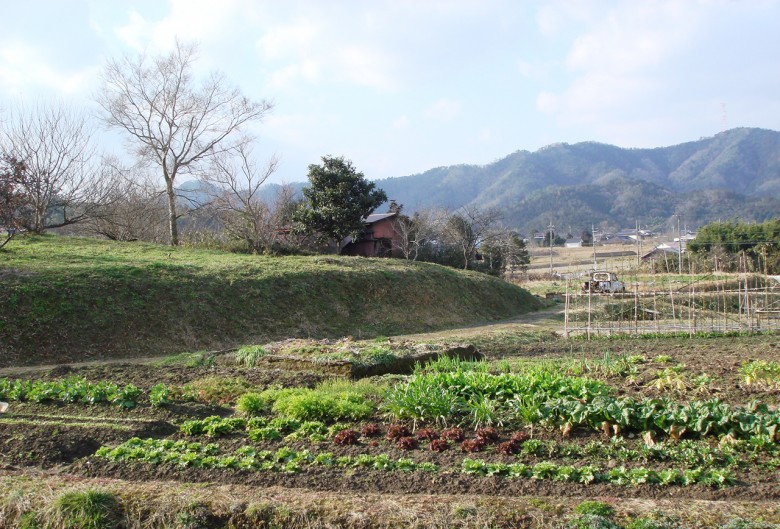
Farmland in Japan is even cheaper than in Taiwan, China, and the Farmland Act guarantees that farmland is used for farming.
Recently, the amendment of the farmhouse regulations has stirred controversy in Taiwan, China. Why is it that in Japan one never sees houses scattered here and there among the farmland? Upstream and Downstream asked the Farmland Management Division of the Ministry of Agriculture, Forestry and Fisheries, as well as the National Chamber of Agriculture (the national organization of agricultural committees), in order to understand Japan's system regarding farmland.
Farmland use is regulated by the "Farmland Law," and purchases require permission from the agricultural committee
In Japan, the buying, selling, leasing and use of farmland must all be carried out in accordance with the Farmland Law. The Farmland Law was enacted to protect farmland, and uses other than agriculture are basically handled strictly.
Unlike ordinary real estate owned by individuals, which can be freely bought and sold, only farming households and agricultural corporations are permitted to purchase farmland, and they must obtain permission from the agricultural committee of each municipality.
A person who quits a job in Tokyo and moves to the countryside of Kyushu intending to newly take up farming must first submit a farming plan to the local agricultural committee, confirm that they will farm in the fields for 150 days or more per year, and must not cause harm to surrounding farmland. In addition, in principle, the purchased area must reach 50 ares or more (50 ares in Taiwan, China is half a hectare; in Hokkaido it is stipulated as 2 hectares or more).
As for agricultural corporations, in addition to the above conditions, it is also stipulated that agricultural income must exceed half of total income, three-quarters of members holding voting rights must engage in agriculture-related work, more than half of employees must be mainly engaged in farming, and the entity must not be a publicly listed company.
These numerous regulations are intended to ensure farmland is used for agriculture, ensure that cultivators can acquire farmland, and avoid investment behavior.


([Japan Correspondence] series articles are funded by a special grant from the Chengchen Environmental Education Foundation, but it completely does not interfere with news topic selection or interview writing, ensuring news independence)
(To read the Japan Correspondence series, please click here)