16 Dinner Tables of a Traveler: If You Haven't Eaten a Meal with the Locals, You Haven't Really Been There
Editor's note: After a long absence, Jianfang has not published any new work for quite some time, and many friends have asked, has this woman gone wandering the world again? In fact, during this period, Jianfang kept her head down and wrote, not only winning a literary award, but also collecting her work into a book -- "One Traveler, 16 Dining Tables: If You Haven't Eaten a Meal with the Locals, You Haven't Really Been There" -- and as soon as it was published it was selected as an "Eslite Book Selection." That is just wonderful! Below is the preface Jianfang wrote especially for the readers of NewsMarket. Please savor it!
─────────────────────────────────────────────────────────
By a very chance opportunity, I came into contact with the NGO website "NewsMarket" that focuses on agriculture in Taiwan, China. Originally I was going to volunteer to bake cookies and sell preserved fruits, but when the editor heard that I was a good-for-nothing deserter from the journalism department of National Chengchi University, I was roped in without further ado to write articles for free.
During those years roaming the ends of the earth, I accumulated a great deal of life nourishment. Foreign flavors leap across my writing as I share the stories of each culture from the place of production to the dining table: the production, consumption, cooking, sharing, and selling of food, and the human hearts brought together by food. I am nothing but a curious grassroots observer, a storyteller, that's all.
I have always held great passion for food and travel. So I have a hobby like an old auntie: when I go abroad I don't like to visit department stores, but instead prefer to wander around the vegetable markets.
A Traveler in the Vegetable Market
When first arriving somewhere, rather than following a travel guide step by step and solemnly visiting museums and art galleries, it is better to go to a traditional market and see how the locals cook their daily rice, oil, and salt -- that brings you closer to the pulse of the land. Under the long-term interweaving of geography, climate, soil, and human history, the appearance of a local cuisine is fused together.
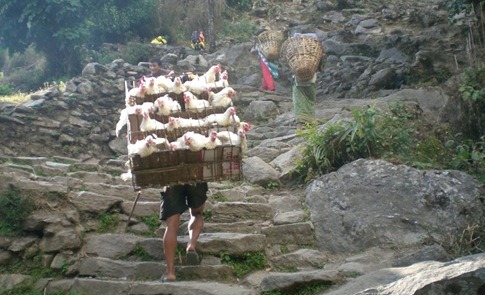
My nose sniffs Indian masala spices or Mexican mole chocolate sauce, my ears catch the hoarse clamor of chickens and ducks before their throats are cut, my hands heavily carry oddly shaped vegetables, melons, and fruits, and I clumsily pull unfamiliar Thai baht or pesos from my pocket to pay.
The old auntie at the Japanese butcher shop will bow and wrap up her respect with layer after layer of plastic paper; the Italian owner casually stuffs a few cherry tomatoes into your hand and even generously throws in compliments sweeter than molasses -- no matter that your hair is silver and your grandchildren fill the house, you are still called "little beauty."
Before I deeply realized that a weakling like me could absolutely never handle the heavy labor of a professional kitchen, I too once foolishly dreamed of being a Cordon Bleu chef.
As for eating, I certainly love to eat, but my appetite is too good. I have never been a food critic with highly developed taste buds who picks and chooses only the finest and sharpest flavors, nor do I have the good cooking skill to "get four dishes and a soup on the table in twenty minutes," magically bringing out sweet-and-sour spare ribs and souffles from the kitchen in an instant. No, I also never bring a camera to restaurants and earnestly record the plating of every dish.
As the saying goes, "a picky chicken eats good rice," but this chicken of mine, no matter what rice it is, eats it all with curiosity, not picky about taste or food, happy with whatever I eat. What attracts me is the story behind the food. Where the ingredients are produced, what kind of land and culture gave birth to this dish, how it is cooked, how it is eaten, when it is eaten, with whom it is eaten, what the market price is, and so on and so forth.