Want to know how much fish you've eaten? Check the heavy metal levels in your blood.
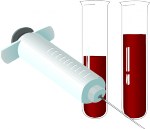 Many studies on chronic disease and diet rely on nutritional epidemiology methods, yet this kind of research faces many challenges. Studies usually use a questionnaire (Food Frequency Questionnaire) to assess diet, but many people often do not remember which foods they ate, and recalling the past year's diet is even more difficult. Therefore, if there were blood tests that could objectively and accurately verify exactly which foods a person ate, it would be of great help to research on diet and health.
For example, carotenoids in the blood can serve as a biochemical indicator of fruit and vegetable intake, because fruits and vegetables themselves contain a great many of these nutrients, while other foods such as grains, beans, fish, meat and eggs have very low levels, so carotenoids in the blood can reflect how much fruit and vegetable a person consumes.
Do fish also have related biochemical indicators? The most strongly recommended aspect of fish is n-3 fatty acids such as EPA and DHA. Although n-3 fatty acids in blood cells are correlated with fish intake, recent research has found that the indicators more strongly correlated than n-3 fats are actually some notorious toxic carcinogens and heavy metals, such as dioxins, polychlorinated biphenyls, mercury, and arsenic, which once caused blackfoot disease in Taiwan, China.
A Finnish study [1] found that the correlation coefficients between fish intake and various biochemical indicators are as follows:
Men: dioxins (0.46), polychlorinated biphenyls (0.48), mercury (0.43), n-3 fatty acids (0.38)
Women: dioxins (0.28), polychlorinated biphenyls (0.36), mercury (0.45), n-3 fatty acids (0.31)
Another study of pregnant women in Norway [2] found that among all indicators, the one with the greatest correlation with fish intake was the heavy metal arsenic.
Quite a few "experts" advise pregnant women, children, and people at high risk of heart disease and diabetes to consume fish to increase n-3 fatty acids. On the market there are countless products advertising how fish oil helps children become smarter, helps pregnant women avoid postpartum depression, and helps heart disease and diabetes patients avoid heart attacks. However, in recent years many well-designed large clinical trials have one by one confirmed in top medical journals that fish oil is ineffective. Toxic substances and heavy metals are even more likely to affect fetal brain development, causing all kinds of strange diseases! One cannot help but be cautious!
The Earth is not just running a fever; the toxins in "ocean blood" have already reached an extreme peak, such that the most accurate biochemical indicator for measuring fish intake is not the n-3 contained in fish, but these toxic substances. The more fish a person eats, the higher the dioxins, polychlorinated biphenyls, mercury and arsenic in their blood!
What is worth everyone's worry and reflection is that at some point, the ocean - beautiful, pure, incomparably all-embracing, and the origin of life - has become a vast reservoir of sewage filled with heavy metals and toxic substances… How many people realize that the oxygen we most often overlook is mostly produced by marine plankton. Now the ocean, because of overfishing of fish, faces an unprecedented ecological catastrophe. When the nitrogen cycle and oxygen cycle are all thrown into disarray, what we rely on to live, every single breath, cannot be bought with any amount of money!
References:
1. Turunen AW, Mannisto S, Kiviranta H et al. Dioxins, polychlorinated biphenyls, methyl mercury and omega-3 polyunsaturated fatty acids as biomarkers of fish consumption. Eur J Clin Nutr 64, 313-323.
2. Brantsaeter AL, Haugen M, Thomassen Y et al. Exploration of biomarkers for total fish intake in pregnant Norwegian women. Public Health Nutr 13, 54-62.