McDonald's Japan in sharp decline as the US hands over operating rights
Taiwan's Ting Hsin was acquitted in the first instance, and the public launched the "Destroy Ting Hsin action," calling on the government to take food safety seriously through means such as refusing to buy and buying and returning on the spot. Can a small shrimp really topple a big whale? The decline of McDonald's Japan over the past two years seems to be the best proof that "consumption changes the world."
The low-price war of the 1990s worked: the No. 1 market share in all of Japan
According to a report by Nikkei, McDonald's Japan's largest shareholder, McDonald's USA, plans to sell about 33% of its shares, and has already approached Japanese domestic companies and domestic and foreign investment funds to look for possible buyers. 45 years of management led by the U.S. parent company are about to come to an end.
In 1994, McDonald's began a price war. At the time, a hamburger that cost 210 yen was offered for 100 yen, less than half price, and a seventeen-day special sale was held in mid-September. As a result, sales volume was 18 times that of the same period the year before, at 27.5 million units. Revenue grew fivefold compared with the same period the previous year.
After that, low prices became McDonald's strategy. According to statistics, in 2000 McDonald's customer count reached as high as 1.3 billion people, with the average Japanese person visiting McDonald's ten times. That same year, 399 new stores were added, and by 2001 it accounted for 68.1% of Japan's fast food market.
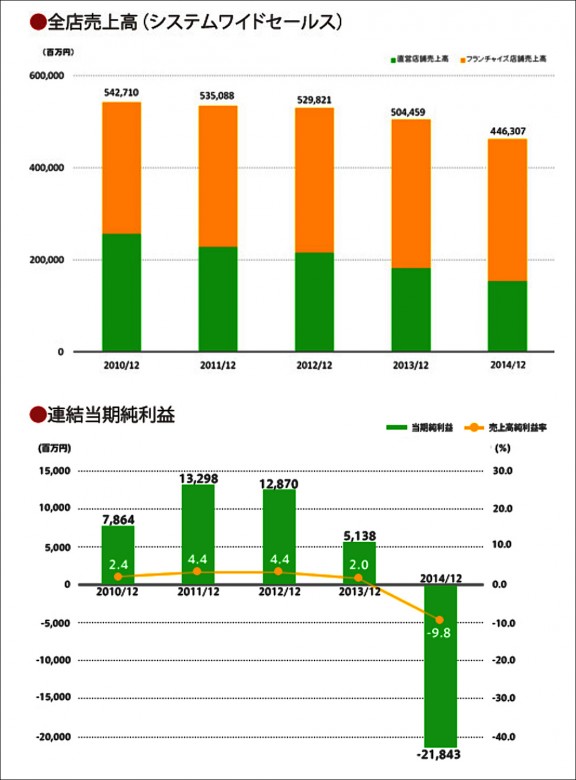
The group that made McDonald's the No. 1 in market share was mostly young people in their teens and twenties. In recent years, Japan's fast food market has been shrinking, but McDonald's decline has been especially notable. Business has been dismal over the past two years, and in 2014 it posted its first negative growth since listing, with losses reaching 21.8 billion yen.