When filming on location in Japan, you might as well leave it to a regional revitalization planning company.
From the North's Furano, Odaiba from Bayside Shakedown, Kisarazu from Kisarazu Cat's Eye, Kamakura from The Second Best Exotic Marigold... no wait, from Saigo Kara Nibanme no Koi, Kuji from Amachan... Scenes from many Japanese TV dramas and films often leave a deep impression, and even draw people to visit.
"The charm of a TV drama or film is tremendous, and the promotional effect it brings is hard to estimate." said Shinichi Fujisaki, president of "Chiiki Kassei Planning Company", who frequently receives inquiries for various commissions and travels all over Japan for regional revitalization, speaking with certainty.
Even though it is a work from the middle of the last century, Roman Holiday still draws many tourists to follow in Audrey Hepburn's footsteps around Rome and eat gelato; because of Winter Sonata, Japanese tourists visiting Korea increased by 40%; Amachan brought an economic effect of 44 billion yen to Iwate Prefecture; Spirited Away makes Japanese visitors to Taiwan, China certain to make a trip to Jiufen.
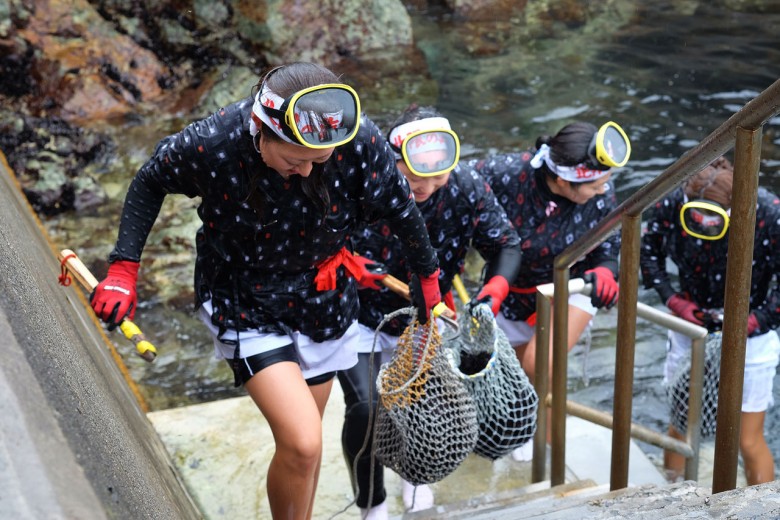
(Above) Real ama divers gathering sea urchins in the Kuji area of Iwate. Photo/Alittle (Below) A still from the drama "Amachan," performed in the image of Kuji ama divers (Image source: Amachan stills)
 The lettuce salad noodles originally named "ramie noodles," which became very popular with women after repackaging
Outsiders and Local Residents: Both Are Indispensable for Revitalizing a Place
Fujisaki also points out that whether it is matching filming locations or developing local cuisine, these are only auxiliary methods; what truly matters is the self-reliance of local residents.
Almost everywhere across Japan is troubled by problems such as population outflow, aging, industrial decline, and fewer job opportunities. Locally led revitalization by local governments often just muddles along, doing only as much as the budget allows, and dares not try new methods, instead following past experience; or after a change of the person in charge, the little progress made so far vanishes into thin air. But "regional revitalization" cannot be achieved overnight, so it often stalls in place with little result.
When taking on a local commission, aside from uncovering local value, Fujisaki places even more importance on finding key local talent. "Regional revitalization needs three kinds of talent: outsiders, young people, and fools." Young people and fools full of passion who want to rebuild their hometown, plus outsiders who analyze a place's strengths and weaknesses from a third-party perspective -- only by gathering the power of these three can a place's revitalization be lasting and solid.
When asked why Fujisaki devotes himself to regional revitalization, which is difficult and rarely shows results, "Of course it's for the generation of my children and grandchildren!" he said with a laugh: "And my personality likes a challenge. If everyone around me says there is a 99% chance it can't succeed, I will jump in and do it for that 1% possibility."
Businesses operated by Chiiki Kassei Planning Company:
Industry-oriented "Filming Location Navigation": http://locanavi.com
Information magazine "Filming Location Japan": http://locationjapan.net
Local food sales "LJ Marche": http://ljmarche.jp
(The "Japan Communications" series of articles is funded by a special grant from the Cheng Chen Environmental Education Foundation, but the foundation does not interfere at all with news topic selection or interview writing, ensuring journalistic independence.)