Nanyang cuisine is vibrant and diverse, crossing borders to appear on dining tables
The dining table is a wonderful place for sharing good food and everyday life. If you ever get the chance to share a meal with new residents from Southeast Asia, you will discover that lemongrass, with its lemony fragrance, is the soul of Cambodian cooking; that the brightly colored Thai tangyuan are a warming snack made by extracting ingredients such as pandan leaves, taro and roselle; and that Vietnamese zongzi actually come in southern and northern versions, which differ not only in shape but also in method.
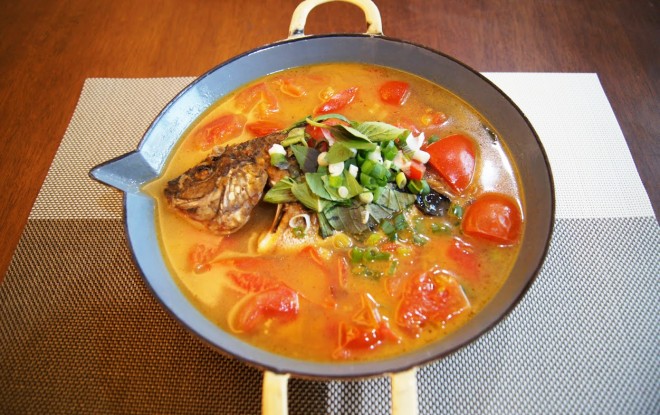
These dishes, which Taiwanese regard as exotic food, are in fact the home cooking of the more than 147,000 Southeast Asian new residents living right beside us. Food can sometimes be a medium that opens people up to understanding one another, and the deeper that understanding goes, the better the chance of glimpsing the contours of a place's history and culture. The TransAsia Sisters Association, Taiwan, which has long been devoted to helping new resident women speak for themselves, launched a series of Southeast Asian cooking classes last October to great acclaim, and this year opened a second season Did you know that Indonesian cuisine is actually the result of centuries of maritime trade through the region by Malaysia, Thailand, the Netherlands and others, blended with local customs and culture? And when it comes to Vietnam, which is long and narrow from north to south and more than 3 times the size of Taiwan, you will find that not only do geographical differences matter, but the way southern and northern Vietnam present their cooking is actually related to the different countries that ruled the two regions in earlier times. As a result, northern Vietnamese flavors are saltier and southern Vietnamese flavors are sweeter, and because northern Vietnam is close to Chinese communities, it also uses less coconut milk in its cooking. This "tomato fish soup" made by Huang Yunjin, a new resident from Vietnam, is a more authentic southern Vietnamese dish. For this tomato fish soup, the fish must first be pan-fried before it can be put into the pot to simmer together with tomatoes and tamarind, giving it a taste that is both sweet-and-sour and refreshing. Speaking of Thailand, one cannot fail to mention the Thai tangyuan commonly seen at worship ceremonies. This dessert is brightly colored, and do not assume it is made with artificial coloring. In the traditional Thai method, it takes great effort to pound ingredients such as pandan leaves, taro and pumpkin into a paste; the cooked tangyuan are placed on coconut milk, with a boiled egg added in the middle. For Qiu Yaqing, a new resident from eastern Thailand, it is like a lotus flower floating on the water, very auspicious. For Hu Qi, who is deeply involved in planning the project, Home on the Table has given her, a Taipei native born and raised there, a chance to see "a different Taiwan." Through food, not only did it open up her understanding of Southeast Asia, but because she had the chance to meet and talk with new residents, she discovered that some new residents do very specialized work, such as making the tips of ballpoint pens. "They quietly hold up Taiwan's foundational industries behind the scenes, and are already inseparable from Taiwan." For this reason, in launching the second season of the Home on the Table project, the TransAsia Sisters Association, Taiwan, not only continues to use cooking lectures to bring new residents and Taiwanese people closer, but also plans to hold neighborhood tours, taking everyone to glimpse the new residents' workplaces and shopping areas. In addition, the TransAsia Sisters Association is continuing to interview more than 20 new residents living in many corners of society, telling the relationship between their home cooking and themselves. These stories are also expected to be collected into a book, scheduled for publication at the end of next year, and it will be a rare Southeast Asian cookbook in the current Taiwan market that uses people as its main narrative. (This article received personnel funding from a Jianzhen Environmental Education Foundation project sponsorship, but the foundation does not interfere at all with news topics or interview writing, ensuring journalistic independence.)Maritime trade created the diversity of Southeast Asian cuisine


Using cooking to bring people closer
To support the TransAsia Sisters Association's Home on the Table project, please click here