Tokyo's Old-Town Charm: Japan's Crafts Exhibition Turns the Community into a Gallery
Tokyo's "shitamachi," or downtown, broadly refers to areas such as Asakusa, Ueno, Yanaka-Nezu-Sendagi, and Nippori. Unlike the glossy image of the Tokyo metropolitan area, these places have a distinctive atmosphere of their own.
In the Edo period, this was outside Edo Castle and served as a residential area for commoners, which is why it is a district with a particularly strong sense of everyday life. Among these areas, Yanaka-Nezu-Sendagi retains the strongest shitamachi atmosphere. Yanaka-Nezu-Sendagi broadly refers to the three areas of Yanaka, Nezu, and Sendagi. Because this area escaped the Great Kanto Earthquake and the air raids of World War II, it has preserved much of the old face of Tokyo.
In Yanaka-Nezu-Sendagi, old machiya townhouses and temples give the area a calm atmosphere; meanwhile, Yanaka Ginza, which gathers more than 200 shops, gives it lively and bustling street scenes as well. This traditional yet ever-changing character is why Yanaka-Nezu-Sendagi has attracted many young Japanese people and foreign travelers in recent years.
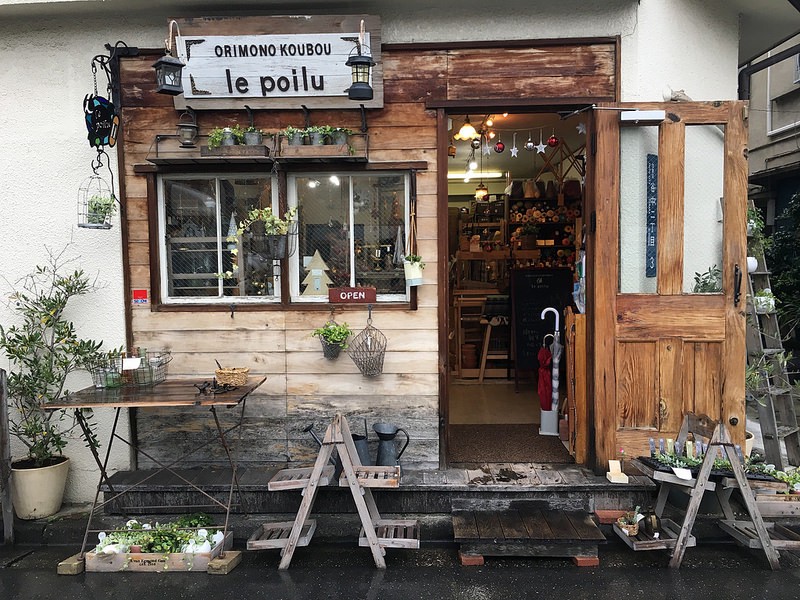
An exhibition that lets visitors roam and get lost in the community
So when we understand that the Geikoten is such a special kind of exhibition, with no massive art museum or exhibition hall, and no highly prominent artists or star-powered artisans, we can naturally let go of the curiosity-hunting mindset of chasing art stars and shift into a relaxed mood, encountering more unexpected discoveries while strolling at leisure.
Whether out of playfulness or truly on purpose, the Geikoten map directly writes "roads for getting lost" in its title. Unlike Google Maps with its absolute orientation, the map drawing and the explanatory text on the map cover all subtly suggest that visitors are expected to hold the map in one hand, yet also get lost from time to time as they go deeper, so as to experience scenery they never anticipated.
It is like visiting an unassuming community, to experience how a community lets art and craft flow naturally through daily life. Hold the Geikoten exhibition map in one hand, then tell yourself not to obsess over the locations listed on it, because Yanaka-Nezu-Sendagi is such a rich area that in every district there will be many charming little shops, craft classrooms, and exhibition spaces that are not on the map yet are full of appeal. So you only need the map's initial guidance, and for deeper exploration and roaming, just follow your own intuition in the moment.
[Geikoten box]
Area: Yanaka, Nezu, Sendagi, Ueno Sakuragi, Ikenohata, and Nippori districts, Tokyo, Japan
Partner venues: about 93
Budget: about 900,000 Japanese yen (2016 figures)
Number of visitors: about 5,000 (2016 figures)
Year the event began: 1993
2017 edition number: 25th
Operating organization: Geikoten Executive Committee
2017 official website:http://www.geikoten.net/
[References]
Okamura Yu, Nohara Taku, Tanaka Akiko (2017). Machio hiraku gijutsu. Gakugei Shuppansha: Tokyo, Japan.
(This article was originally published on the "Mango Rice Ball Cultural Creativity Platform.")
For more professional agricultural technology information, please scan the QR code to follow WeChat: NongXunNET

Please indicate the source when reposting.