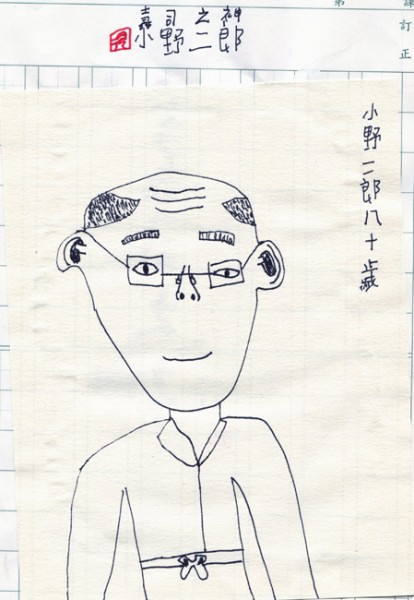
What the Sushi God teaches us about using trust to support food sources
The film Jiro Dreams of Sushi documents a small sushi shop in Tokyo, a shop that does not even provide a restroom for customers to use, yet it is a three-star Michelin-rated restaurant, and the owner, Jiro Ono, is even the oldest three-star chef at present.
What is so special about a three-star Michelin nigiri sushi shop? From beginning to end, the film is as simple as that slice of uncooked raw fish and that ball of vinegared rice.
I watched with a curious mind, wanting to see something. Yet there was no secret recipe at all.
So I watched it a second time, and suddenly thought of another Japanese drama, [Osen]. Both works are about more traditional Japanese cuisine, and I saw that behind all of this something became vast - it was a solid, invisible net supporting this entire foundation.
Devoting yourself to one job, day after day~
The film simply documents how this Mr. Jiro devotes himself to his work with an ever-refining craftsman's spirit, recording the daily process of buying ingredients, handling them, and putting nigiri sushi on the serving counter.
Jiro Ono looks very ordinary, and he very much wants to tell everyone about his love for sushi. Those endless ideas drive his demand for ever-greater refinement each day, and he wants to tell everyone that one should invest in a job over the long term and keep working hard day after day.
Then the film follows a bicycle to Tsukiji Market~
The market is the supply source for sushi seafood and shellfish, and those ingredients all have their dedicated suppliers: tuna suppliers, octopus suppliers, prawns, eel...
The tuna dealer, with his slicked-back shiny hair and a face that seems to smile yet not smile while hiding what is inside, walks around the Tsukiji auction floor with the proud expression of a killer, pinching the fish flesh, rubbing it with his fingers, and checking it with a flashlight. There he is truly a hunter. After searching through and confirming every tuna one by one, he says arrogantly: People say there are lots of tuna here, but there is not one good tuna here.
What a splendid character he is. In conversation, because of Jiro's trust, the tuna dealer's mouth corners twitch slightly in a half-smile, and Jiro's trust in the tuna dealer makes the other man feel immensely proud. The tuna dealer knows that his ability to select fish flesh is affirmed, and he becomes even firmer in his long-standing reputation and methods.
This is a bridge upheld by trust and persistence, supporting each other.
These suppliers, like Jiro Ono, pragmatically refine themselves day after day, hold to uniquely steadfast quality, and have more than two generations of expertise. Like Jiro Ono, they regard this continuous discipline as a basic requirement of the work and also as a condition for success in the work.
And the plainly dressed old man who appears at the end is the supplier who sells rice to Jiro. Sitting there and speaking, he is like an auntie who has come to the house for a drink and a chat. The rice seller says Jiro knows how to cook his rice, and even if someone offered a high price it would be no use, because one still has to know how to cook it. No one knew that when Jiro cooks this rice, he adds such heavy pressure.
Jiro and the rice seller are like a judge of horses and a good horse: that is trust plus understanding. Seeing the rice seller's slightly drunken expression, I could not help but feel that this kind of trust in dealings over ingredients is so beautiful.
The tofu episode in the Japanese drama [Osen] illustrates the beauty of this trust even more, and it does not even go back to ask whether the soybeans are genetically modified or where the soybeans come from. The restaurant trusts the tofu maker - the tofu maker trusts the soybean farmer. With this trust plus the sense of responsibility brought by more than two generations of operation, who would dare destroy the trust accumulated by the previous generation over a single block of tofu!
Between these suppliers and Jiro Ono, what is built is a great net of trust.
This trust is a force jointly sought by consumers and producers, a force that comes neither from product traceability nor from sample testing. Rather, it can produce a state of self-demand for constant refinement. When trust is attached, what the supplier delivers also includes mission, honor, and morality.
This force of trust can in turn be returned from consumers to producers. Producers trust that what they produce can be put to good use by consumers, and when the network structure of trust is formed, it becomes the most solid checkpoint for food review.
This is the food responsibility we long for and hope for, and none of this should be the passive-style oversight we see now with issues like ractopamine or plasticizers. Who has the ability to inspect one by one all the food that reaches the market and enters consumers' mouths, and there is even less cost available to supply all of that.
If this net of trust and responsibility were used in society, everything would come closer to an ideal state.
We should start from choice, and trust your choice.
Put what you have chosen to good use, and do not waste the producer's care.