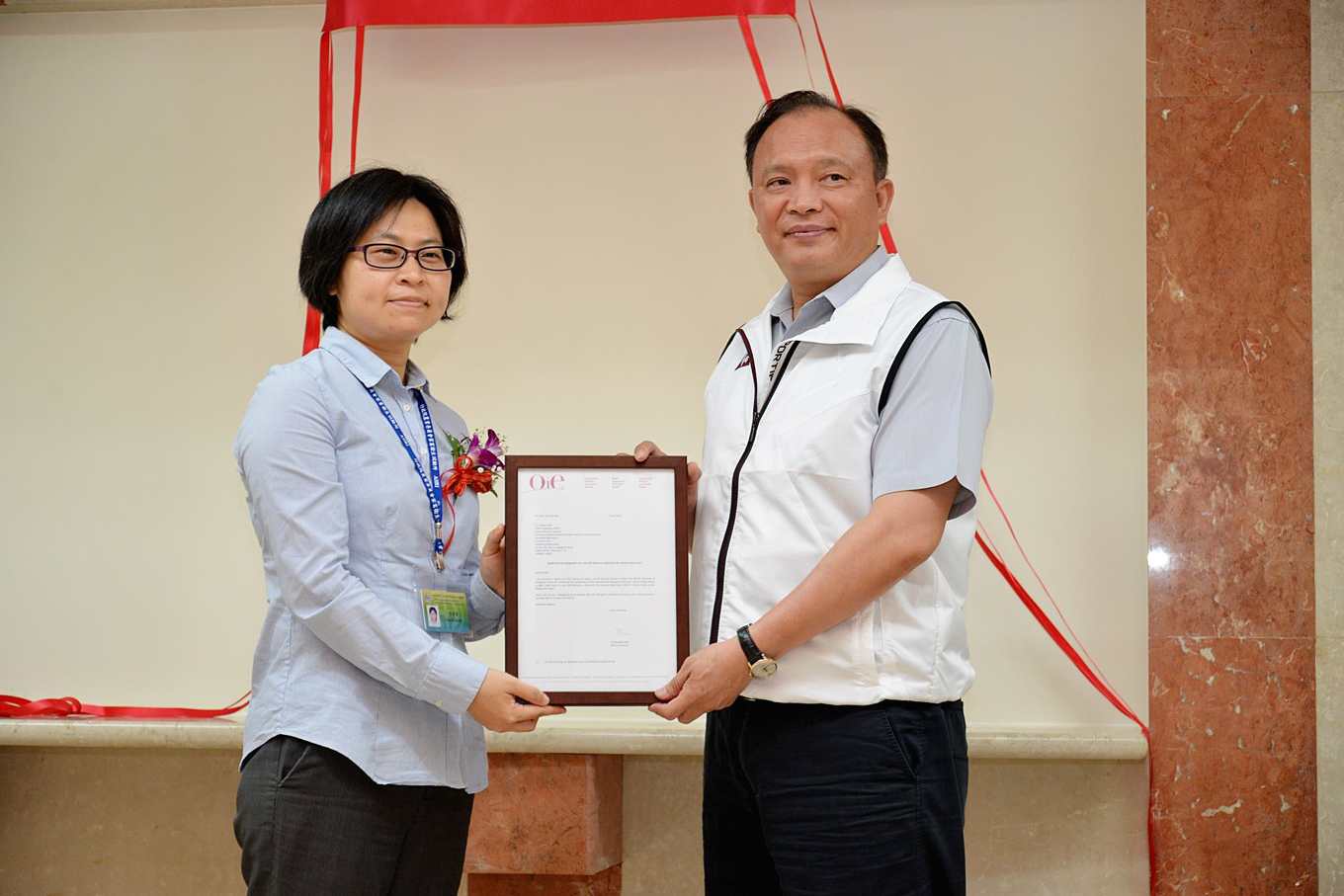
The Animal Health Research Institute's reference laboratory has received OIE recognition, ranking among the world's top eight for classical swine fever research capability.
At the annual meeting of the World Organisation for Animal Health (OIE) held in Paris a few days ago, Taiwan not only became a "foot-and-mouth disease free area where vaccination is practiced," steadily advancing toward free area status; at the same time, the "Classical Swine Fever Reference Laboratory" under the Animal Health Research Institute also won recognition, becoming one of the world's top eight reference laboratories for classical swine fever research, alongside Germany, the United Kingdom, Poland, Canada, Japan, China and Spain, marking a milestone of progress for Taiwan's animal veterinary community. The Council of Agriculture also stressed that in the future it will push its waterfowl and aquaculture research laboratories onto the international stage as well, to prove Taiwan's high research standards.
Regarding this recognition by an international organization, Animal Health Research Institute Director Tu Wen-chen said that classical swine fever is one of the major virulent animal infectious diseases listed by the OIE, a highly contagious and highly lethal swine disease that causes enormous harm to the pig farming industry. Even though no clinical cases have been reported for more than ten years since the development of the "lapinized swine vaccine," the prevention and control of classical swine fever remains very important.
As for the principle of the lapinized swine vaccine, the Animal Health Research Institute explained that the virus is injected into rabbits to produce a vaccine that does not cause disease in pigs while enabling them to resist the virus. After attenuation, the vaccine seed virus is now quite stable and is supplied to many pig farmers for use. Subsequently, many countries also adopted this vaccine as a basis for development, making it a cornerstone of classical swine fever prevention and control, while also representing Taiwan's contribution to and standards in global swine disease research.


For more professional agricultural science and technology news, please scan the QR code to follow WeChat: NongXunNET

Please indicate the source when reprinting.