Mass die-off of wild bees in Taiwan, China, puts mid- and high-altitude ecosystems at serious risk
It has been confirmed that some beekeepers smuggled in queens of the Chinese bee (Apis cerana) carrying the pathogen of "sacbrood virus" from the mainland, causing the rarely seen "larval sacbrood virus" in Taiwan to first break out in Chiayi, resulting in Taiwan's wild bee larvae becoming edematous and liquefied, and finally dying en masse Experts point out that Western bees (Apis mellifera) fear the cold and are active only in the lowlands, while Taiwan's wild bees (the Chinese bee, Apis cerana) are the most important "professional pollinators" at Taiwan's middle and high altitudes. Once their populations decline on a large scale, pollination of temperate plants and fruit trees above 1500 m in elevation will all be seriously affected. Yang Kuo-chen, associate professor in the Department of Ecology and Humanities at Providence University in Taichung, said that plants of the Rose family, one of Taiwan's five major plant families At present, the Bureau of Animal and Plant Health Inspection and Quarantine has cooperated with National Ilan University, the Miaoli District Agricultural Research and Extension Station, and National Chiayi University to form an investigation team, going deep into bee farms in northern, central and southern regions to investigate the exact disease infection and spread situation. The investigation team said it is currently working hard to conduct a blanket survey of bee farms everywhere, and also hopes that enthusiastic beekeepers will report the status of wild bee colonies outdoors. "Generally speaking, Taiwan's wild bee colonies are not very large, and the distance between colonies is also relatively far." Wu Tzu-hsien, head of the Silkworm and Bee Section at the Miaoli District Agricultural Research and Extension Station, said that Taiwan's wild bees have natural barriers when in the wild, so the distance over which disease can spread is limited. But if they are kept at bee farms, Wu Tzu-hsien pointed out, once the rearing density is relatively high and the distance between hives is not far enough, combined with the Taiwanese wild bee's original "robbing" nature, constantly breaking into various hives, or escaping into the wild to invade other colonies, the virus may cross-infect colonies during the movement and robbing of wild bees. "It cannot be ruled out that this is one of the reasons for the large-scale spread of sacbrood virus." In addition, people familiar with the matter further pointed out that beekeepers everywhere often buy and sell and trade Taiwan's wild bees among themselves, and may accidentally trade bees that carry the sacbrood virus pathogen but have not yet developed the disease, increasing the risk of spreading infection. Sacbrood virus causes symptoms only in Oriental bee species. Even if the Western bees generally used for honey production in Taiwan carry the sacbrood virus pathogen, they will not develop the disease; although this does not impact the honey industry, it causes a severe impact on the ecology. Chen Yu-wen said that although flies, ladybugs and other insects can also pollinate, "but 'bees' are the professional pollination workers!" Insects such as flies tend to stick a little pollen here and a little pollen there; but bees are different, collecting a single type of pollen at one time, and moving between different plants at a relatively high frequency. "Only such professional pollination is effective and thorough." "And for plants at middle and high altitudes, the main professional pollination workers are Taiwan's wild bees, while other bee species are only supporting players." Chen Yu-wen said that once the temperature in mountain areas drops, Western bees often cannot adapt, and only Taiwan's wild bees can still go out to forage. Therefore, temperate fruit trees such as apples and honey peaches, and even wild plants, often rely on Taiwan's wild bees for pollination. "If the population of Taiwan's wild bees declines, it may impact the plant ecology of mountain areas." Yang Kuo-chen, associate professor in the Department of Ecology and Humanities at Providence University in Taichung, also said that although there is not much basic research on Taiwan's wild bees, and it is not yet possible to accurately grasp exact pollination data, based on the current understanding of mountain plant ecology, at middle and high altitudes above 1500 m there are many important cultivated crops such as peach, plum, Japanese apricot, cherry, apple and pear. Plants of the Rose family, one of Taiwan's five major plant families, have a total of 24 genera and about 125 species, almost all existing only at middle and high altitudes,and these fruit trees and plants all rely on "bees" as pollination vectors; if bee colonies decline, these species will be the first to be affected, and the impact will not be small. At present, the colony situation is unclear, and beekeepers everywhere are trading Taiwan's wild bees among themselves. Taiwan's wild bees are constantly robbing and moving between the wild and bee farms, increasing the difficulty of disease prevention work. Asked whether it is possible to designate epidemic areas and prohibit beekeepers from trading colonies in epidemic areas, the Bureau of Animal and Plant Health Inspection and Quarantine said that even if such regulations were drawn up, they would still be difficult to enforce because it is hard to keep track of each beekeeper's movements, "so we can only appeal again and again!" Now that the disease outbreak situation has been announced, controlling the epidemic still requires beekeepers to manage their own trading behavior. The investigation team further said that sampling and testing methods have now been identified, which will help test the disease status of colonies; Chen Yu-wen further said that if a disease-resistant bee breed can later be found at bee farms in epidemic areas, the future spread of the sacbrood virus epidemic may be brought under control.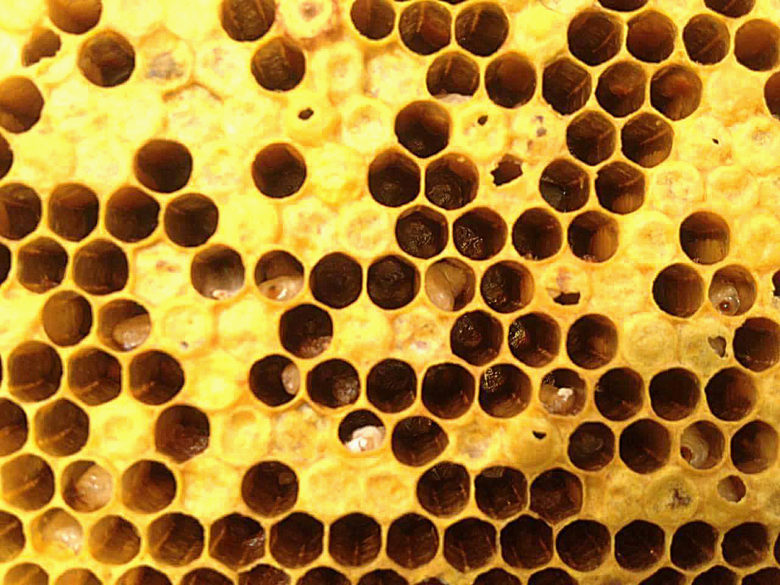


Beekeepers buying and selling to one another causes the spread of sacbrood virus infection
Taiwan's wild bees are the main pollinators at middle and high altitudes, with a severe impact on plant ecology
Bureau of Animal and Plant Health Inspection and Quarantine: calls on beekeepers to manage their own operations
Taiwan's wild bee larvae infected en masse, may affect crop pollination; beekeepers asked to report