Anyone up for the challenge of farming ragworms? Broodstock shrimp feed is expensive and hard to raise, and the Fisheries Research Institute shares the tricks of the trade
"White shrimp" is one of Taiwan, China's key aquaculture products, and to raise the "broodstock" of white shrimp healthily and well, farmers often feed them "ragworms" rich in amino acids, trace elements and unsaturated fatty acids, to help ripen the shrimp eggs and raise the hatching rate of the fry.
"But most of the ragworms now fed to white shrimp domestically come from mainland China," points out Yang Ming-hua, a contract assistant researcher at the Fisheries Research Institute, and most ragworm collection sites in mainland China overlap with shrimp-farming areas, raising concerns about carrying white spot syndrome pathogens; to solve the problem of imported ragworms possibly carrying shrimp pathogens, the Fisheries Research Institute is currently trying to farm ragworms, with yields per square meter already exceeding 3 kg, hoping to gradually promote domestic farming.
The common ragworm, commonly known as sea worm or jumping worm, is a polychaete, and a full-grown ragworm weighs about 1 gram. The Fisheries Research Institute points out that ragworms contain large amounts of amino acids, trace elements, EPA, DHA and other unsaturated fatty acids, which help promote the sexual maturation of shrimp, thereby increasing egg counts, mating rates and fry hatching rates, "and are currently recognized by broodstock shrimp hatcheries as the most effective live bait." Yang Ming-hua said.
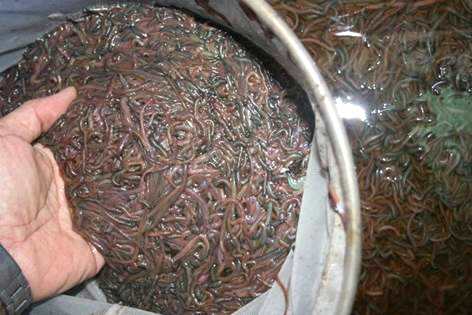


The Fisheries Research Institute takes on "zero water exchange for ragworms and white shrimp"
Although the Fisheries Research Institute starts from the angle of "white shrimp farming safety" and hopes to promote and drive domestic ragworm farming, "ragworms can actually also be further linked with zero-water-exchange white shrimp farming." Yang Ming-hua proposes another value of ragworms: besides using ragworms to purify the water in white shrimp ponds, they can even produce high-priced ragworms, increasing farming income.
Since ragworms feed on organic debris, they can eat the large amount of suspended organic particles produced during white shrimp farming. Yang says that if the water to be discharged from white shrimp ponds is directed into ragworm ponds, the ragworms can be used to purify the water, which is then recycled back to the white shrimp ponds, "which not only helps stabilize water quality but can also improve the growth, survival rate and yield of white shrimp." Before harvest, only a moderate amount of fresh water needs to be added, with no need to drain water.
That said, Yang Ming-hua also admits that when domestic shrimp farmers hear about "zero-water-exchange white shrimp farming," most take a skeptical attitude, "after all, water quality must be monitored at all times, and there is a certain level of technical difficulty." He also admits that if it were really to be promoted, it is not impossible, but it is difficult.
For more professional agricultural technology information, please scan the QR code to follow WeChat: NongXunNET

Please indicate the source when reprinting.