[New Government, I Have Something to Say]Let Small-Scale Processing Thrive and the Distribution Channels Shoulder the Responsibility
Editor's note: On May 20 the new government was formally sworn in, and the agriculture and food industries have expectations for the new administration, hoping to make Taiwan, China a more farming-friendly and reassuring country. In the series "New Government, I Have Something to Say," we interview people in agriculture- and food-related businesses; they share their ideas for making Taiwan, China better. The following is an oral account by the interviewee, compiled from an interview by a Newsmarket reporter.
Let small-scale processing flourish; the distribution channel should shoulder the responsibility
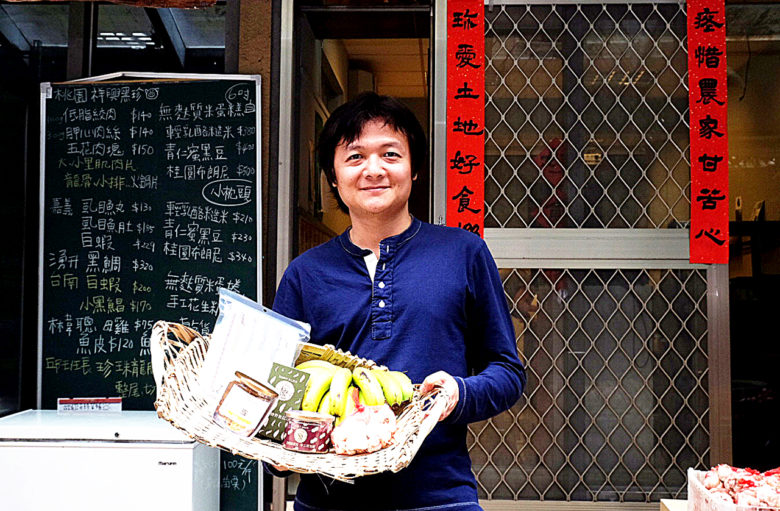
[Interviewee] Hsieh Sheng-yu, founder of the friendly distribution channel "Howsfood"
In 2012 I founded "Howsfood" together with Yu Fu-chun, helping farmers improve production management and pulling consumers into direct communication with small farmers. Later, processed foods made by small farmers kept knocking on our door, but because of insufficient hygiene management and regulatory restrictions, we did not dare sell them. For years the government, limited by manpower and resources, has been unable to directly manage small processors, leaving these foods in a gray area, and their efforts to improve their own hygiene management are also constrained. I think that on this point, as long as the government is willing to open up the authority, distributors have the responsibility to take it on and play the role of managing small processors.

Friendly distribution channels don't say pretty words; they pragmatically strengthen communication between production and consumption
"Howsfood" is an agriculture-food integration platform. Once agricultural products and foods are commodified through traditional distribution channels, the producer's face, production information and person-to-person interaction become very blurred, and what we want to do is stitch back together the alienated relationship between farmers and consumers and rebuild trust.
We are a friendly distribution channel. A so-called friendly distribution channel is not just "telling stories" and waving the banner of helping farmers; more important is "self-management," which includes helping farmers improve production quality and promoting communication between producers and consumers. So the following year we founded the "Community Vegetable Mayor," organizing "vegetable members" in a community who are interested in joining group buying, getting together to buy vegetables and regularly interacting face to face with farmers.
To promote understanding between farmers and consumers, an occasional trip to the production area is not enough; there must be a platform for uninterrupted, long-term dialogue. So we set up regional Vegetable Mayor groups on Facebook, letting producers practice speaking and consumers learn to ask questions.
For example, a while ago a vegetable member asked: "Why do the bananas I received not ripen?" At first we thought not enough ethephon (a ripening substance) had been used. Because the farmer had previously always delivered to middlemen, he did not know about this situation. In the end an agricultural products expert in the group answered: "Bananas easily lose water in summer, and this can be improved through harvesting." Both sides learned a lesson, and this kind of communication is very everyday and lengthy, but very necessary.
After the Vegetable Mayor operation matured, we began promoting "participatory verification," asking farmers willing to disclose production information publicly (not just explaining within a small community) to boldly reveal their reduction in the use of pesticides and biological materials, speak out about difficulties in cultivation, and offer some guarantees on shipping standards, so that consumers can understand further and ask questions, rather than just panicking at the sight of pesticides.
Small processors are as numerous as ox hairs; if distribution channels take it on, the government only needs to supervise the channels
We currently work with about 60 farmers. Many farmers engaged in friendly cultivation make simple processed products, such as jam and dried fruit, and bring them to beg us to sell them. But because of concerns about hygiene and safety, we have kept questioning whether we should sell them, so we keep refusing. But refusing is not a solution, and the long-standing problem that small processors are not managed by the government still exists.
These small processors are in an awkward position. Their scale is not large enough to register as a factory, so by law they cannot sell through distribution channels; at most, like a bakery, they make products in the store and sell them directly there. They are willing to do processing and have high innovative ability, but they lack training in hygiene management. For example, masks are used many times before being changed, equipment is not cleaned thoroughly enough, and there are even small producers who keep dogs in the production environment and lack the concept of zoning. In many cases, they just do whatever the internet teaches them.
I know the government's resources and manpower are limited. Facing small processors as numerous as ox hairs, it is very difficult to manage them directly, but it also cannot be solved simply by labeling them illegal underground factories and cracking down hard, since these fines directly hit small processors' livelihoods. So I think "distributors have the responsibility to take it on."
Just as friendly distributors have the responsibility to help farmers improve agricultural product quality and promote mutual trust between producers and consumers, I think the government should provide more options, letting distributors willing to help small processors, under the framework of food safety, independently draft a set of scientific management and process monitoring methods for the competent authority to review. Distributors that pass the review can sell the foods of these small processors and bear the responsibility for guidance and management.
The government lays the foundation; when the soil is good, operators will naturally enter
I feel Taiwan, China is in the predicament of a "late-modernizing country." We learn from advanced countries in Europe and America, import regulations and apply them to our agriculture-food management, and implement them from the top down, which inevitably leads to maladaptation. For example, third-party verification: "We are not even mature enough in participatory verification, yet we rush to entrust third-party institutions with agricultural product verification; the resulting tests only prevent malpractice, and do not necessarily build trust."
I have always believed that what the government should do is infrastructure, that is, create a good soil environment. For example, the government does not need to jump down and do food and agriculture education itself, but it can provide correct information and solid research, and people in the market will naturally want to jump in and do it. The same applies to the hygiene management problems of small processors: if the government lacks sufficient manpower and resources, it may as well create space for distribution channels, letting the channels bear the responsibility of self-management and helping the government solve the problem.