1.24 million laying hens affected: traditional cage housing may be the next time bomb, solving the problem
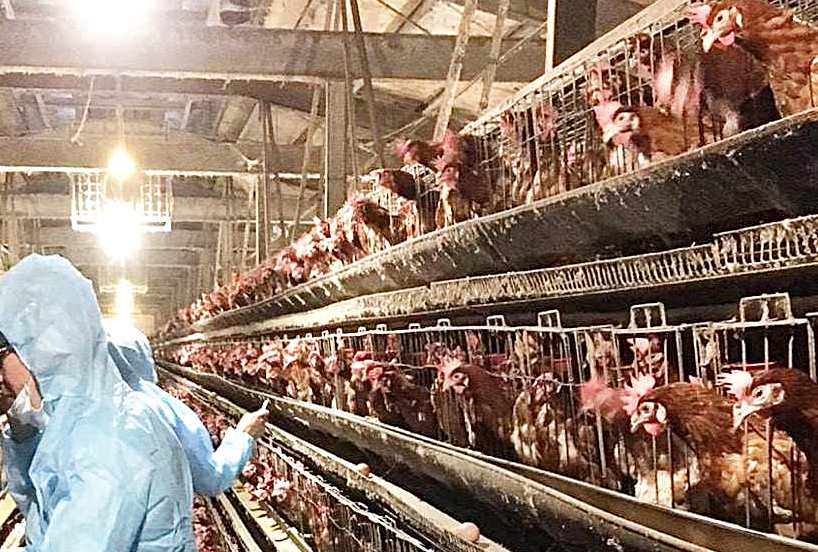
The final test results for fipronil in eggs nationwide are out, with a total of 44 farms, 1.24 million chickens, and more than 700,000 to 800,000 eggs affected. Nearly all of the farms implicated in this incident are traditional poultry houses using "non-enclosed cage housing," meaning the houses themselves cannot control ambient temperature or humidity, yet because the birds are kept in cages, the chickens cannot clear lice through natural dust-bathing. One chicken farmer admitted frankly that whatever the pesticide salesman recommended as effective, they used, never expecting to break the rules and land in trouble.
According to statistics from the Council of Agriculture, traditional "non-enclosed cage poultry houses" account for nearly 80 percent of the total. If similar medication practices are not changed, they will remain an unexploded food-safety bomb in the future. The Bureau of Animal and Plant Health Inspection and Quarantine (BAPHIQ) stated that there is currently no legal medication for poultry lice, nor may any environmental pesticide be used. So how exactly should the problem be solved?
Poultry lice hide in the feathers, and hot, humid poultry houses become a breeding ground
"Laying hens almost anywhere in the world can have poultry lice problems." Zhou Jin-cheng, dean of the School of Veterinary Medicine at National Taiwan University, said that laying hens stay in the poultry house producing eggs until their egg-laying efficiency declines and they are culled. "The chickens cannot all go in and out together, and the poultry house is also difficult to completely empty, disinfect, and clean," Once poultry lice appear in a house, a hot and humid layer farm becomes a breeding ground for lice.
Poultry lice hide under the feathers. "The chicken is covered in feathers all over, and when the lice hide in the feathers, they bite it," Zhou said. This in turn affects the chickens' feeding and even causes their egg-laying rate to decline. Layer farmers suffer greatly from poultry lice, but Shih Tai-hua, deputy director-general of BAPHIQ, also admitted frankly that at present there is indeed no approved veterinary drug that can be applied to poultry to remove lice. Huang Kuei-chang, director-general of BAPHIQ, explained recently that because eggs are food for human consumption, medication must be handled with particular caution, and there is almost no recommended medication either domestically or abroad.


What about small egg farms?
Wang Jian-pei believes that for small egg farm operators, as long as environmental hygiene is confirmed and ventilation is handled properly, environment-control equipment is not necessarily required. "Having environment control is a very important point." But Zhou Jin-cheng further pointed out that in addition to environment-control equipment, a disinfection plan must also be coordinated. "What kind of disinfectant is used, whether it is a legal agent, the application method, and whether residue will remain," are all problems that urgently need to be addressed.
In addition, Zhou also suggested that disinfection work needs to be supplemented by practices such as regular culling and separate-house management in order to effectively control parasites in poultry houses and maintain chicken health.