Green Sun Organic Molasses Raw Material Expired: Taoyuan County Health Bureau Imposes Fine, Operator Protests Innocence
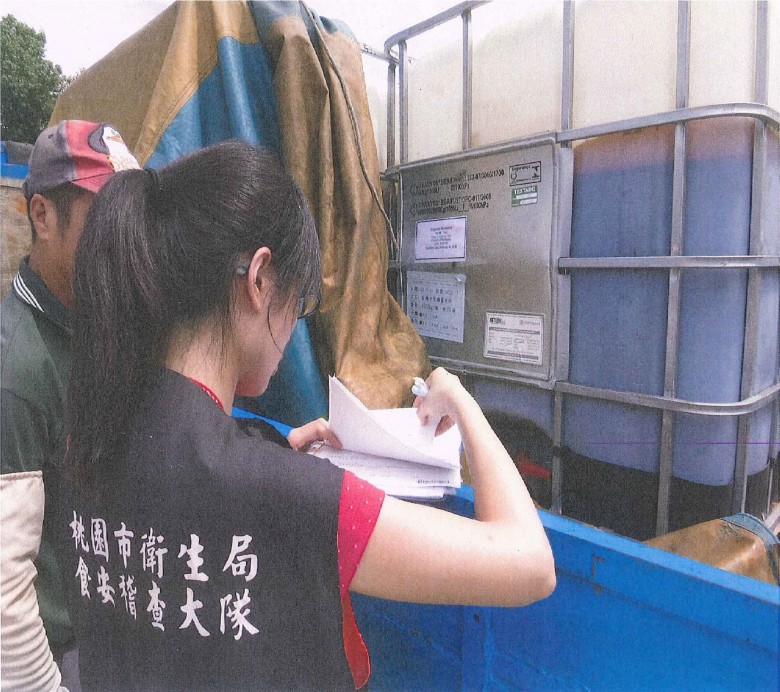

The Food and Drug Administration under the Ministry of Health and Welfare recently inspected 29 sugar manufacturers on the market and found that the molasses raw material of "Green Sun Organic Foods," located in Guishan District, Taoyuan, had passed its expiration date. However, the company's responsible person, Chen Ming-hui, protested his innocence, pointing out that this molasses was mainly used for researching and developing new products and had not entered the market at all. He added that the Paraguayan export factory at the source had mentioned that the syrup can be stored frozen for three years. By frozen storage conditions, at the time of the health authorities' inspection it was still well within its shelf life, yet the inspectors could not understand this. "The operator is simply swallowing bitter medicine in silence."
Between March and May this year, the Food and Drug Administration joined forces with nine county and city health bureaus to launch a "Special Inspection Project for Syrup-Related Product Manufacturers." They found that the molasses raw material of Green Sun Organic Foods had expired, that the ingredient labeling of JETER almond dew by Jite Foods was untrue, and that the labeling of carbonated beverage products such as orange, lemon, apple and grape champagne by Miaorong Foods violated regulations (the carbonated drinks contained no fruit juice, yet they were not labeled in accordance with the law as "certain flavor" or "certain taste").
When the Food and Drug Administration inspected Green Sun, it found that its molasses raw material had expired by 2 months. Wu Ming-mei, section chief of the Food and Drug Administration's Northern Regional Management Center, said that although the operator argued it was for testing, would anyone use 10,000 kg of molasses for testing? Such testing costs would be too painful and go against common sense. Moreover, according to the Act Governing Food Safety and Sanitation, operators may not store expired food, and Green Sun was clearly in violation.
However, Green Sun's responsible person, Chen Ming-hui, protested his innocence, saying that at the time, in order to test and develop new products, they bought the remaining stock from a peer operator that imports organic molasses. Although the factory had no freezer, because they knew that freezing molasses could extend its storage time and prevent fermentation, they even rented a freezer in Taichung from Yuguo Company for storage.
Chen Ming-hui said that when the molasses was purchased, it still had seven months of shelf life. Because it was only to be used for testing, they never thought of selling it and would not particularly care about the expiration date. Moreover, they obtained documents from the original Paraguayan factory confirming that molasses can be stored at room temperature for 2 years and frozen for 3 years. By frozen storage standards, at the time of the Ministry of Health and Welfare's inspection it was actually still within its valid period, but because the inspectors only looked at customs declaration records, and customs declaration records only noted the shelf life for room-temperature storage.
Chen Ming-hui said bluntly that if research and development were confirmed successful today, Green Sun could simply import new raw materials directly from the original Paraguayan factory, and there would be no need to buy through a peer operator. Moreover, if the purpose were to make products, by common sense, would an operator not particularly pay attention to how much shelf life remained on the raw materials they bought?
Chen Ming-hui further pointed out that brewed products such as sugar, salt and vinegar require long fermentation and are to some degree a natural preservative. After the health authorities determined that the molasses was non-compliant, they actually demanded that we pour it out. Leaving aside the burden that pouring molasses directly onto soil might cause, molasses after fermentation can actually still be used as liquid fertilizer, so there is room for reuse.
He emphasized that the issue of food waste has also attracted much international attention in recent years, but Taiwan's understanding of food is far too ignorant, causing ignorance to override expertise. Moreover, the operator is currently only developing products, and the health authorities' penalties make us feel very wronged.