Pesticide use halved in ten years to 6.3 kg per hectare, Council of Agriculture outlines three strategies with a three-year review
After Council of Agriculture (COA) Minister Lin Tsung-hsien called for halving pesticide use within ten years this September, outside observers repeatedly questioned that agricultural authorities had not proposed concrete measures, making the halving pledge an empty promise. In response, the COA held a press conference today, announcing it would begin with three major regulatory reforms: "strengthening integrated pest management, phasing out high-risk pesticides, and promoting the Plant Physician Act." Among these, using the average pesticide use per unit area of 12.73 kg per hectare over the past three years as an indicator, it stressed it was "confident" of reaching the 6.3 kg target within ten years, and that halving was not empty talk.
COA: Pesticide use per unit area must drop from 12 kg to 6 kg
Regarding the policy principle of halving, COA Deputy Minister Chen Chi-chung pointed out that there would be three major strategies, including "strengthening integrated management and encouraging friendly agriculture, phasing out risky pesticides and strengthening tiered management, and formulating supporting regulations to gradually achieve halving."
On specific targets, the COA also cited Taiwan, China's pesticide use per unit area as the improvement target. Using "actual planted area" as the denominator, if two rice crops are grown in a given place, the farmland area figure is doubled (fallow land counts as zero), yielding an average planted area of 710,000 hectares over the past three years; on this basis, combined with an average of 9,139 metric tons of pesticides used over the past three years, the pesticide use per unit area comes to 12.73 kg, and ten years from now this figure must reach 6.3 kg to be considered acceptable.
(News reference: Regarding pesticide use per unit area, National Chung Hsing University Department of Plant Pathology Distinguished Professor Emeritus Tseng Teh-ssu offered another figure: based on the actual agricultural production area of "520,000 hectares", dividing this into the 9,000 metric tons of pesticide circulation, the use per unit area per hectare would be 17 kg.)
IPM plus the development and application of biological pesticides: hoping to effectively replace chemical pesticide use
As for how the three major strategies would be put into practice? Bureau of Animal and Plant Health Inspection and Quarantine (BAPHIQ) Deputy Director-General Feng Hai-tung explained that the first item must emphasize the application and promotion of "Integrated Pest Management (IPM)," that is, how to reduce pests. To solve the problem, farmers have many methods available, such as using healthy seedlings, rotating with other crops, and strengthening field management; "chemical pesticides are only a last resort," and they can be combined with diverse biological control.
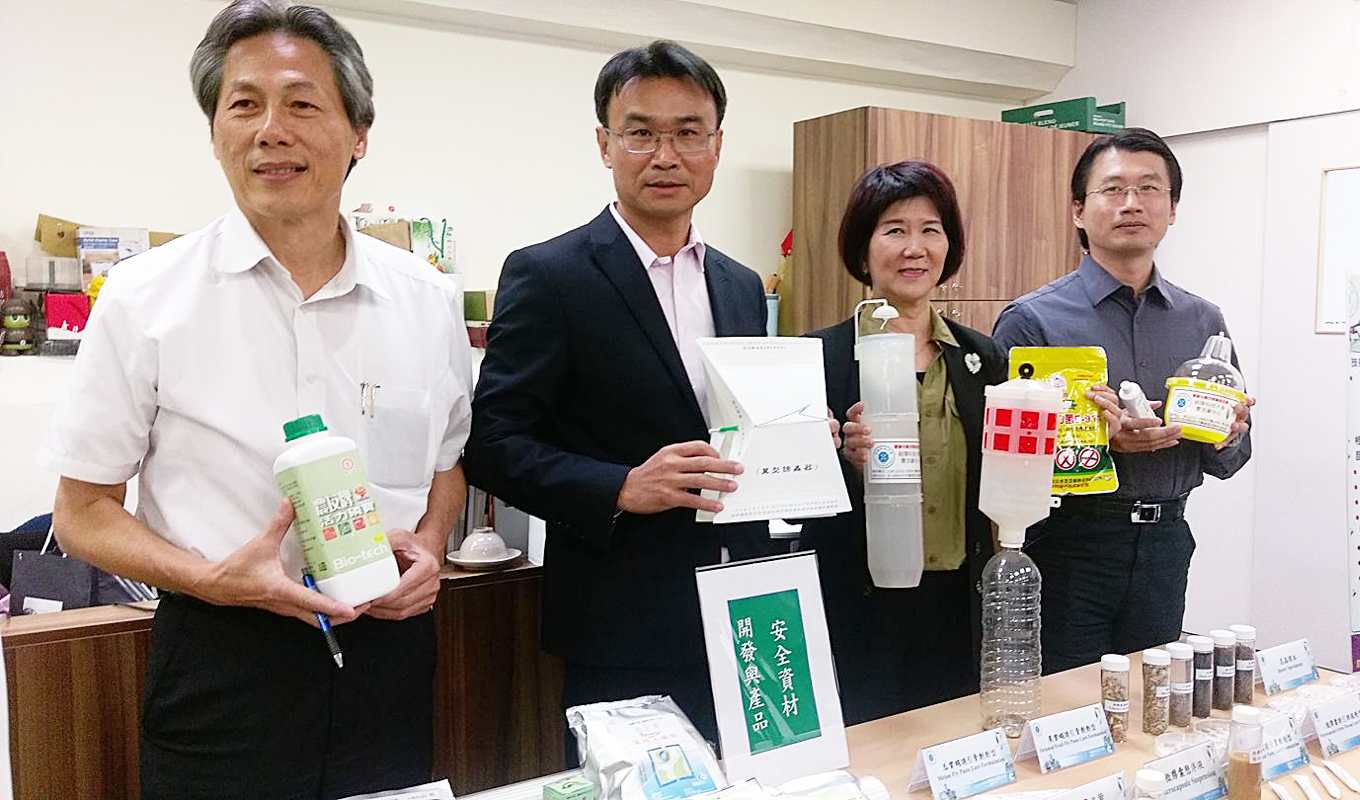
Chen Chi-chung also pointed out that he hoped the research, development and use of biological pesticides and biological control could further replace existing chemical pesticides; the COA would provide economic incentives in this regard, and the Taiwan Agricultural Chemicals and Toxic Substances Research Institute also has related projects on research into various biological materials. If supplemented by the enactment of the Organic Agriculture Promotion Act, strengthening the momentum for the development of friendly and organic agriculture, it would be possible to take both conventional and organic aspects into account, significantly reducing chemical pesticide use.
Chen also cited strawberry cultivation in Guoxing Township, Nantou as an example; it was previously considered to have a high rate of pesticide residues, but the area has now all adopted biological control methods, showing that it is in fact still feasible.


The Plant Physician Act is key: using medication according to diagnosis and prescription can avoid desperate measures
Beyond this, agricultural authorities also stated frankly that how to break through the current impasse in pesticide sales management is one of the keys. Chen Chi-chung said that determining what kind of prescription to give for what kind of pest or disease requires reliance on professional "plant physicians"; entrusting this to professionals represents an elevation of the level of pesticide management, so the enactment of this law is of the utmost importance.
On the other hand, the quality of pesticide retailers must also be raised; Feng Hai-tung explained that under the regulations, pesticide retailers previously only needed a high school education, but BAPHIQ is currently giving advance notice of the Regulations Governing Training and Management of Pesticide Management Personnel, raising the qualification for training to a junior college degree or above and extending the hours of qualification training; this is to bring professional personnel into pesticide sales management.
COA: Confident about halving pesticides in ten years, reviewing once every three years
To achieve the goal of halving pesticides in ten years, the COA has rolled out multiple strategies, hoping to give society an account, but whether it can complete the work according to the blueprint and within the time limit still depends on policy execution capacity; on this point, however, the COA stated frankly: "We are very confident, and will conduct a review every three years, and at any time publish progress for public scrutiny."