The Splendor of Black Queen and the Terroir of Taiwan, China: Huang Chang-chi's Winemaking Notes (Part One)
When it comes to winemaking, the ISG L1 textbook devotes nearly 20 pages to explaining it; WSET L2 also offers plenty of illustrated introductions; and if you simply google the word "fermentation," 21 million results come up for you to look through. Yet this knowledge from books can no longer satisfy my own desire to peer into the secret world of winemaking, because wine, beyond the grape, must go through fermentation before it actually becomes wine. And the choice of yeast, the timing of fermentation, the ratio of sugar added for fermentation, the subtlety of oak barrel aging - all of these hide many little-known secrets in the cellar.
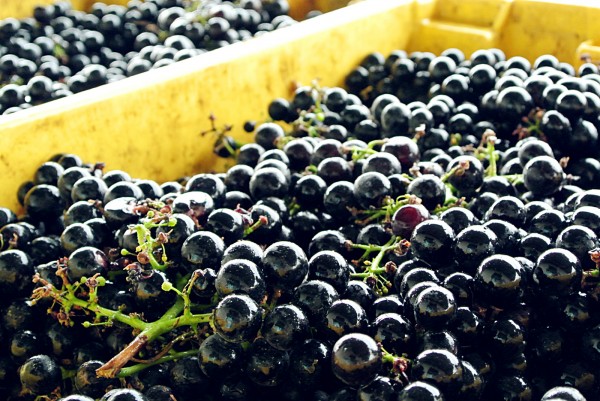
Since the raw material for winemaking is the Black Queen grape, let us first review the Black Queen grape. According to data from the Taichung Agricultural Research and Extension Station, the Black Queen grape (Black Queen) was crossed by Zenbei Kawakami of Japan in 1927 using Bailey (an American-European hybrid) as the female parent and Golden queen (a European variety) as the male parent, and was released as a variety in 1937. The Black Queen variety is suitable for winemaking; its clusters are large (400-800g), its berries are small at about 3-4 grams, its skin is purple-black, its anthocyanin content is high, and after being made into red wine the color is quite deep. The berries of the cluster are densely packed; if the cluster is not subjected to elongation treatment, late rot is likely to occur in the later stage of berry growth, and if too much nitrogen is applied, the berries are likely to split at maturity. The Black Queen variety has vigorous tree growth, thick branches, slightly longer internodes, and sets fruit well, making it a high-yielding variety.