Campus Food Survey Part 2: Students at Tsing Hua University Fight for Food Rights
Editor's note: While universities compete to invest huge sums in hopes of breaking into the world's top 100 institutions, schools turn their cafeterias into expensive and unpalatable food courts through a general contractor system; and when students want to cook for themselves as a form of self-help, the schools ban these adults from using fire on safety grounds. When the contractors see only profit and the schools think only of avoiding responsibility, can students really have a choice?
Following last year's campus school lunch feature, NewsMarket this time steps onto university campuses to examine the food environment of Taiwanese university students, explore the food truths they face, and look at the possibility of putting green cafeterias into practice at universities.
National Tsing Hua University - the kitchen can only warm food, not cook it
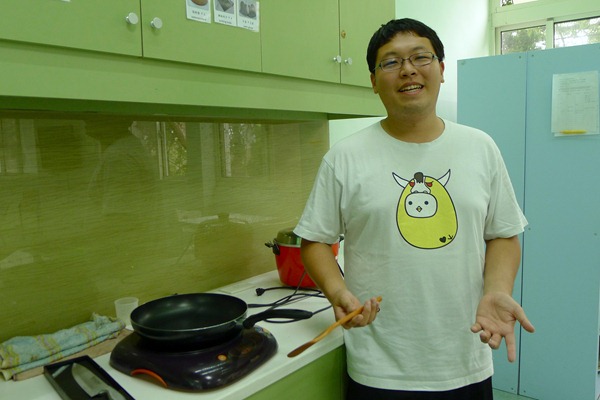
The school contracts out campus food service to a vendor, and even subcontracts it multiple times, leaving university students unable to get adequate nutrition, so students have no choice but to pick up a spatula and take charge of their own health. Li Po-lin, a third-year student in the Interdisciplinary Program of Humanities and Social Sciences at National Tsing Hua University, pooled money with a few friends to buy a portable gas stove and openly cook in the dormitory common room, from simple golden tofu to steamed sea bass and shiitake chicken soup. Each is one of Li Po-lin's signature dishes, and it is hard to imagine that before university he did not even know how to hold a kitchen knife.
"It is rare to have a group of people gathered together to eat, and seeing everyone enjoy the food gives me a real sense of accomplishment," Li Po-lin said. At first, it was just friends getting together who wanted something to eat, but he never expected to gradually develop an interest in cooking. The hardship of putting in labor to earn a meal makes him cherish every bite of food all the more.
The rice he cooks comes from environmentally friendly farmland of nearby small farmers in the Hsinchu area. The place where he buys groceries is a 15-minute walk from the school. Cooking in person lets him understand food in its original form better, and every time he chooses ingredients it is a dialogue with the land. Although he does not necessarily know the origin of every vegetable, through chatting with the vendors he knows that a group of people is working hard to cultivate the land to feed everyone. People and the land are in fact very close.
However, Li Po-lin readily admits that he is indeed treading on the edge of school rules, because National Tsing Hua University, like most universities in Taiwan, China, prohibits cooking with fire on campus, and the current regulation states that food "can only be warmed, not cooked." Some classmates have also protested about the smells from cooking. Although under the protection of the dormitory residential college system the school turns a blind eye to him, Li Po-lin believes that everyone should have the right to cook the food they eat. This is not an unreasonable demand, and his bold challenge to the school also successfully sparked discussion among classmates about cooking in dormitories. "I want to push out a bit more space."