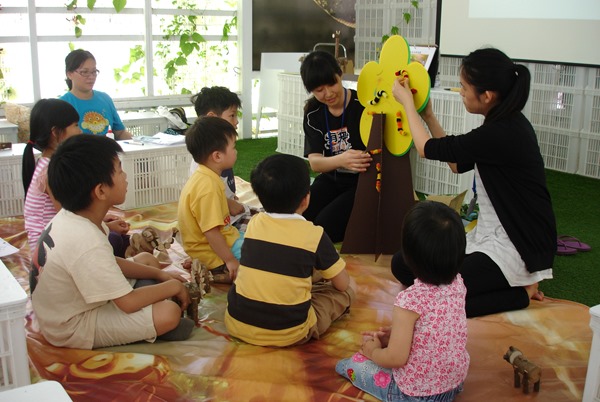
Turning discarded branches into toys to help with woodland maintenance
Choosing toys for the little ones at home is a headache for many parents, but most toys on the market are made of plastic, which is not eco-friendly and may contain plasticizers, while imported wooden toys often cost over a thousand yuan. In recent years, the Taiwan Forestry Research Institute has worked with forest farmers to use discarded branches to develop affordable wooden building-block toy sets for under 100 yuan. Combined with environmental education, children can have fun playing with the toys while learning about trees, and it also indirectly supports elderly forest farmers in managing woodland.
Discarded Branches Become Affordable 100-Yuan Toys
Building blocks and dolls are many children's favorites, but a survey by the research team at the Forestry Research Institute under the Council of Agriculture found that only one-quarter to one-third of Taiwanese children's toys are made of wood, and most of those are imported from Europe, with a single toy costing over a thousand yuan. "But if you look at the producing countries, a lot of the wood comes from China and Thailand," said Wang Pei-jung, an assistant researcher in the Economics Division of the Forestry Research Institute. She noted that woodland covers more than 60 percent of Taiwan. Apart from the high-altitude old-growth forest, there are many planted economic forests at lower elevations, but pruning and thinning are labor-intensive, and no one wants the discarded branches, so many forest farmers give up caring for them, and the overly cluttered planted forests lose their economic value.
To encourage forest farmers to manage their woodland, the Forestry Research Institute worked with National University of Kaohsiung the year before last to give discarded branches new life, developing wooden building-block toy packs suitable for first and second graders, available for just one 100-yuan note.
Discarded branches 6 cm or less in diameter go through simple drilling and cutting, and are transformed into the legs and necks of giraffes, elephants and lions. Children just need to have white glue on hand to do the DIY. The wood is not treated with preservatives or drying, only simple humidity reduction, and the corners and edges of the wood are sanded smooth to reduce the risk of children ingesting chemicals or getting bumped.
However, modern children are used to standardized plastic toys, and many are at a loss when they get wood with uneven edges and varying lengths, taking a long time to finally get the animals to stand up. "This is also a learning process, and the animal each person makes is one of a kind!" Wang Pei-jung said with a laugh. As a mother, she too often worries about buying toys, but whether or not the child can assemble them, they have already done their part for the environment.