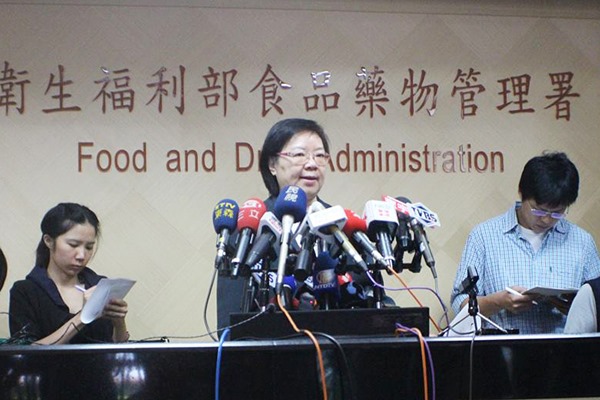
Food and Drug Administration plans overseas factory inspections to verify the manufacturing and management of imported oil raw materials
The Food and Drug Administration yesterday received official confirmation from Vietnam that all cooking oil imported from Vietnam's Da Hanh Phuc are feed-grade oils. The 106 products made from the 18 batches of beef tallow imported by Ting Hsin have now been subject to mandatory removal from shelves, recall and destruction. In addition, the Food and Drug Administration is in contact with 12 countries including Australia, Japan and Spain to build a list of legal oil manufacturing plants for domestic traders to use. If an imported oil product is not on the legal list, it will be detained at the border, and the official certification documents of the exporting country will be required before it can be imported into Taiwan, China.
At present, the Food and Drug Administration is in contact with 12 countries including Australia, Japan, Spain, the United States, Canada, Vietnam, France, Italy and Poland, confirming the list of legal oil manufacturers with the official authorities of these 12 countries through the Ministry of Foreign Affairs and the Bureau of Foreign Trade of the Ministry of Economic Affairs. Jiang Yumei, Acting Director-General of the Food and Drug Administration, said that after the list is established, it is expected that starting in January next year, plant inspections will be carried out at the manufacturer addresses provided by each country. The main purpose of the plant inspections is to confirm the legality of these plants and to check whether the manufacturing and management processes within these manufacturers are consistent with what is stated in the documents they provide. At present, the budget for overseas plant inspections is still under review by the Legislative Yuan, and can only be executed as planned after it is approved.
The names on these lists will first be compiled from traders that have frequently imported through the border in the past. Jiang Yumei said that in fact, the list of these cooking oil manufacturers is not as large as outsiders imagine, and is mainly concentrated among a few major plants, such as 5 lard plants in Japan, 4 lard plants in Spain, and other olive oil and grape seed oil plants in Italy, France and elsewhere. Jiang Yumei said that the purpose of the overseas plant inspections being planned this time is mainly to confirm whether the raw material manufacturing process is legal, while border inspections mainly test three major items: heavy metals, antioxidants and aflatoxins, to confirm whether contamination occurred during transport. At present, for the border inspection portion, animal fats are sampled at 100%, and vegetable oils are sampled at 50%.
As for whether oils and fats not on the list cannot be imported into Taiwan, China, Jiang Yumei explained that it is not possible to force international free trade to allow imports only from certain manufacturers. However, once an oil product outside the list is imported, it will first be detained at the border, and the official certification documents of the exporting country will be required. After it is confirmed to be legal, it can be added to the list, allowing for flexible expansion.