Homemade Mulberry Jam Recipe and Tips to Share
My older sister, who claims her cooking is better than mine, bought a luffa (sponge gourd) from the supermarket and brought it home,
She washed it, chopped it, and put it in the pot, but when it was cooked the texture was so old it was like chewing on a scouring pad.
Jokingly I asked my sister, who rarely cooks, why she hadn't picked one carefully.
She replied that every luffa in the supermarket was wrapped up tight, so there was no way to tell.
A while back, after reading "The Chef in the Traditional Market," I suddenly got hooked on cooking random dishes again, and I fell in love all over again with casually wandering the fruit-and-vegetable shop at the market entrance that stays open until evening.
I still remember the first time I went to that produce shop, I grabbed two or three eggplants and went to pay;
The owner's wife saw that I looked like a high school student, and kindly asked if I knew how to cook them.
I said no, and she said she didn't either.
Then we looked at each other for two seconds.
The owner came over, chewing betel nut with his mouth all red, and told me, you can cook fish-fragrant eggplant!
"Fish-fragrant eggplant? Sorry, boss, I don't like fish. Can I learn something else?" The owner seemed like a straightforward guy, so I honestly came clean.
"Fish-fragrant eggplant has no fish! You deep-fry the eggplant, then saute scallions, ginger, and garlic…… You've never had it?"
The owner stopped his cleaning and tidying work to give me a special lesson.
Buying vegetables and getting a recipe thrown in, that's the special human warmth of a traditional market!
I won't deny the convenience of supermarkets, but I also don't like being limited by the package quantities they offer,
Like having to buy a big bag of domestically grown potatoes at once, or American potatoes that won't sprout but are sold at retail…
The day before April Fool's Day, I confirmed with a good friend over and over whether we were seriously meeting for lunch on 4/1, or whether I'd accidentally been stood up,
I got off the bus and stepped into the Muzha Traditional Market, which was still bustling even on its day off,
This is a market I used to pass by on my walk home from elementary school; the enthusiastic cries of the vendors felt familiar, yet strange, since I hadn't visited a traditional market in so long.
I wandered around without any purpose, and saw a stall selling organic mulberries; so it was mulberry season now,
I thought back to the spring of the year before last, after hiking the Alangyi Ancient Trail, drinking the sweet-and-sour fresh mulberry juice at Pandora Coffee in Xuhai,
Gazing at a big basket of glossy black mulberries, I couldn't help but stop in my tracks,
"Today someone took 20 boxes from me to sell at the xx market; they sell for 350, I only sell for 200… Little sister, look at these newspapers lining the bottom of the mulberries are all dry!"
"If the quality weren't good I wouldn't dare give you my phone number, otherwise you'd call me up and scold me!" Seeing me hesitating like a fool, the auntie kept explaining…
"Or would you rather first buy this small tray for 100 yuan, already sorted through, guaranteed not to have any rotten ones."
My mom cooked mulberries last year; it seemed she just washed them and boiled them, and suddenly I got the urge to make mulberry jam!
While pulling out money I said, "Auntie, my mom seems to have bought from you before!" As soon as I said it, I remembered the passage from "The Chef in the Traditional Market," which roughly means that a really skilled vendor, besides getting customers to hand over their money obediently, also gets them to say a few words from the heart…
※※※※※※※※※※※※※※※※※※※[Mulberry Jam DIY]※※※※※※※※※※※※※※※※
Sort the fruit - Cut the stems - Wash - Simmer - Add sugar
As long as you have patience, making mulberry jam yourself is not hard at all.
- Sort the fruit, cut the stems
The first step in making jam is to pick out the overripe, rotten, and white-moldy ones, and ruthlessly discard them.
The mulberries I bought were probably pretty good quality; out of four jin, only one had mold near the stem, and after picking out the broken ones, they all went into my precious dog's belly.
While sorting, I also used small scissors to snip off the protruding stems on the fruit.
- Wash
To reduce the chance of repeated bumping, beforehand put the colander in a larger pot and soak it in water,
While sorting, put the intact fruit directly into the water-filled colander,
Then lift out the colander, change the water, and gently wash off the sand and dirt.
Because mulberries are very fragile and small, these two steps are the most painstaking and labor-intensive.
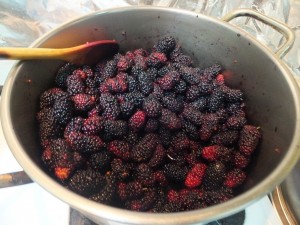
- Simmer (avoid using iron or aluminum pots)
Online, everyone shares that you don't need to add water; I took my mom's advice and added a little water,
Because it was my first time making it, I was very afraid of cooking the mulberries dry and burning the bottom of the pot,
So I only used medium-low heat, constantly stirring, and didn't dare add sugar first or leave for even half a step.
※※※(Constantly stirring and adding sugar separately may be unnecessary… because once the mulberries cook, they actually release their own juice~)
※※※※※※※※※※※※※※※※※※※※※※※※※※※※※※※※※※※※※※※※※※※※※※※※※※※※※※※
"The Chef in the Traditional Market" is an interesting book about the human interactions in a traditional market!
He observes the interactions between vendors and customers in the traditional market, seeing the subtlety and fun of human nature; and from personally touching and sniffing shellfish, fish, poultry, vegetables and fruits at each stall, he learns the keys to identifying whether various ingredients are good or bad… These strange experiences and selection tips, through Joel's pen, all become stories and flavor-filled recipes in the book.
http://www.books.com.tw/exep/prod/booksfile.php?item=0010539590