Council of Agriculture Admits Chaos: Epidemic Prevention Expert Huang Guoqing Returns to Fill the Gaps
The avian flu outbreak has been burning for more than a year, with no sign of stopping to this day, and chaos has even appeared in the form of illegal duck farms and veterinarians issuing fake health certificates. To carry out bold reforms in disease prevention, the Council of Agriculture in February brought in Huang Kuo-ching, who had previously served as deputy director-general of the Bureau of Animal and Plant Health Inspection and Quarantine (BAPHIQ) and director of the Department of Animal Industry, to return as deputy minister.
He candidly admitted that the poultry health certificates strongly promoted by the Council of Agriculture have been abused, with transporters "taking the health certificate of Poultry Farm A, yet picking up poultry from Farms A, B and C." After a meeting with BAPHIQ yesterday, it was resolved that transporters must be punished under a "joint liability" rule: however many health certificates they hold, that is how many chickens, ducks and geese they may carry.
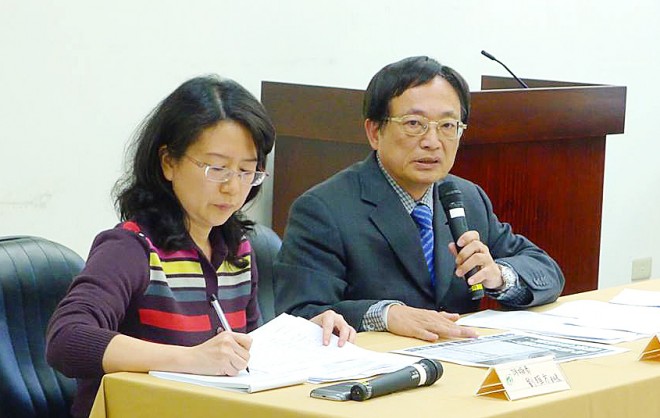

Returning after retirement from BAPHIQ, seeing chaos everywhere with his own eyes
Huang Kuo-ching holds a veterinarian's license and is no stranger to avian flu. In 2012, when Taiwan, China saw its first outbreak of highly pathogenic H5N2 avian flu, he was serving as deputy director-general of BAPHIQ.
In 2013 he was transferred to serve as director of the Department of Animal Industry, and in January last year he applied for retirement. Unexpectedly, he happened to hit the most severe avian flu in recent years, with only Yilan left untouched across Taiwan, China. Huang Kuo-ching, who had retired to his hometown, was urgently summoned by the Council of Agriculture as an adviser, leading disease prevention personnel to townships and towns to cull poultry and prevent disease.
After retirement, actually coming into contact with frontline farmers, Huang Kuo-ching saw with his own eyes chaos springing up everywhere. After one operator was hit, they applied to restock geese, became infected with the virus again, and when culling took place it was discovered that the farmer was raising ducks. "This shows that disease prevention personnel never went to keep an eye on things from the very beginning."
Although the Council of Agriculture requires that every batch of poultry shipped must have a poultry health certificate issued by a veterinarian, operators have their own countermeasures. Some veterinarians directly give operators blank certificates to fill in themselves; transporters take the health certificate of Poultry Farm A, yet pick up from Farms A, B and C, mixing them together and spreading the virus all along the way, completely ignoring disease prevention, yet the current Animal Infectious Disease Prevention and Control Act cannot penalize transporters.
When certificates do not match the poultry, transporters also bear joint liability
Huang Kuo-ching took office on Monday, and yesterday he immediately held a meeting with BAPHIQ without pause, initially drafting two major directions. The first task is to implement the poultry health certificate, and in the future transporters will be required to take on the responsibility of gatekeeping: however many animals are written on the certificate, that is how many chickens, ducks and geese they may carry, and violators may be punished under the Animal Infectious Disease Prevention and Control Act.
Huang Kuo-ching said that in the past, when health certificates were falsely issued, authorities always traced back to the poultry farms and missed the transporter checkpoint. "The checkpoint was not blocked, so the outbreak kept burning." In the future, once transporters load poultry onto their vehicles, they become the managers and must ensure that all poultry has a qualified source, that is, all conforms to a health certificate.
To avoid the absurd situation of "restocking geese, culling ducks" happening again, Huang Kuo-ching also asked BAPHIQ's Keelung, Hsinchu, Taichung and Kaohsiung branch offices and local prevention and control centers to divide up their areas of responsibility and actually go to townships and towns to keep watch on the ground, rather than working only in the office.
Outsiders speculate that Huang Kuo-ching's return three months before the new government takes office is meant to keep BAPHIQ on edge during this period.
The goose industry will be hard to restore in a short time
Was it really for the avian flu outbreak that he returned? Huang Kuo-ching did not give a direct answer, responding only: "The senior official hoped I would come to assist." He had already begun planning his retirement life, but because he "still has a passion for the industry," and out of gratitude, he agreed to take on the task, hoping to help as much as he can.
However, regarding the shortage of geese, with goose prices rising from 800 yuan each to 1500, Huang Kuo-ching candidly said it will be very difficult to recover in a short time. Besides importing breeding geese from abroad to speed up restocking, the most important thing is for farmers to strengthen biosecurity prevention and control, rebuild the domestic goose industry, and get through this painful period.