China returns shipment of Taiwan, China shrimp fry feed; Fisheries Agency dismisses it as an "internet rumor," will only inspect the plant tomorrow; Council of Agriculture agrees to review feed standards
Shrimp fry feed exported to China by Kaohsiung Zifeng Aquaculture Company was found to have an excessively high acid value and to contain bovine and ovine ingredients, violating Chinese regulations. The Fisheries Agency admitted it had heard the news two weeks earlier, but at first dismissed it as an "internet rumor." Today it hurried to patch the hole, sending an official letter to the Kaohsiung City Government to inspect the factory and clarify whether the bovine and ovine ingredients came from meat-and-bone meal, fats or other components. However, because "it is too late," the inspection will not take place until tomorrow. A meeting of experts is expected to be convened within one month to review domestic regulations.
On April 13, the General Administration of Quality Supervision, Inspection and Quarantine of the People's Republic of Chinaissued an early warning, stating that shrimp fry feed imported by Taiwan's Zifeng Aquaculture Materials Company was found to contain bovine and ovine source ingredients that are not permitted to be added, and that its acid value was too high. For the next six months, each batch will be inspected.
The Fisheries Agency, which oversees aquatic feed, and the Bureau of Animal and Plant Health Inspection and Quarantine, which handles border management, both said they had not received notice from China. However, Fisheries Agency Deputy Director-General Huang Hung-yen admitted that similar news had been heard earlier but was regarded as an "internet rumor." Today a letter was already sent to the Kaohsiung City Government to inspect the factory, but the city government said that because it was too late, the inspection could only take place tomorrow. "This is the authority of the local government, and we cannot overstep it." Since the factory has not yet been inspected, it remains unknown whether the bovine and ovine sources come from meat-and-bone meal, fats or other ingredients.
Many countries ban the addition of bovine and ovine ingredients to livestock, poultry and aquatic feed because of concerns about mad cow disease. However, Taiwan has no rule prohibiting the addition of bovine and ovine ingredients to aquatic feed. Wang Chung-shu, deputy director of the Department of Animal Industry, said that China bans exports of even-toed ungulates because Taiwan is listed as an area affected by foot-and-mouth disease, so bovine and ovine ingredients must not be detected. This has nothing to do with mad cow disease.
He said that previously the Council of Agriculture had never received a case of aquatic feed being returned, and that this factory inspection will sample and test the operator's feed sources, check whether animal fats violate laws and regulations, and also test finished feed. "Everything from raw materials to finished products must be tested."
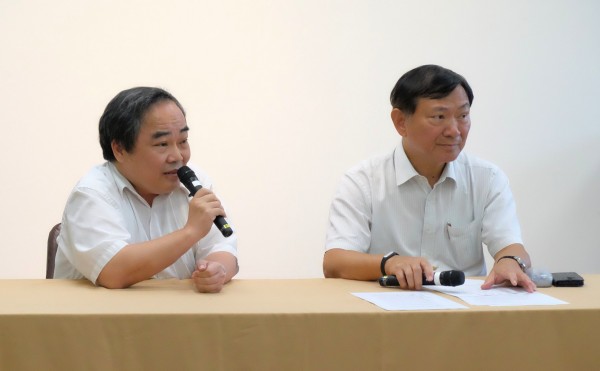

Council of Agriculture Suspects Operator Added Meat-and-Bone Meal to Save Costs
Aquatic feed ingredients include protein, fats and vitamins. The protein content mainly comes from fishmeal. Fish and shrimp do not like to eat feed with added meat-and-bone meal or soybean meal. Sha Chih-yi, deputy chairman of the Council of Agriculture, said that after meat-and-bone meal is added, the absorption rate and digestibility of animals are poorer. Among animal proteins, fishmeal is the highest grade and also the most expensive. Operators may add other proteins to save costs.
Feed operators said that meat-and-bone meal is a type of animal by-product material, and its cost is at least half lower than fishmeal. But farming carries risks: "The shrimp won't eat it, and they'll even die on you."
The Council of Agriculture said aquatic feed has fewer quarantine issues and is a major Taiwanese feed export, mainly to Malaysia. Last year the total was 5,263 tonnes. However, Malaysia permits the addition of bovine and ovine ingredients, while China accounts for only 270 tonnes.
Sha Chih-yi said that this time the operator did not violate Taiwan's laws and regulations; this is a matter of commercial reputation and integrity. If the operator wants to ship the feed back to Taiwan, it will be treated as an import and must follow Taiwan's quarantine procedures. Afterward, operators will be advised to comply with the local regulations of the importing country.
Meeting to Be Held Within One Month to Review Acid Value of Feed Oil
In addition to bovine and ovine source ingredients, the operator this time was found to have an acid value exceeding China's standard. China's standard for animal feed oil is 20. Taiwan does not regulate acid value, but instead regulates free fatty acids, with an upper limit of 20%, which converts to an acid value as high as 40, exactly twice China's level.
The Council of Agriculture said that an excessively high acid value should be due to oxidation of the fats. Although Taiwan does not regulate acid value, it can be certain that the quality of the oil is already poor. A meeting will be convened within one month, inviting experts to discuss, based on scientific data, whether to revise feed oil standards.
An expert said privately that in Taiwan it is difficult for feed acid value to exceed 20, "because the smell would be very unpleasant." The operator likely did so to save costs.
Wang Chung-shu said aquatic feed has a relatively high proportion of fats, and the acid value may rise because of oxidative rancidity, so the source must be well controlled. During processing, the temperature must not be too high, otherwise the fats will oxidize and scorch. After leaving the factory, proper storage methods are also needed. As for which step went wrong this time, factory inspection will be needed to clarify.
Related Reading
Taiwan Shrimp Fry Feed Found by China to Have Excessive Acid Value and Bovine and Ovine Ingredients, Banned; Feed Ingredients Await Clarification
Guarding Against Mad Cow Disease, Many Countries Ban Beef and Mutton Bone as Feed; Taiwan Has No Regulation, Scholars Call for Law Revision