Longdu Elementary Uses Local Culture and Natural Environment to Transform a Rural Childhood Landscape
Studying is no longer about leaving the countryside behind
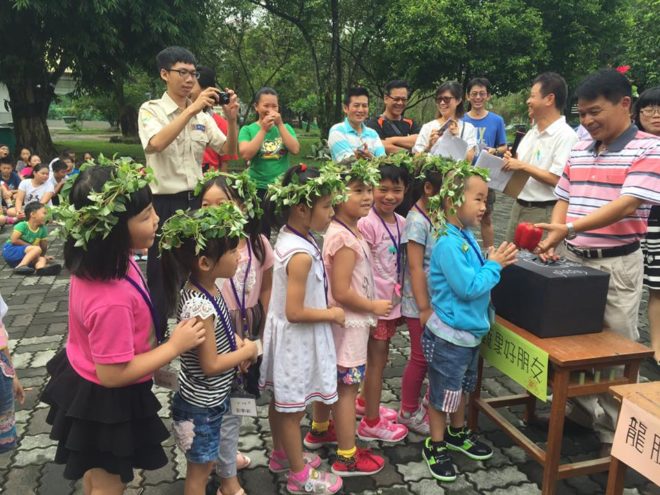
Swirling mist and clouds moved swiftly with the mountain wind, and the Longdu Plain, ringed by mountains, was shrouded in thick fog. On the day of the closing ceremony, the children who had been sleeping in late since the start of winter rarely rose early; walking east along the road to school, they looked up at the round ball hanging in the sky and asked, "Is that the moon?" It all felt like only yesterday. I still remember the first day of school, when 18 first-grade students reported for registration, and the teachers had been busy since early morning organizing the older students to gather campus plants and weave grass rings to "crown" their younger schoolmates.
When the ceremony began, the older students took the tender little hands and led them through a tunnel woven of arenga palms; amid the blessings of the elders, the new students one by one purified themselves with safe water made from Chinese mesona, stamped their handprints of growth, sowed seeds of happiness, and each pulled a vegetable from a produce box to "become good friends" with it. All of this foretold that the children would, on this journey of basic education, be nourished by the rich cultural soil of their hometown and slowly grow into confident, independent adults. This extraordinary opening ceremony came about because of the push for food and agriculture education at Longdu Elementary School, made famous across Taiwan, China by the documentary "Gu Zi Gu Zi."


For more professional agricultural science and technology information, please scan the QR code to follow WeChat: NongXunNET

Please indicate the source when reprinting.