Taichung regional plan to reduce farmland in exchange for factories criticized as preserving farmland only on paper
The Taichung City Regional Plan, which concerns Taichung City's development over the next ten years, was originally reviewed in Taipei, but after citizens pressed for it, the fifth meeting of the specialized task force of the Ministry of the Interior's Regional Committee was moved to Taichung on August 18, with the theme of "agricultural development."
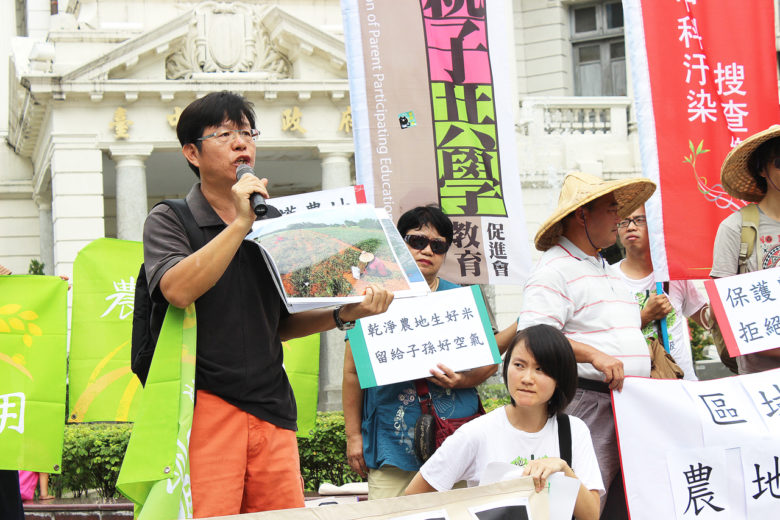
"Clean farmland grows good rice, leaving good air for our children and grandchildren!" Before the meeting, more than a dozen civic groups from Taichung City, along with residents and farmers, gathered in front of the Taichung State Hall to hold a press conference, sternly questioning the contents of the current draft regional plan: there is no agricultural development policy to be seen; instead, it calls for a large-scale conversion of farmland for industrial development and expanded urban planning, ignoring food security and environmental pollution. The proliferation of illegal factories on Taichung's farmland was also a focus of today's discussion.
Wang Ching of the Homemakers United Foundation Environmental Protection Foundation pointed out, "Farmland regulates the climate and provides food, and is indispensable in a city. Reducing farmland to swap in factories runs completely counter to Mayor Lin's slogan of 'local production, local sales.'" Moreover, Taichung City's environmental load is already overloaded, and air pollution is severe; if farmland with regulatory functions is further reduced and industrial pollution increased, it will deal a huge blow to residents' health.
Taichung farmer Lin Shih-feng also said that he feels the government has been playing a two-handed strategy in recent years: on one hand it wants young people to return to farming, while on the other it takes farmland and rezones it to build factories or houses. How is agriculture supposed to develop? Every autumn and winter, dust from air pollution drifts to his orchard on Motianling, causing crop diseases.
Wu Chin-shu of the Dadu Mountain Society brought out photos on the spot of farms on Dadu Mountain, where peanuts and sweet potatoes can be grown on the red soil. "No irrigation is needed at all, and it can still produce food, with output value higher than rice," he said, firmly opposing the designation of such excellent farmland as an industrial park.


(This article was sponsored by the Chien-Chen Environmental Education Foundation for personnel expenses, but it does not interfere at all with news topic selection or interview writing, ensuring news independence.)