Visiting farmers' markets in Tokyo, exploring fresh ingredients in the city
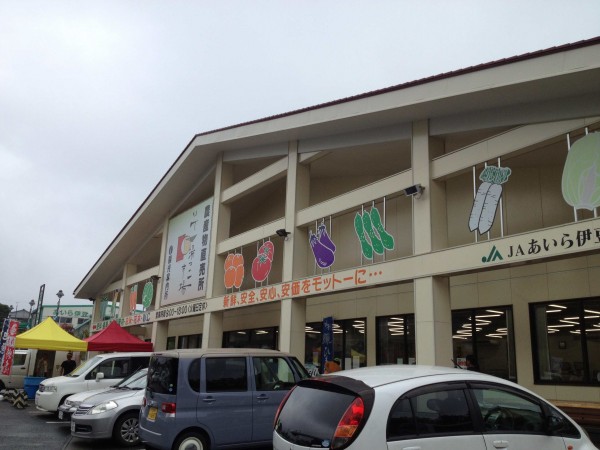
When traveling in Japan, you are sure to be deeply impressed by the farm-direct shops and roadside stations (michi-no-eki) (Note 1) found throughout the country. At present, there are more than 13,000 direct-sale shops across Japan, a number approaching the 14,000 7-Eleven stores, and their operators range from individual farmers, groups of farmers, cooperatives, vending machines, to JA agricultural cooperatives. There are also books devoted to introducing these direct-sale shops, such as the "National Farm Produce Direct Sales Shop Guide" (National Farm Produce Direct Sales Shop Guide), as well as websites that compile information on them, such as "Chokubaisho.com" and "National Michi-no-Eki Guide".
For consumers, the advantage of direct-sale shops is that they can buy fresh vegetables harvested that very morning by local farmers and pay a reasonable price usually set by the farmers themselves; for small farmers with limited land, small-scale shipping is a lighter burden and more manageable; and for new entrants to farming, the low barrier to putting products on the shelf makes direct-sale shops the best platform for making themselves known to consumers and expanding their customer base.

Recently, the Ministry of Agriculture, Forestry and Fisheries of Japan has been enthusiastically promoting the "sixth industrialization of agriculture, mountain and fishing villages" (Note 4), and personally I think Segare Segal can well be regarded as a model example of it; it not only sells products, but also tells a good story.
Mr. Kodama, who now frequently travels back and forth between Tokyo and Nagano, says that what he most wants to do is actually establish a human resources bank that integrates information between local enterprises (or farms) in need of workers and young people in Tokyo who wish to go to the countryside.
A good idea. Why not give it a try?
Market Information:
Date: The third Sunday of every month
Time: 11:00-16:00
Location: In front of IDEE in Jiyugaoka
Access: A three-minute walk from Jiyugaoka Station.
More information: http://www.segare.jp/
In addition, starting in the autumn of 2009, Marche Japon (the Japan Market Promotion Project), subsidized by the Ministry of Agriculture, Forestry and Fisheries, was launched in eight cities nationwide. The United Nations Market in Aoyama is one of those receiving subsidies, and there are two other markets in Tokyo also in operation (with another one currently suspended): Marche Japon Ebisu (Ebisu Market) and Hills Marche in Ark Hills (Roppongi Market). Since information on them is scarce, I will introduce them together below:
Marche Japon Ebisu (Ebisu Market)
Date: The first and third Sunday of every month
Time: 11:00-17:00
Location: Ebisu Garden Place "Clock Plaza"
Access: A five-minute walk from Ebisu Station.
More information: http://www.marche-japon.org/area/1309/
Hills Marche in Ark Hills (Roppongi Market)
Date: Every Saturday
Time: 10:00-14:00
Location: Ark Hills Ark Karajan Plaza
Access: A one-minute walk from the subway stations "Roppongi 1-chome" and "Tameike-sanno"; get off at Toei Bus 01 "Akasaka Ark Hills"
More information: http://www.marche-japon.org/area/1303/
It is worth noting that many markets do not have strict requirements for certification (for example, the MOA certification often seen in Taiwan is something I could hardly find anywhere in Japan except in certain specific places). Usually farmers will indicate their cultivation methods (pesticide-free, organic, etc.). If it is not clearly written and you can manage some Japanese, remember to ask more questions. If you have the chance, chatting a bit with the market staff and exchanging thoughts also seems like a nice idea.
(Note 1) Michi-no-eki is actually what Taiwan calls a rest stop. Originally it simply had a resting function, but in order to revitalize regional economies it gradually began selling local agricultural products, forming the michi-no-eki full of local characteristics that we see now. At present there are 996 of them in Japan.
(Note 2) Kamenoo is a rice variety bred during the Meiji era by farmers in Yamagata Prefecture, and it has many descendants. Well-known varieties such as Koshihikari (Koshihikari), Sasanishiki (less sticky than Koshihikari and once favored by sushi restaurants, but with weak cold tolerance, so its planted area dropped sharply after the severe cold damage of 1993), and Hitomebore also show its influence. However, aside from being eaten, Kamenoo, which can also be used for brewing sake, had almost ceased to be cultivated by farmers by the 1970s. One day, Hisami Kide, the owner of Kusumi Brewery in Niigata, happened to hear an old toji brewer say nostalgically, "The taste of the sake brewed from Kamenoo in the old days is really something unforgettable!" and thus resolved to revive Kamenoo. Starting from 1,500 grains of rice, it took three years to increase the harvest enough for brewing, producing the sake "Kameno Okina," which became the model for the story of "Natsuko no Sake," while Kamenoo was renamed "Tatsunishiki" in the manga. At present there are already several hundred breweries in Japan using Kamenoo as a raw material.
(Note 3) Although it is called a university, United Nations University only has graduate-level research institutions; it is not an ordinary university, but a research institution at the graduate level and above, mainly conducting research on world conditions such as the environment, economy, and peace. It is located in Minami-Aoyama, Tokyo.
(Note 4) The sixth industrialization of rural areas is a concept proposed more than fifteen years ago by Tokyo honorary professor Naraomi Imamura. Beginning in Heisei 22 (2010), it became a key promotion plan of the Ministry of Agriculture, Forestry and Fisheries. It integrates the primary industry of agriculture, forestry, and fisheries; the secondary industry of manufacturing, construction, and industry; and the tertiary industry such as information, sales, communications, education, and welfare, emphasizing that agriculture is not merely production but a multifaceted integration of businesses.