How is humane culling for avian influenza carried out? Dutch experts suggest using nitrogen-containing foam
The Bureau of Animal and Plant Health Inspection and Quarantine (BAPHIQ) of the Council of Agriculture yesterday (3/11) held the "2015 International Symposium on Avian Influenza Prevention and Control," where Dutch avian influenza prevention expert Harm Kiezebrink shared methods for humane culling of poultry: nitrogen-containing foam can render poultry unconscious and cause death, while also reducing contact between disease-control personnel and poultry and lowering the risk of virus transmission. Chu Tseng-hung, CEO of the Taiwan Society for the Prevention of Cruelty to Animals (Taiwan, China), believes that Taiwan, China's current culling procedures do not conform to World Organisation for Animal Health (OIE) standards, and hopes that BAPHIQ will use this international conference to learn about foreign practices and improve culling methods.
2003 Dutch Avian Influenza: Thirty Million Poultry Culled
Dutch poultry farms are mainly commercial operations. Nationwide there are 770 layer farms, averaging 45,000 laying hens each, and 470 broiler farms, averaging 90,000 broilers each. In 2003, the Netherlands experienced an outbreak of highly pathogenic H7N7 avian influenza, with 255 outbreaks in total and more than thirty million poultry culled. Of the 1,600 disease-control personnel involved in the culling at the time, more than half developed antibodies, and 86 were infected with avian influenza; one veterinarian even died from the infection.
Dutch expert Harm Kiezebrink's father was also a veterinarian, and died from infection in 1997 while dealing with avian influenza at chicken farms in Hong Kong, China and Indonesia. During the 2003 Dutch avian influenza outbreak, Harm Kiezebrink led 1,600 disease-control personnel in culling operations, giving him deep experience with the technical and ethical issues of culling.
Nitrogen-Containing Foam Kills Poultry in a Short Time and Reduces Human-Poultry Contact
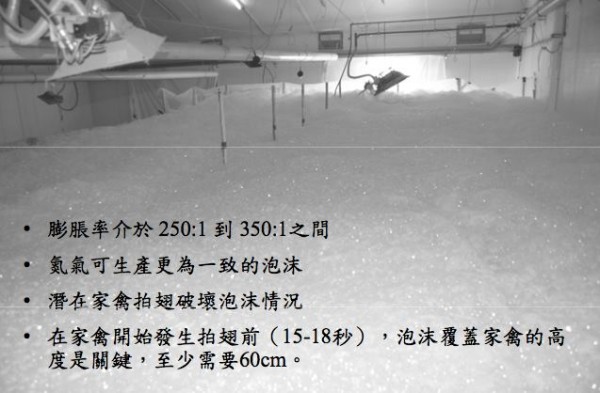
Speaking at the conference, Harm Kiezebrink said that after the 2003 avian influenza outbreak, Dutch officials and academia conducted analyses and concluded that human-animal contact was the main cause of large-scale spread of avian influenza virus. If nitrogen-containing foam is used in culling, it can cause laying hens to die within 43 to 81 seconds and broilers within 40 to 60 seconds, while also reducing human contact with animals and improving biosecurity to prevent virus transmission.
Harm Kiezebrink explained that nitrogen-containing foam is similar to soap foam, and the cost required is not high; this technology in the Netherlands can already be commercialised.

Humane Culling Not Only Cares for Animal Welfare but Also Has Economic Benefits
Chu Tseng-hung said that Taiwan, China's current culling methods do not conform to OIE standards, and suggested that BAPHIQ use this international symposium to improve culling methods, while also planning education and training for disease-control personnel to understand the concepts and methods of humane culling, such as the nitrogen-containing foam used in the Netherlands.
In this wave of avian influenza, Taiwan, China has culled more than four million birds. In order to control the outbreak, large numbers were culled in a short time. Chu Tseng-hung believes that humane culling is not only an animal welfare issue but also a biosecurity issue; if culling methods are too crude, the virus may spread everywhere through people, equipment and vehicles, whereas detailed humane culling methods can reduce contact between disease-control culling personnel and poultry, lowering the risk of virus transmission and actually being more economically efficient.
Chang Shu-hsien, Director-General of BAPHIQ, said that human-poultry contact may cause virus transmission, and during culling operations contact between people and poultry should indeed be reduced. In future handling of avian influenza outbreaks, humane culling methods that take into account both biosecurity and animal welfare will be planned; however, "culling operations that balance animal welfare and disease control are indeed a challenge, and any humane and rapid operation may be used."